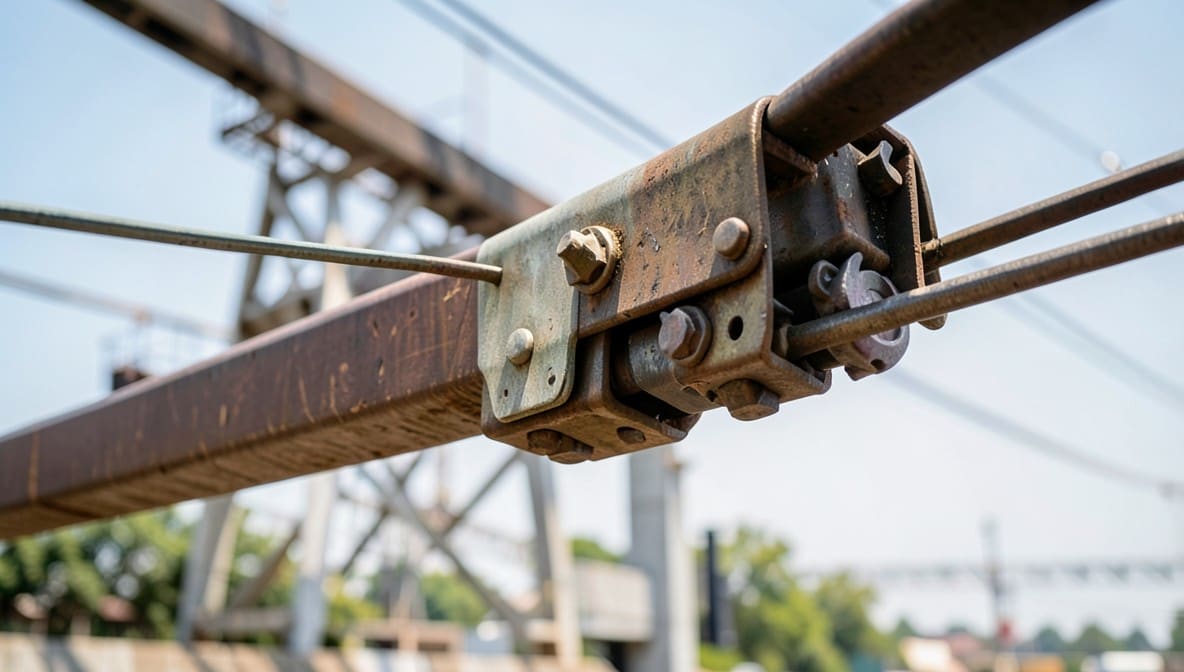
The Competition Commission of India has dismissed an allegation of abuse of dominance against M/s Arthur Flury India Private Limited, concluding that price adjustments in the supply of Short Neutral Section Assemblies (SNSA) were economically justified and did not constitute anti-competitive conduct under Section 4 of the Competition Act, 2002.
Background & Facts
The Dispute
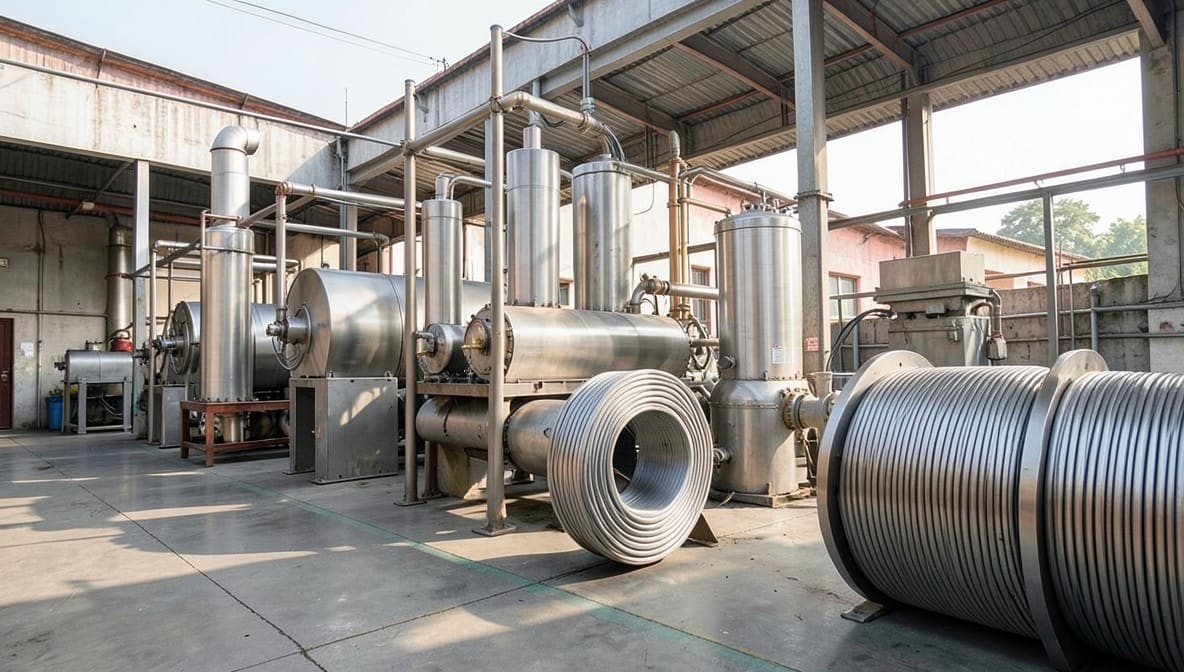
The Informant, Kshitij Srivastava, alleged that M/s Arthur Flury India Private Limited (OP), a wholly-owned Indian subsidiary of the Swiss-based Arthur Flury, abused its dominant position in the market for Short Neutral Section Assemblies (SNSA) used in Indian Railways’ overhead traction systems. The Informant claimed that after obtaining RDSO approval as an indigenous supplier under the Make in India (MII) Policy, the OP eliminated competition and engaged in profiteering, discriminatory pricing, and extortionate pricing.
Key Facts
- SNSA is a critical safety component classified as an RDSO-controlled item, requiring procurement only from RDSO-approved vendors.
- Prior to 2023, global suppliers M/s Arthur Flury (Switzerland) and M/s Galland (France) were approved, but became ineligible under MII Policy restrictions after November 2022, which barred global tenders below Rs. 200 crore.
- On 06.05.2023, RDSO granted indigenous approval to OP, making it the sole eligible indigenous supplier for Indian Railways tenders.
- The Informant alleged that OP imported all nine components and merely assembled them in India, defeating the intent of the MII Policy.
- Between February 2022 and March 2023, OP consistently quoted Rs. 10.25 lakh per unit (without GST) in 11 tenders.
- After RDSO approval on 06.05.2023, OP increased its price to Rs. 12.90 lakh per unit in July 2023, and later to Rs. 13.89 lakh in November 2024.
- On 13.12.2024, M/s Atlantic Tradeengineers LLP was approved as a new indigenous vendor, ending OP’s monopoly.
- Immediately after entry of the new vendor, OP reduced its price to Rs. 9.65 lakh per unit in January 2025, despite a sharp rise in the Swiss Franc (CHF) to Indian Rupee (INR) exchange rate from 95.72 to 110.91.
- OP charged Indian Railways between Rs. 11.99 lakh and Rs. 13.89 lakh per unit, while supplying the same item to EPC contractors at Rs. 9.50 lakh to Rs. 11.50 lakh.
- The Informant alleged dual pricing and exploitation of monopoly status.
Procedural History
- 06.05.2023: RDSO grants indigenous approval to OP.
- 28.11.2024: OP quotes Rs. 13.89 lakh in tender by North Frontier Railway.
- 13.12.2024: RDSO approves Atlantic Tradeengineers LLP as new indigenous vendor.
- 05.01.2025: OP reduces price to Rs. 9.65 lakh in tender by KRCL.
- 29.01.2026: CCI conducts meeting to consider the Information.
- 07.04.2026: CCI passes order closing the case under Section 26(2).
Relief Sought
The Informant sought punitive action against the OP, including imposition of financial penalty and/or ban on business operations.
The Legal Issue
Did the OP’s pricing behavior and market position, following its RDSO approval, constitute an abuse of dominant position under Section 4 of the Competition Act, 2002, particularly through exploitative pricing, discriminatory pricing, or exclusionary conduct?
Arguments Presented
For the Informant
The Informant contended that OP’s price hike from Rs. 10.25 lakh to Rs. 13.89 lakh after gaining exclusive eligibility under MII Policy was unjustified and exploitative. He argued that the subsequent price drop to Rs. 9.65 lakh upon entry of a competitor demonstrated that earlier prices were artificially inflated. He further alleged dual pricing - higher rates for Indian Railways versus lower rates for EPC contractors - as evidence of discriminatory conduct. The Informant relied on the temporal correlation between monopoly status and price increases, asserting that the absence of competition enabled OP to extract monopoly rents.
For the Respondent
The OP did not file a formal response. However, the Commission considered the economic context and market dynamics, noting that OP’s pricing was consistent with cost drivers including currency fluctuations, logistics, and order volume. The Commission inferred that OP’s conduct was commercially rational and not anti-competitive.
The Court's Analysis
The Commission undertook a rigorous market analysis to determine whether a prima facie case of abuse of dominance existed. It first defined the relevant product market as SNSA, noting its unique safety function and lack of substitutes, and the geographic market as India, given Indian Railways’ pan-India procurement.
The Commission acknowledged that OP held a dominant position from 06.05.2023 to 31.12.2024, but emphasized that dominance alone does not violate Section 4. Abuse must be demonstrated through conduct.
The Commission examined the price trajectory across 34 tenders, noting that the initial increase from Rs. 10.25 lakh to Rs. 12.90 lakh coincided with a rise in the CHF-INR exchange rate from approximately 81 to 95. This correlation suggested that the price adjustment was cost-driven, not arbitrary. The Commission further observed that OP maintained the Rs. 12.90 lakh rate for 11 consecutive tenders despite further currency appreciation, indicating pricing discipline.
"The trend observed indicates that the rates were constant for the first three tenders during this phase, despite the steady rise in the value of the Swiss currency rate as compared to the Indian currency."
The Commission also noted that the price reduction after entry of a competitor was consistent with competitive dynamics, not evidence of prior exploitation. The Commission rejected the dual pricing claim, finding that EPC contractors operated outside MII Policy constraints and were free to negotiate prices, making direct comparison misleading. The 9.4% difference between highest and lowest rates for Indian Railways was deemed commercially reasonable, especially given variations in quantity and logistics.
The Commission emphasized that Indian Railways, as a procurer, retained full autonomy in procurement decisions and was not coerced by OP. It cited precedents (Shri Kailash Chander Sharma, Suntec Energy Systems, XYZ Vs PCMM) affirming that a supplier cannot dictate procurement specifications to create artificial demand.
The Commission concluded that the price movements were attributable to legitimate economic factors: exchange rate volatility, transportation costs, bulk discounts, and inflation. The entry of a new vendor and subsequent price reduction confirmed market responsiveness, not abuse.
The Verdict
The Commission dismissed the Information and closed the case under Section 26(2) of the Competition Act, 2002. It found no prima facie case of abuse of dominance. No penalty was imposed. The OP’s conduct was deemed commercially rational and consistent with market forces. The Informant’s allegations of profiteering, discriminatory pricing, and monopolistic exploitation were rejected.
What This Means For Similar Cases
Pricing Fluctuations Must Be Contextualized
- Practitioners must analyze price changes against currency, logistics, and volume trends - not just temporal proximity to market entry or exit.
- A price increase following regulatory approval does not automatically imply abuse; cost-based justifications must be evaluated.
Dual Pricing Is Not Per Se Illegal
- Different pricing for government vs. private contractors is not discriminatory if the procurement conditions differ (e.g., policy constraints, tender rules).
- The burden shifts to the complainant to prove that the price differential lacks economic justification.
Market Entry as a Corrective Mechanism
- The CCI views new entrants as natural market correctors. A price drop after entry supports the conclusion that prior pricing was competitive, not exploitative.
- This reinforces that competition law protects competition, not competitors.
Regulatory Approval Does Not Create Abuse
- RDSO’s approval of a vendor does not confer market power; the supplier’s conduct, not its status, determines liability.
- Procurers retain autonomy in procurement decisions, and suppliers cannot be held liable for regulatory design choices.