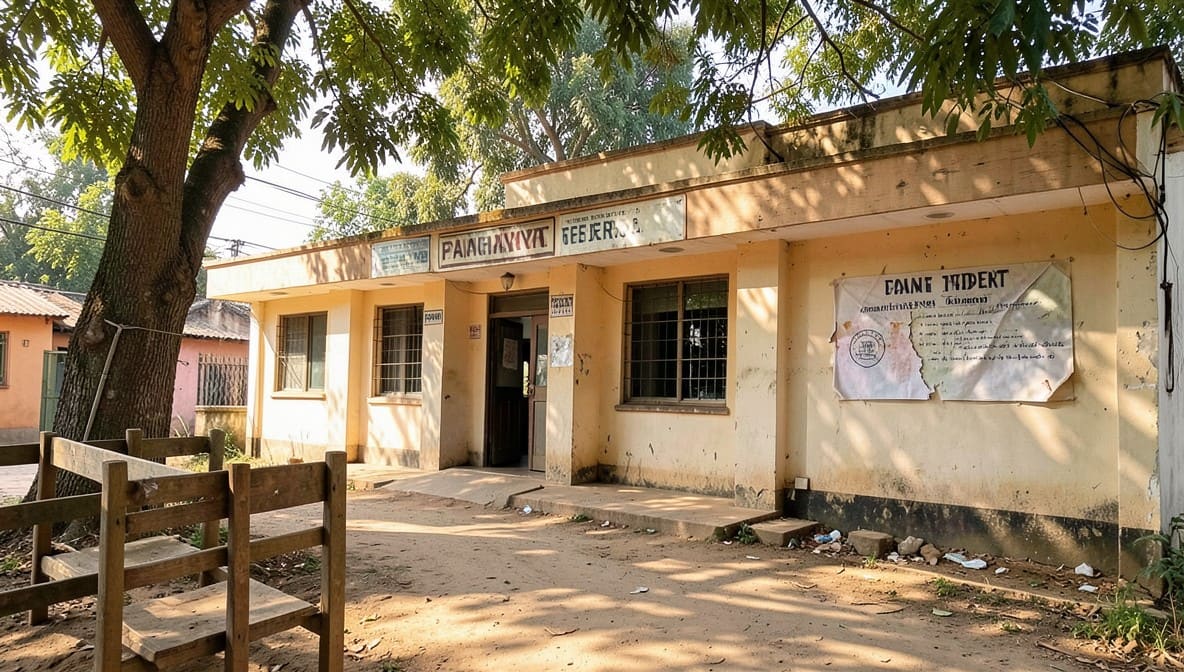
The Rajasthan High Court has affirmed that the suspension of an elected Sarpanch under Section 38(4) of the Rajasthan Panchayati Raj Act, 1994 is legally valid when criminal proceedings for an offence involving moral turpitude - such as corruption under the Prevention of Corruption Act - are pending, irrespective of whether a formal departmental enquiry has been completed. This ruling reinforces the state’s authority to suspend public functionaries to preserve public trust during serious criminal allegations.
Background & Facts
The Dispute
The petitioner, Ganesha Ram, was elected as Sarpanch of Gram Panchayat Mokalsar, Panchayat Samiti Suratgarh, District Sri Ganganagar on 04.10.2020. On 26.05.2025, the Anti-Corruption Bureau (ACB) registered FIR No.129/2025 against him under Section 7 of the Prevention of Corruption (Amendment) Act, 2018, alleging that he demanded and accepted Rs.10,000 as illegal gratification for facilitating approval under the Pradhan Mantri Awas Yojana (Gramin). The petitioner was arrested and later granted bail by the Special Court, ACB, Sri Ganganagar.
Key Facts
- The complainant, Ganesha Ram, alleged that the petitioner demanded Rs.10,000 for approving his house under the PMAY scheme.
- The petitioner claimed the complainant had already been included in the beneficiary list prepared by the Gram Vikas Adhikari on 12.05.2025, and the Gram Panchayat had no authority to sanction or reject the claim after that.
- The petitioner asserted that Rs.10,000 was not a bribe but a repayment of a personal debt owed by the complainant.
- The ACB allegedly laid a trap and recovered Rs.10,000 from the petitioner’s office drawer on 25.05.2025.
- An additional Rs.2,000 was alleged to have been taken earlier during verification.
- The petitioner was suspended by order dated 16.06.2025 under Section 38(4) of the Rajasthan Panchayati Raj Act, 1994.
- A notice initiating departmental proceedings under Section 38(1) and Rule 22 of the Rajasthan Panchayati Raj Rules, 1996, was issued on 16.05.2025.
Procedural History
- 04.10.2020: Petitioner elected as Sarpanch.
- 12.05.2025: Beneficiary list for PMAY (Gramin) approved by Gram Vikas Adhikari.
- 16.05.2025: Notice under Rule 22(2) of the Rules of 1996 issued to petitioner initiating departmental enquiry.
- 25.05.2025: ACB conducted trap operation and recovered Rs.10,000.
- 26.05.2025: FIR No.129/2025 registered under Section 7 of the Prevention of Corruption Act.
- 16.06.2025: Suspension order issued under Section 38(4) of the Act of 1994.
- 13.03.2026: Judgment pronounced by the Rajasthan High Court.
The Parties' Positions
Petitioner: Argued that suspension was illegal because no preliminary enquiry was conducted under Section 38(1), no charges were framed before suspension, and the timing of the digital signatures on documents suggested mala fide intent. He claimed the FIR was politically motivated and that the Gram Panchayat had no authority to act on the PMAY application after the list was forwarded.
Respondents: Contended that the FIR under the Prevention of Corruption Act involved moral turpitude, triggering Section 38(4) independently of departmental proceedings. They asserted that the notice dated 16.05.2025 initiated the enquiry and that the suspension order was not issued before the notice, as the digital timestamps reflected only electronic signature times.
Relief Sought
The petitioner sought quashing of the suspension order dated 16.06.2025 and restoration of his position as Sarpanch. He also sought a direction restraining respondents from obstructing his official duties.
The Legal Issue
Can the State Government suspend an elected Sarpanch under Section 38(4) of the Rajasthan Panchayati Raj Act, 1994 solely on the basis of an FIR for an offence involving moral turpitude, without first initiating a departmental enquiry under Section 38(1) or framing formal charges?
Arguments Presented
For the Appellant/Petitioner
The petitioner’s counsel relied on Ravi Yashwant Bhoir v. District Collector, Raigad and Sang Singh Rajpurohit v. State of Rajasthan to argue that Section 38(4) requires either a pending departmental enquiry under Section 38(1) or a criminal trial for an offence involving moral turpitude. He contended that no preliminary enquiry was conducted under Rule 22(1), no charges were framed before suspension, and the suspension order was issued before the notice of enquiry, indicating mala fide. He emphasized that suspension is not a punitive measure and must strictly comply with procedural safeguards.
For the Respondent/State
The State’s counsel argued that Section 38(4) operates independently of Section 38(1). The registration of an FIR under the Prevention of Corruption Act for demanding and accepting a bribe constitutes an offence involving moral turpitude, which is sufficient to trigger suspension. They cited Sanjay Sukhwal v. State of Rajasthan to assert that in cases of red-handed corruption, the requirement of a preliminary enquiry is waived. The notice dated 16.05.2025 was sufficient to initiate proceedings, and the digital timestamp discrepancy was merely technical.
The Court's Analysis
The Court undertook a detailed statutory interpretation of Section 38 of the Rajasthan Panchayati Raj Act, 1994, and Rule 22 of the Rules of 1996. It observed that sub-sections (1) to (3) deal with removal, which requires a preliminary enquiry and opportunity of hearing, while sub-section (4) provides for suspension as a preventive, non-punitive measure. The Court held that the two contingencies - initiation of departmental enquiry and pendency of criminal proceedings - are independent and cumulative, not sequential.
"The allegations, if proved, clearly involve moral turpitude, which is a recognized ground for suspension under Section 38(4) of the Act of 1994."
The Court rejected the petitioner’s argument that suspension must follow a completed preliminary enquiry. It noted that Rule 22(1) applies to removal under Section 38(1), not suspension under Section 38(4). The notice dated 16.05.2025, which was not challenged, was held to have initiated the departmental enquiry, thereby satisfying the first condition under Section 38(4). The Court further held that the timing discrepancy in digital signatures did not prove procedural illegality, as the respondents explained it as a technical artifact of electronic processing.
The Court emphasized that corruption strikes at the foundation of public administration. Citing Sanjay Sukhwal, it held that when an office-bearer is allegedly caught red-handed accepting a bribe, the state is entitled to act swiftly to preserve institutional integrity. The Court declined to interfere with the suspension order, noting that the petitioner’s tenure had expired, but the legal challenge remained relevant due to potential future appointments as Administrator.
The Verdict
The writ petition was dismissed. The Court upheld the suspension order dated 16.06.2025 as valid under Section 38(4) of the Rajasthan Panchayati Raj Act, 1994, on the ground that criminal proceedings for an offence involving moral turpitude under the Prevention of Corruption Act were pending. The Court found no procedural illegality, no mala fide, and no jurisdictional error. No monetary relief or reinstatement was ordered, as the petitioner’s tenure had expired.
What This Means For Similar Cases
Suspension Does Not Require Prior Departmental Enquiry
- Practitioners must now recognize that Section 38(4) suspension is triggered by the mere registration of an FIR for an offence involving moral turpitude, even if no preliminary enquiry under Section 38(1) has been completed.
- A notice under Rule 22(2) issued prior to suspension can satisfy the statutory condition, even if formal charges are not framed until after suspension.
Moral Turpitude Is Broadly Interpreted in Panchayat Context
- Corruption under the Prevention of Corruption Act, including demands for bribes in welfare schemes like PMAY, qualifies as moral turpitude without requiring a conviction or even a charge sheet.
- Courts will not entertain technical objections to suspension timing if the underlying allegation involves public trust.
Digital Timestamps Are Not Conclusive Evidence of Procedural Violation
- In administrative proceedings, digital timestamps on electronic documents may not reflect actual order issuance sequence.
- Practitioners must produce physical file records or contemporaneous logs to challenge procedural timing; mere digital metadata is insufficient.