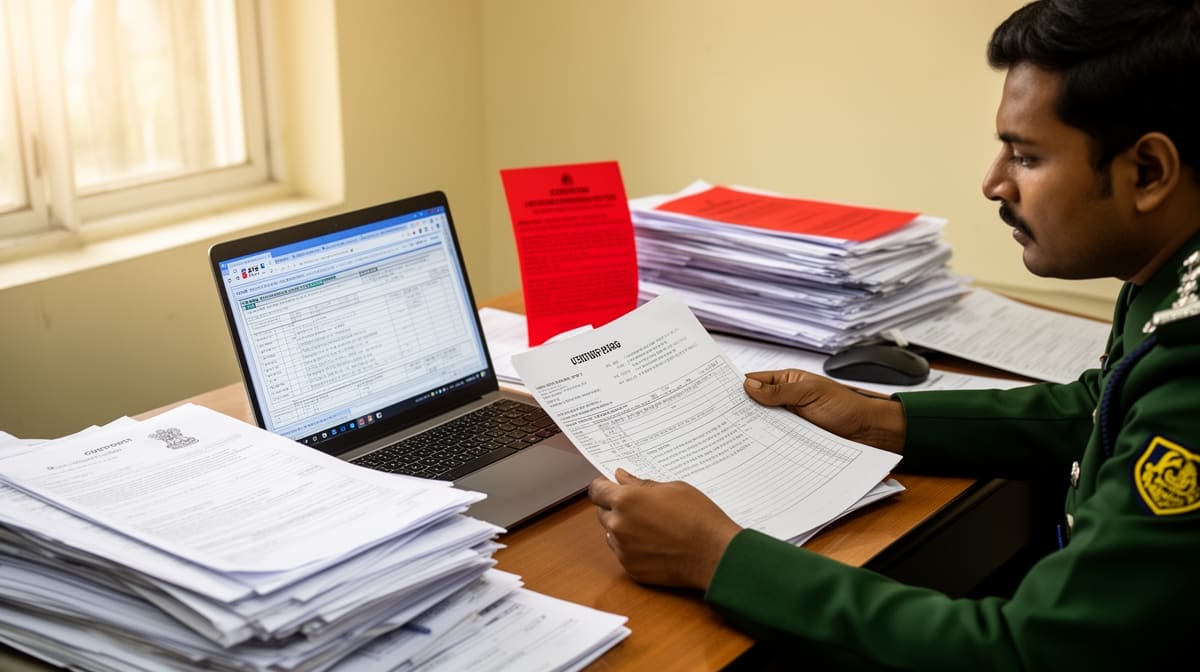
The Himachal Pradesh High Court has clarified that compliance with mandatory procedural requirements for excise inspections is not optional but jurisdictional. In a significant ruling, the Court quashed the cancellation of a distillery’s licenses not on substantive grounds, but due to fundamental violations of statutory procedure governing inspections and adjudication.
Background & Facts
The Dispute
The petitioner, M/s Tiloksons Brewery & Distillery, held multiple licenses under the Himachal Pradesh Excise Act, 2011 for manufacturing Indian Made Foreign Spirit and Country Liquor at its facility in Kala Amb, District Sirmour. The dispute arose after the State authorities cancelled its parent licenses in Forms D-2 and L-11 following a surprise inspection on 04.05.2025, which allegedly revealed unauthorized bottling operations, illegal labels, and storage of contraband materials.
Key Facts
- The petitioner held valid licenses in Forms D-2, L-11, L-1A, L-1C, L-13C, L-15, and L-16 for the financial year 2025-26.
- On 30.04.2025, the Commissioner State Taxes & Excise constituted a team for a surprise inspection of the petitioner’s premises.
- The inspection was conducted on 04.05.2025 at approximately 2:00 a.m. by a team comprising:
- Sh. Himanshu Panwar, Deputy Commissioner, STE, Sirmour
- Sh. Sachin, AC, STE, Nalagarh-II
- Sh. Anurag Garg, AC, STE, Bilaspur
- Sh. Aman Sophat, AC, STE, CZ, Una
- Sh. Kuldeep Singh, AC, STE, Nalagarh-III
- Sh. Manoj Kumar, STEO, CZ, Una
- Sh. Rupinder Singh, STEO, BBN
- Sh. Manoj Sacdeva, ASTEO, SZ, Parwanoo
- No Executive Magistrate or Police Officer of the prescribed rank was present during the inspection.
- The inspection report alleged violations of Sections 39(1)(a), 39(2)(i), and 39(2)(iii) of the HP Excise Act, 2011.
- An FIR No. 67 of 2025 was registered under Sections 318(4), 331(4), 305, and 61(2) of the Bharatiya Nyaya Sanhita, 2023, and Sections 39(1)(i) and 39(2)(i) of the HP Excise Act.
- On 05.05.2025, the Commissioner directed the Collector (Excise) to conduct an administrative inquiry.
- The Collector (Excise) submitted an inquiry report on 07.05.2025 and suspended the STEO Incharge on 13.05.2025.
- Notices were issued to the petitioner on 09.05.2025, 19.05.2025, 24.05.2025, 26.05.2025, and 30.05.2025.
- On 26.05.2025, both the Collector (Excise) and the Commissioner (Excise) issued separate notices for the same violations.
- The petitioner requested the Collector (Excise) to withdraw his notice, citing parallel proceedings by the Commissioner (Excise).
- On 28.05.2025, the Commissioner (Excise) ordered proceedings under Case No. 06/2025 to be kept in abeyance.
- On 02.06.2025, the Collector (Excise) passed an order recommending cancellation of the petitioner’s licenses D-2 and L-11.
- On 04.07.2025, the Commissioner (Excise) cancelled the licenses based on the Collector’s recommendations.
Procedural History
- 04.05.2025: Surprise inspection conducted at petitioner’s premises.
- 05.05.2025: Commissioner directed Collector to conduct administrative inquiry.
- 07.05.2025: Collector submitted inquiry report.
- 13.05.2025: STEO Incharge placed under suspension.
- 09.05.2025: First notice issued to petitioner.
- 19.05.2025: Notice affixed at premises.
- 23.05.2025: Petitioner responded to notice.
- 24.05.2025: Second notice issued.
- 26.05.2025: Two parallel notices issued - one by Collector (Excise), one by Commissioner (Excise).
- 30.05.2025: Petitioner emailed Collector requesting withdrawal of notice due to pending proceedings by Commissioner.
- 28.05.2025: Commissioner ordered proceedings in Case No. 06/2025 to be kept in abeyance.
- 30.05.2025: Collector issued final notice for hearing on 02.06.2025.
- 02.06.2025: Collector passed recommendatory order for cancellation of licenses.
- 04.07.2025: Commissioner cancelled licenses D-2 and L-11.
- 18.06.2025: Writ Petition filed before the High Court.
- 02.04.2026: Judgment delivered.
The Parties' Positions
Petitioner: Argued that the inspection team was illegally constituted under Section 8 of the HP Excise Act, 2011, as it lacked an Executive Magistrate and a Police Officer of the prescribed rank. Further, the Collector (Excise) acted as judge in his own cause by conducting inquiry, recording evidence, and then recommending cancellation to the Commissioner, thereby violating principles of natural justice.
Respondents: Contended that the inspection was valid under Section 10 of the Act, which permits surprise searches without mandatory accompaniment. They also argued that the Collector’s recommendations were merely advisory and did not bind the Commissioner, who acted independently.
Relief Sought
The petitioner sought:
- Quashing of the order dated 04.07.2025 cancelling licenses D-2 and L-11.
- Quashing of the recommendatory order dated 02.06.2025.
- Declaration that the inspection violated the HP Excise Act, 2011 and the 2024 Amendment.
- Mandamus directing the State to permit the petitioner to resume operations.
The Legal Issue
The central question was whether Section 8 of the Himachal Pradesh Excise Act, 2011, as amended in 2024 and governed by Notification dated 26.04.2025, mandates the presence of an Executive Magistrate and a Police Officer of the rank of Deputy Superintendent of Police during a surprise inspection, and whether failure to comply with this requirement vitiates the entire proceeding.
Arguments Presented
For the Petitioner
The petitioner relied on Nazir Ahmad v. King Emperor to argue that where a statutory power is conferred to be exercised in a specific manner, deviation renders the action void. The Notification dated 26.04.2025 explicitly required that any inspection under Section 8 be conducted by an Executive Magistrate (not below Tehsildar) accompanied by an Assistant State Taxes & Excise Officer and a Police Officer not below Deputy Superintendent of Police. The inspection team lacked both. The petitioner further argued that the Collector (Excise) acted as prosecutor, investigator, and recommendatory authority, violating the doctrine of nemo judex in causa sua. The Commissioner’s reliance on the Collector’s report rendered the cancellation order tainted by bias.
For the Respondent
The State contended that the inspection fell under Section 10, which permits unannounced searches without mandatory accompaniment. Even if Section 8 applied, the procedural lapse was technical and did not prejudice the petitioner, as the violations were substantiated by independent evidence including the FIR. The Collector’s recommendations were merely advisory, and the Commissioner independently applied his mind before cancellation.
The Court's Analysis
The Court undertook a detailed analysis of Sections 8, 9, 10, and 6 of the HP Excise Act, 2011, as amended by the 2024 Act, and the Notification dated 26.04.2025. It held that the literal reading of Section 6(1)(ii) and the Notification clearly required the presence of an Executive Magistrate and a Police Officer of the prescribed rank during inspections under Section 8. The Court rejected the State’s argument that Section 10 applied, noting that the inspection was not a search for concealed evidence but a routine inspection of licensed premises, squarely falling under Section 8.
"Where a power has been given to do a certain thing in a certain way, the thing must be done in that way or not at all. Other methods of performance are necessarily forbidden."
The Court further observed that the Collector (Excise) had assumed multiple roles - investigator, fact-finder, and recommendatory authority - while the Commissioner, who held the ultimate power to cancel licenses, deferred to the Collector’s findings. The Collector’s inquiry report and statements were used to support the recommendation, and the Collector later filed a rejoinder before the Commissioner, effectively acting as both witness and advocate. This violated the principle of impartial adjudication.
The Court acknowledged that the petitioner had not demonstrated specific prejudice from the absence of the Magistrate or Police Officer, particularly since an FIR had been registered and the violations were substantiated. However, it emphasized that procedural compliance is not a mere formality but a jurisdictional safeguard. The Court held that the Commissioner’s order was not the product of an independent mind and was therefore unsustainable.
The Verdict
The petitioner succeeded in part. The Court quashed the order dated 04.07.2025 cancelling the petitioner’s licenses in Forms D-2 and L-11. The Commissioner State Taxes & Excise-cum-Financial Commissioner (Excise), H.P., is directed to adjudicate afresh on the notice dated 26.05.2025, without relying on the recommendatory order dated 02.06.2025 or any pleadings submitted by the Collector (Excise). The petitioner shall be granted a reasonable opportunity to present its case. The entire exercise must be completed within two months. The State is directed to ensure future inspection teams strictly comply with the statutory and notification requirements.
What This Means For Similar Cases
Procedural Compliance Is Non-Negotiable
- Practitioners must now treat statutory inspection protocols as jurisdictional, not procedural.
- Any inspection under Section 8 of the HP Excise Act without the mandated Executive Magistrate and Police Officer is void ab initio.
- Even if substantive violations are proven, the absence of prescribed personnel invalidates the entire enforcement chain.
Judge in One’s Own Cause Is Fatal to Administrative Justice
- Administrative authorities cannot investigate, recommend, and then influence the final decision-maker.
- Where a subordinate officer conducts an inquiry and submits findings to a superior, the superior must conduct an independent review - not rubber-stamp.
- Rejoinders filed by the investigating officer before the adjudicating authority constitute a conflict of interest and violate natural justice.
Harmonious Interpretation Overrides Literalism
- Courts will reject interpretations that create absurd distinctions (e.g., allowing police inspectors to act alone but requiring magistrates to be accompanied).
- Statutory amendments must be read to promote accountability and protect licensees, not to create loopholes.
- The presence of multiple agencies during inspections is a safeguard, not a burden.