The Chhattisgarh High Court has clarified that a complainant in a Section 138 NI Act case, though not traditionally entitled to appeal an acquittal, may withdraw an appeal filed under Section 378(4) CrPC and seek liberty to file a fresh appeal under the proviso to Section 372 CrPC, in light of the Supreme Court’s recent ruling in Celestium Financial v. A. Gnanasekaran. This decision aligns with the evolving recognition of the complainant’s status as a victim under the CrPC and BNSS.
Background & Facts
The Dispute
The complainant, Robin Sharma, filed a criminal complaint under Section 138 of the Negotiable Instruments Act, 1881 against Aditya Dixit, alleging dishonour of a cheque issued as payment for a debt or liability. The Judicial Magistrate First Class, Durg, acquitted the accused on 29.08.2018 in Complaint Case No. 7306/2015, holding that the prosecution failed to establish the essential ingredients of the offence beyond reasonable doubt.
Key Facts
- The cheque in question was issued on 12.05.2015 and presented for payment on 18.06.2015
- The cheque was returned unpaid on 20.06.2015 with the reason "sufficient funds not available"
- A legal notice under Section 138 was issued on 25.06.2015, received by the accused on 02.07.2015
- The accused failed to make payment within 15 days of the notice
- The complaint was filed on 15.08.2015
- The trial concluded on 29.08.2018 with the accused’s acquittal
Procedural History
- 15.08.2015: Complaint filed before Judicial Magistrate First Class, Durg
- 29.08.2018: Acquittal order passed by JMFC in Complaint Case No. 7306/2015
- 27.03.2026: Acquittal appeal filed under Section 378(4) CrPC before the Chhattisgarh High Court (ACQA No. 403 of 2018)
- 27.03.2026: Hearing conducted before Justice Radhakishan Agrawal
The Parties' Positions
For the Appellant
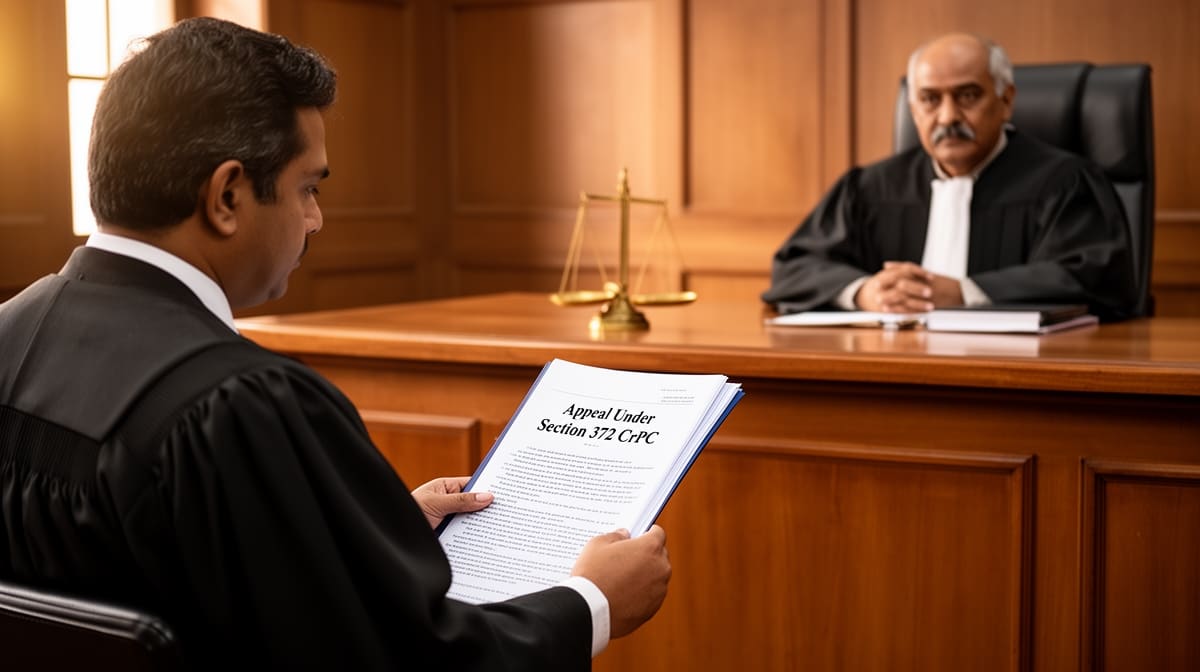
The complainant, through counsel Mr. Praveen Kumar Dhurandhar, argued that the Supreme Court in Celestium Financial v. A. Gnanasekaran (2025 INSC 804) has held that a complainant under Section 138 NI Act qualifies as a "victim" under Section 2(wa) of CrPC (and Section 2(y) of BNSS, 2023). Consequently, the complainant is entitled to file an appeal under the proviso to Section 372 CrPC, which permits a victim to appeal an order of acquittal without requiring prior leave from the High Court.
For the Respondent
Respondent No. 1 (accused) did not appear. Respondent No. 2 (State of Chhattisgarh), through Dy. G.A. Mr. Ram Narayan Sahu, did not oppose the prayer for withdrawal with liberty.
Relief Sought
The appellant sought permission to withdraw the appeal under Section 378(4) CrPC and be granted liberty to file an appeal under the proviso to Section 372 CrPC before the Sessions Judge, contending that such an appeal would not be barred by limitation and must be decided on its merits.
The Legal Issue
Can a complainant in a Section 138 NI Act case, after filing an acquittal appeal under Section 378(4) CrPC, withdraw it and instead file an appeal under the proviso to Section 372 CrPC as a victim, without being barred by limitation?
Arguments Presented
For the Appellant
The appellant’s counsel relied on the Supreme Court’s judgment in Celestium Financial v. A. Gnanasekaran (2025 INSC 804), which held that a complainant under Section 138 NI Act is a "victim" within the meaning of Section 2(wa) of CrPC. The Court further held that such a victim is entitled to file an appeal under the proviso to Section 372 CrPC, which operates independently of Section 378. The counsel submitted that since the Supreme Court expressly granted liberty to the petitioner in that case to file an appeal under Section 372, the same principle must apply here. He argued that the limitation period for filing under Section 372 begins from the date of the acquittal order, and since the appeal under Section 378 was pending, the complainant’s right to appeal under Section 372 remains intact and should not be defeated by technicalities.
For the Respondent
The State did not oppose the prayer. The accused did not appear. No counter-arguments were presented.
The Court's Analysis
The Court acknowledged the landmark nature of the Supreme Court’s ruling in Celestium Financial v. A. Gnanasekaran, which fundamentally altered the procedural standing of complainants in cheque bounce cases. The judgment in that case overruled the earlier position that only the State could appeal an acquittal under Section 378 CrPC, and recognized that the complainant, as a victim, has an independent statutory right to appeal under the proviso to Section 372 CrPC.
"The complainant under Section 138 of the NI Act is a victim as defined under Section 2(wa) of CrPC and is entitled to file an appeal under the proviso to Section 372 CrPC without seeking leave under Section 378."
The Court noted that the appellant had filed the appeal under Section 378(4) before the Supreme Court’s clarification, and therefore, the filing was not an abuse of process but a good faith attempt to challenge the acquittal. The Court held that permitting withdrawal with liberty to appeal under Section 372 would serve the ends of justice and prevent a technical defeat of a substantive right.
The Court further emphasized that the proviso to Section 372 CrPC is a substantive right, not a procedural formality, and that the limitation period for such an appeal is computed from the date of the acquittal order. Since the appeal under Section 378 was pending, the complainant’s right to appeal under Section 372 remained alive and was not extinguished by the pendency of the earlier appeal.
The Verdict
The appeal under Section 378(4) CrPC is withdrawn with liberty to the appellant to file an appeal before the concerned Sessions Judge under the proviso to Section 372 CrPC within 60 days from the date of receipt of a certified copy of this order. The Sessions Judge shall not apply the limitation period strictly and shall decide the appeal on its merits in accordance with law. The certified copy of the acquittal order dated 29.08.2018 shall be returned to the appellant after obtaining an attested photocopy. The record shall be sent back to the JMFC, Durg.
What This Means For Similar Cases
Complainants Are Victims Under CrPC
- Practitioners must now treat complainants in Section 138 cases as victims entitled to appeal acquittals under Section 372 CrPC, without needing leave under Section 378
- Any acquittal appeal filed under Section 378(4) may be withdrawn with liberty to file under Section 372, even if the limitation period has technically expired
- The limitation clock for Section 372 appeals begins from the date of acquittal, not from the date of filing the Section 378 appeal
Procedural Flexibility in Victim Appeals
- Courts must not dismiss appeals under Section 372 on technical grounds of limitation if the complainant acted in good faith and sought redress through the available forum
- The Celestium Financial precedent now binds all High Courts and subordinate courts in India
- Advocates should immediately amend their strategy in pending Section 138 acquittals: file under Section 372, not Section 378, unless the State is the appellant
Strategic Implications for Prosecution
- The State may still file appeals under Section 378, but the complainant’s independent right under Section 372 now creates a parallel remedy
- Defence counsel must now anticipate dual appeals - one from the State and one from the victim - in every Section 138 acquittal
- Courts must ensure that both appeals are heard on their merits, and not merged or dismissed on procedural grounds