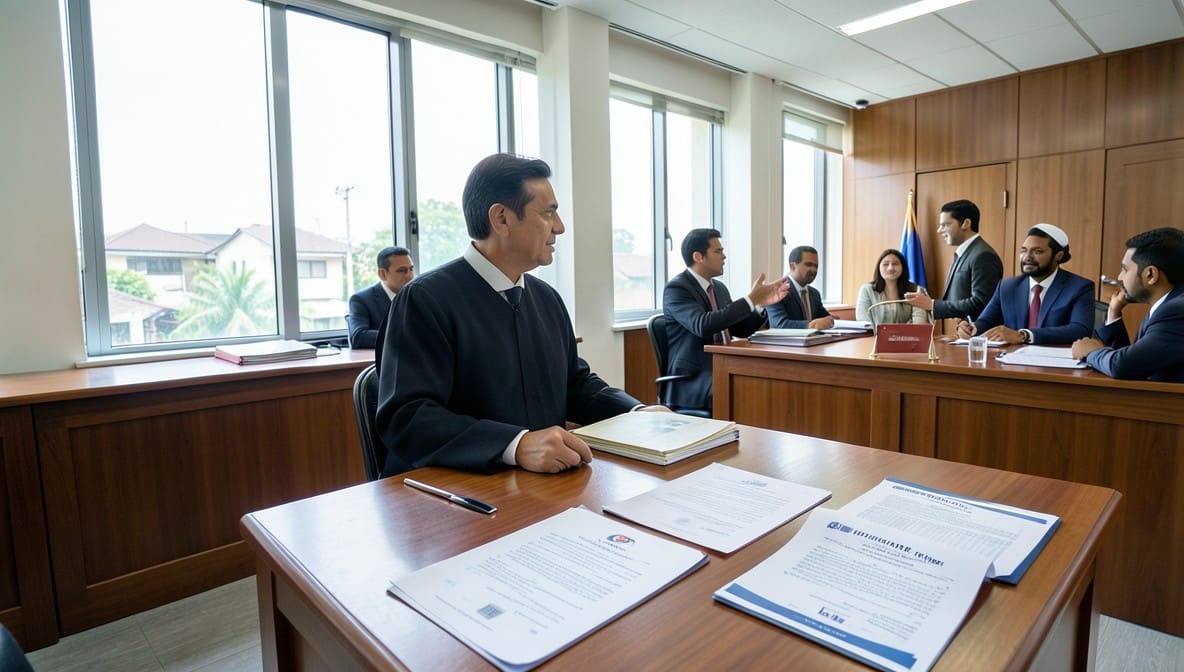
The Delhi High Court has clarified that an order rejecting an application for impleadment of a non-signatory in arbitral proceedings constitutes a ruling on jurisdiction under Section 16 of the Arbitration and Conciliation Act, 1996, and is therefore appealable under Section 37. This decision resolves conflicting High Court precedents and reinforces the principle that arbitral tribunals, not referral courts, are the primary forums to determine whether non-signatories are bound by arbitration agreements.
Background & Facts
The Dispute
The National Highways Authority of India (NHAI) issued a tender in February 2009 for the four-laning of the Muzaffarnagar - Haridwar section of NH-58. ERA Infra Engineering Limited, a public limited company, entered into a Joint Bidding Agreement with OJSC-SIBMOST on 26.03.2009 to bid as a consortium. The consortium was awarded the project on 29.12.2009. Pursuant to clauses 2.2.6(f) and 2.2.6(g) of the Request for Qualifications and the Letter of Acceptance, a Special Purpose Vehicle (SPV) - Haridwar Highway Private Limited - was incorporated on 02.02.2010 under the Companies Act, 1956. A Concession Agreement (CA) dated 24.02.2010 was executed between NHAI and the SPV. An Engineering, Procurement and Construction Agreement (EPC Agreement) was subsequently executed on 14.06.2010 between the SPV and ERA Infra Engineering Limited for project execution.
Disputes arose, and NHAI terminated the CA on 19.06.2019. The SPV initiated arbitration. ERA Infra Engineering Limited, though not a signatory to the CA, filed an application for impleadment before the arbitral tribunal, contending it was a necessary party due to its role in the consortium and its financial and operational involvement in the project.
Key Facts
- Joint Bidding Agreement executed: 26.03.2009
- Consortium awarded project: 29.12.2009
- SPV incorporated: 02.02.2010
- Concession Agreement (CA) executed: 24.02.2010
- EPC Agreement executed: 14.06.2010
- CA terminated by NHAI: 19.06.2019
- Arbitration initiated by SPV: Post-termination
- Application for impleadment filed by ERA Infra: During arbitral proceedings
- Tribunal rejected impleadment application: 30.07.2025
- Appeal filed under Section 37: 2025
- Judgment delivered: 23.03.2026
The CA defined "Parties" as the SPV and NHAI collectively and individually. Clause 47.13 explicitly stated that the CA created no duty or liability in favor of any person not a party. However, Clause 7.1(k) required consortium members to hold at least 51% of SPV’s equity, and Clause 7.1(m) stated that consortium members had requested NHAI to enter into the CA with the SPV and had unconditionally accepted its terms. The EPC Agreement linked termination of the CA to automatic termination of the EPC Agreement. Performance guarantees were furnished by the SPV using ERA Infra’s credit lines. The consortium’s financial backing was integral to project execution.
Procedural History
- 26.03.2009: Joint Bidding Agreement executed
- 29.12.2009: Consortium awarded project
- 02.02.2010: SPV incorporated
- 24.02.2010: Concession Agreement executed between NHAI and SPV
- 14.06.2010: EPC Agreement executed between SPV and ERA Infra
- 19.06.2019: NHAI terminated CA
- Arbitration initiated by SPV: Post-19.06.2019
- Application for impleadment filed by ERA Infra: During arbitral proceedings
- 30.07.2025: Arbitral Tribunal rejected impleadment application
- Appeal filed under Section 37: 2025
- 10.03.2026: Judgment reserved
- 23.03.2026: Judgment pronounced
The Parties' Positions
For the Appellant (ERA Infra Engineering Limited)
ERA Infra contended that it was a necessary party to the arbitration because:
- It was a member of the consortium that bid for and won the project
- The SPV was formed solely to execute the project awarded to the consortium
- It executed the EPC Agreement with the SPV
- It provided financial backing and credit support for performance guarantees
- The CA’s terms, particularly Clause 7.1, bound consortium members to the project’s obligations
- The Supreme Court in ASF Buildtech (P) Ltd. v. Shapoorji Pallonji & Co. (P) Ltd. and Cox & Kings Ltd. v. SAP India (P) Ltd. held that tribunals, not referral courts, must determine whether non-signatories are bound by arbitration agreements
For the Respondent (NHAI)
NHAI contended that:
- ERA Infra was not a signatory to the CA
- The CA defined "Parties" exclusively as NHAI and the SPV
- Clause 47.13 barred any liability or duty towards non-parties
- The tribunal had no jurisdiction to implead a non-signatory
- The rejection of impleadment was a procedural order, not a jurisdictional ruling under Section 16
- Appeals under Section 37 are limited to specified orders and do not include rejection of impleadment applications
Relief Sought
ERA Infra sought:
- Setting aside of the arbitral tribunal’s order dated 30.07.2025 rejecting its application for impleadment
- Direction to implead ERA Infra as a party to the arbitration proceedings
- Clarification that the tribunal has jurisdiction to determine whether non-signatories are bound by the arbitration agreement
The Legal Issue
Is the order of an arbitral tribunal rejecting an application for impleadment of a non-signatory to the arbitration agreement appealable under Section 37(2)(a) of the Arbitration and Conciliation Act, 1996, as a ruling on jurisdiction under Section 16(2) or (3)?
Arguments Presented
For the Appellant
The appellant relied on ASF Buildtech (P) Ltd. v. Shapoorji Pallonji & Co. (P) Ltd. (2025) 9 SCC 76 and Cox & Kings Ltd. v. SAP India (P) Ltd. (2024) 4 SCC 1 to argue that the determination of whether a non-signatory is bound by an arbitration agreement is a jurisdictional question under Section 16. The tribunal’s rejection of impleadment was not a mere procedural denial but a substantive finding that it lacked jurisdiction over ERA Infra. The Supreme Court in ASF Buildtech held that such issues must be decided by the tribunal, and the resulting order must be appealable under Section 37 to avoid rendering the party without a statutory remedy. The appellant emphasized that the tribunal’s reasoning - that it was a "creature of the contract" and should not ordinarily implead non-signatories - constituted a refusal to exercise jurisdiction, which falls squarely within Section 16(2).
For the Respondent
The respondent relied on Hindustan Prefab Ltd. v. M/s NCC Ltd. (2021:DHC:1802) and M/s. Marg Ltd. v. M/s. PGA Trading & Services & Ors. (ARB. Appeal No. 11/25) to argue that rejection of an impleadment application is a procedural order, not a ruling on jurisdiction. It contended that Section 37(2)(a) only permits appeals against orders accepting a plea under Section 16(2) or (3), not rejecting one. The respondent asserted that the tribunal never accepted any plea of lack of jurisdiction; it merely declined to implead on merits. It further argued that allowing appeals against such orders would undermine the principle of minimal judicial intervention under Section 5 of the Act.
The Court's Analysis
The Delhi High Court undertook a comprehensive analysis of Sections 16 and 37 of the Arbitration and Conciliation Act, 1996, in light of binding Supreme Court precedents. The Court observed that Section 16 embodies the doctrine of competence-competence, empowering the arbitral tribunal to rule on its own jurisdiction, including objections relating to the existence or validity of the arbitration agreement and the identity of the parties.
"The issue of determining parties to an arbitration agreement goes to the very root of the jurisdictional competence of the Arbitral Tribunal."
The Court noted that the tribunal’s order, while not using the word "jurisdiction," clearly held that it could not implead ERA Infra because it was not a signatory to the CA and the tribunal was a "creature of the contract." This reasoning directly addressed whether the tribunal had authority over ERA Infra - a quintessential jurisdictional question under Section 16(2). The Court rejected the respondent’s argument that the absence of the word "jurisdiction" in the award was dispositive, stating: "The nature of the issue decided by the tribunal is relevant and not the language used in the award."
The Court distinguished Hindustan Prefab Ltd. and M/s. Marg Ltd., noting that those cases either did not decide the issue or dealt with Section 17, not Section 16. It emphasized that prior Delhi High Court decisions holding impleadment rejections non-appealable were rendered before ASF Buildtech and Cox & Kings, which overruled conflicting views and established that the tribunal is the proper forum to determine non-signatory liability.
The Court further held that denying an appeal under Section 37 would leave ERA Infra without a statutory remedy until after the final award, forcing it to challenge the award under Section 34 - a remedy that is limited in scope and does not permit re-examination of party status. This would defeat the purpose of the Act, which seeks to ensure speedy and efficient dispute resolution.
"The wait for seeking remedy till passing of the award and thereafter in case of success, the entire arbitration exercise to be undertaken de novo would defeat the object of the enactment of the Act..."
The Court concluded that the rejection of the impleadment application was a ruling under Section 16(2) and therefore appealable under Section 37(2)(a).
The Verdict
The appeal was allowed. The Delhi High Court set aside the arbitral tribunal’s order dated 30.07.2025 rejecting the application for impleadment. The Court directed the tribunal to implead ERA Infra Engineering Limited as a party to the arbitration proceedings. The Court clarified that its observations were limited to the issue of impleadment and did not constitute any opinion on the merits of the dispute, which remained for the tribunal to decide independently.
What This Means For Similar Cases
Impleadment Rejections Are Jurisdictional Orders
- Practitioners must now treat any tribunal order rejecting impleadment of a non-signatory as appealable under Section 37(2)(a), not merely procedural
- Applications for impleadment should be framed as jurisdictional pleas under Section 16(2) or (3), not as mere procedural requests
- Tribunals must explicitly record their reasoning on whether they have jurisdiction over the non-signatory, even if denying the application
Non-Signatories Can Be Bound by Arbitration Agreements
- The doctrine of "group of companies" and "composite transactions" applies in Indian arbitration law
- Conduct, financial involvement, and contractual interlinkage are decisive factors, not just signature
- Clause 47.13 or similar "non-party" exclusions cannot override the substantive relationship established by other clauses
- Evidence of performance, credit support, equity holding, and consortium structure must be meticulously documented
Strategic Implications for Arbitration Drafting
- Drafters of concession agreements should explicitly define whether consortium members are bound by arbitration clauses
- Parties should consider including a "non-signatory joinder" clause in consortium agreements
- Parties seeking to avoid impleadment must ensure clear contractual separation and avoid conduct that suggests assumption of obligations