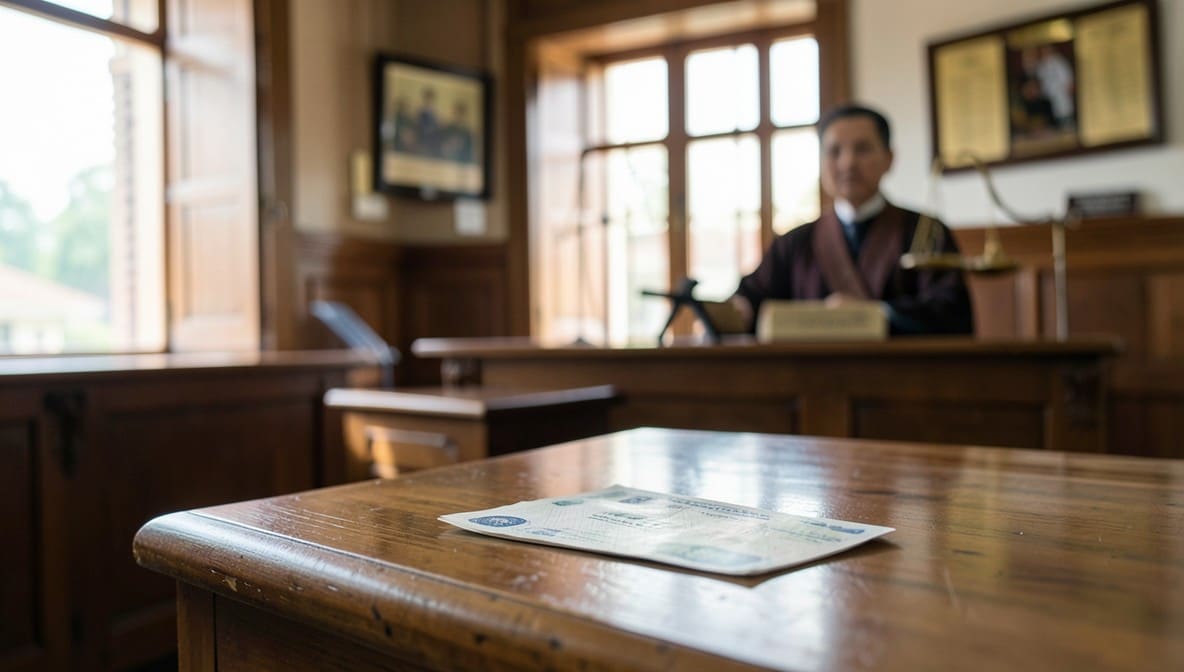
The Punjab & Haryana High Court has affirmed that courts possess inherent authority under Section 348 of the Bharatiya Nagarik Suraksha Sanhita, 2023, to permit additional evidence in criminal trials to rectify inadvertent omissions, ensuring that justice is not defeated by procedural oversight. This ruling reinforces the principle that criminal courts are instruments of justice, not arenas for technical victory.
Background & Facts
The Dispute
The petitioner, Anil Kumar Malhotra, was accused by the respondent, Vijay Kansal, of committing an offence under Section 138 of the Negotiable Instruments Act for issuing a cheque in discharge of a legally enforceable debt that was subsequently dishonoured. The complaint was filed before the Judicial Magistrate First Class, Ludhiana. During the trial, the complainant (CW-1) testified but failed to produce critical documentary evidence supporting the existence of the debt.
Key Facts
- The cheque in question was issued on an unspecified date and presented for payment on an unspecified date, resulting in dishonour.
- During the trial, the complainant (CW-1) deposed that copies of his Income Tax Returns and computation charts were not produced.
- CW-1 also admitted that the ICICI Bank statement of account, which could substantiate the debt, was not produced.
- These omissions were exposed during cross-examination of CW-1.
- The documents sought to be introduced - the bank statement and Income Tax Returns - are objective records that cannot be backdated.
Procedural History
- Date of cheque dishonour: Not specified in judgment, but alleged to have occurred prior to complaint filing.
- Date of complaint filing: Not specified, but trial commenced prior to 05.03.2026.
- Date of CW-1’s testimony: Prior to 05.03.2026.
- 05.03.2026: Trial Court allowed respondent’s application under Section 348 of BNSS to lead additional evidence, including bank statements and Income Tax Returns.
- 17.03.2026: Petitioner filed the present petition under Section 528 of BNSS seeking quashing of the impugned order.
- 24.03.2026: High Court heard arguments and delivered judgment.
The Parties' Positions
Petitioner’s Position: Argued that the trial court’s order permitting additional evidence was an abuse of process, motivated by the complainant’s failure to discharge initial burden. Relied on Andeep Agro Feeds v. Gurmeet Lal to assert that once the defence is opened during cross-examination, the prosecution cannot be permitted to fill gaps.
Respondent’s Position: Contended that the documents sought were genuine, non-manipulable records essential to proving the existence of a legally enforceable debt. Argued that the omission was inadvertent, not intentional, and that permitting evidence would serve the ends of justice.
Relief Sought
The petitioner sought quashing of the trial court’s order dated 05.03.2026 permitting additional evidence, arguing that allowing such evidence would cause irreparable prejudice and violate principles of fair trial.
The Legal Issue
The central question was whether Section 348 of the Bharatiya Nagarik Suraksha Sanhita, 2023 permits a prosecution to lead additional evidence after completion of its case, where the omission was inadvertent and the evidence sought is objective, non-manipulable, and crucial to establishing the existence of a legally enforceable debt under Section 138 of the NI Act.
Arguments Presented
For the Petitioner
The petitioner’s counsel contended that the trial court’s order violated settled principles of criminal procedure. Relying on Andeep Agro Feeds v. Gurmeet Lal, he argued that once the defence is opened during cross-examination and the prosecution’s weaknesses are exposed, permitting additional evidence amounts to allowing the prosecution to correct its own failure, thereby undermining the accused’s right to a fair trial. He emphasized that the documents sought - bank statements and tax returns - could have been produced during the prosecution’s case and their omission was not inadvertent but strategic.
For the Respondent
The respondent argued that the documents sought were not fabricated or created post hoc, but authentic records that could not be altered retroactively. He submitted that the failure to produce them was an oversight, not a deliberate omission, and that their exclusion would result in a miscarriage of justice. He relied on Rajendra Prasad v. Narcotic Cell, Delhi to assert that courts must be magnanimous in permitting correction of inadvertent errors to ensure a just outcome.
The Court's Analysis
The High Court undertook a detailed examination of the purpose and scope of Section 348 of BNSS, which empowers the court to permit additional evidence at any stage of trial if deemed necessary for a just decision. The Court rejected the petitioner’s reliance on Andeep Agro Feeds, distinguishing it on facts. In that case, the prosecution sought to introduce evidence after the defence had closed, and the court found the application mala fide. Here, the evidence sought - bank statements and Income Tax Returns - were objective records whose authenticity could not be questioned.
"No party in a trial can be foreclosed from correcting errors. If proper evidence was not adduced or a relevant material was not brought on record due to any inadvertence, the court should be magnanimous in permitting such mistakes to be rectified. After all, function of the criminal court is administration of criminal justice and not to count errors committed by the parties or to find out and declare who among the parties performed better."
The Court emphasized that the core issue in a Section 138 NI Act case is the existence of a legally enforceable debt. The bank statement and tax returns were directly relevant to establishing this element. The Court noted that the complainant had not concealed the documents; they were simply not produced during the initial stage due to oversight. The Court further held that allowing such evidence would not prejudice the petitioner, as the documents were not susceptible to manipulation and would only serve to clarify the factual matrix.
The Court also reaffirmed the principle from Rajendra Prasad that criminal courts are not adjudicators of procedural perfection but instruments of substantive justice. The trial court’s decision to permit additional evidence was therefore neither arbitrary nor illegal.
The Verdict
The petition was dismissed. The High Court upheld the trial court’s order dated 05.03.2026 permitting the respondent to lead additional evidence under Section 348 of BNSS. The Court held that the documents sought - the ICICI Bank statement and Income Tax Returns - were essential to determining the existence of a legally enforceable debt and that their admission would not prejudice the petitioner. No costs were awarded. All pending applications were disposed of.
What This Means For Similar Cases
Additional Evidence Is Not a Procedural Loophole
- Practitioners must now argue that Section 348 BNSS is a tool for justice, not a mechanism for tactical advantage.
- Courts will permit additional evidence if it is objective, non-manipulable, and directly relevant to a material issue, even if omitted during the prosecution’s case.
- Mere delay or failure to produce evidence does not automatically disqualify its admission if the omission was inadvertent.
The Burden of Proving Debt in Section 138 Cases Is Substantive, Not Technical
- In Section 138 NI Act cases, courts will prioritize the substantive question of debt over procedural formalities.
- Documentary evidence such as bank statements, tax returns, and ledger entries are now more likely to be admitted even if produced late, provided their authenticity is verifiable.
- Defence counsel must focus on challenging the authenticity or relevance of such evidence, not merely its timing.
Procedural Fairness Requires Judicial Magnanimity
- The judgment reinforces that criminal courts must avoid becoming arbiters of procedural perfection.
- Advocates should proactively identify potential evidentiary gaps early and seek court permission to rectify them under Section 348 BNSS rather than risk dismissal on technical grounds.
- This ruling discourages opportunistic challenges to evidence admission and promotes resolution on merits.