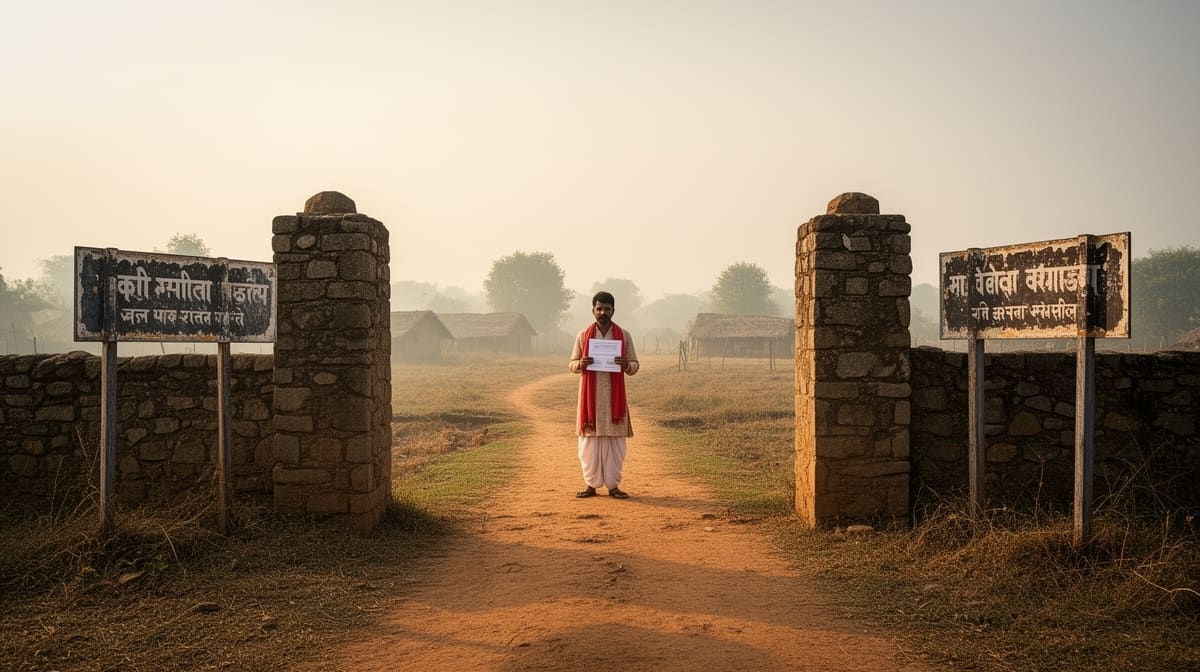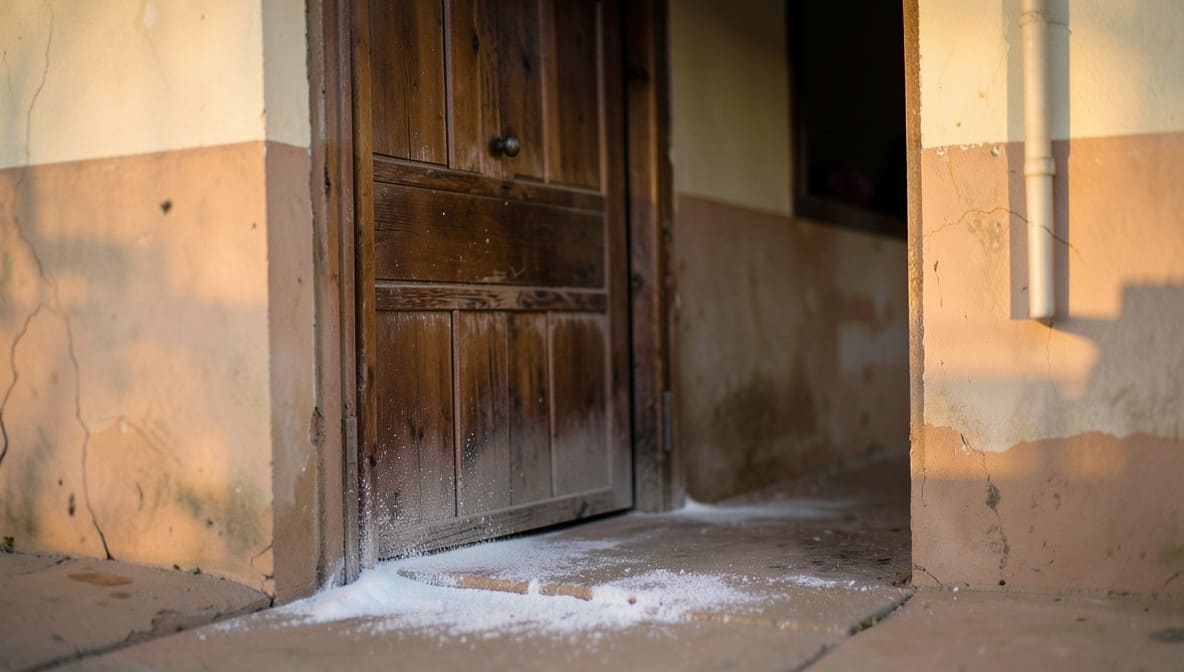
The Bombay High Court has clarified that mere sprinkling of white mustard at a residence, without any allegation of supernatural claim, exploitation, or intent to instill fear, does not constitute an offence under the Maharashtra Prevention and Eradication of Human Sacrifice and Other Inhuman, Evil and Aghori Practices and Black Magic Act, 2013. The Court quashed the FIR and charge-sheet, emphasizing that the Act targets malicious exploitation through claimed supernatural powers, not isolated superstitious acts.
Background & Facts
The Dispute
The applicant, Gajanan Kashiram Shekokar, aged 65, was named as the accused in FIR No. 0343/2025 registered on 20.06.2025 at Police Station CIDCO, Aurangabad, under Section 3(2) of the Maharashtra Prevention and Eradication of Human Sacrifice and Other Inhuman, Evil and Aghori Practices and Black Magic Act, 2013. The complaint was filed by Respondent No. 2, Subhash S/o Baliram Pinjarkar, who alleged that on the morning of 11.06.2025, he found white mustard sprinkled in front of his house door. He claimed to have reviewed CCTV footage from his neighbor Mr. Ramrao Kakde’s camera, which showed a person wearing a helmet riding a motorcycle with registration number MH-20-BE-8092, which was registered in the applicant’s name. A similar incident was reported at the residence of Smt. Jyoti Shrirang Wadhekar, a relative of the complainant.
Key Facts
- The alleged act occurred between the night of 10.06.2025 and the morning of 11.06.2025.
- The complainant did not allege any verbal threat, financial demand, physical harm, or claim of supernatural power by the applicant.
- The motorcycle registration number was the sole basis for identifying the applicant as the accused.
- No statement from Mr. Ramrao Kakde, the owner of the CCTV camera, was recorded or included in the charge-sheet.
- The charge-sheet dated 09.08.2025 did not contain any evidence linking the applicant to the act beyond the motorcycle registration.
- A parallel matrimonial dispute between the applicant’s son and his ex-wife was settled by compromise in Family Court Appeal No. 83/2024 on 23.06.2025.
- The FIR was registered on 20.06.2025, just three days after the compromise.
Procedural History
- 11.06.2025: Alleged incident of white mustard sprinkling reported by Respondent No. 2.
- 20.06.2025: FIR No. 0343/2025 registered under Section 3(2) of the Act of 2013.
- 09.08.2025: Charge-sheet No. 453/2025 filed by the police.
- 15.08.2025: RCC No. 3181/2025 registered before Judicial Magistrate First Class, Aurangabad.
- 10.09.2025: Criminal Application No. 3109 of 2025 filed before the Bombay High Court seeking quashment of FIR and charge-sheet.
- 06.04.2026: Application reserved for judgment.
- 20.04.2026: Judgment pronounced.
The Parties' Positions
For the Applicant: The applicant’s counsel contended that the act of sprinkling white mustard, without any allegation of invoking supernatural powers, creating fear, or causing harm, does not meet the statutory definition of black magic under the Act. She further argued that the identification of the applicant was speculative, based solely on motorcycle registration, and unsupported by witness testimony. She submitted that the FIR was filed with mala fide intent to harass the applicant during an ongoing family dispute.
For the Respondent/State: The Additional Public Prosecutor and the advocate for Respondent No. 2 argued that the act of sprinkling mustard, coupled with the timing and context of a family dispute, raised suspicion of black magic practices. They contended that the investigation was sufficient to proceed to trial and that the Court should not interfere at the pre-trial stage.
Relief Sought
The applicant sought quashment of FIR No. 0343/2025 and Charge-sheet No. 453/2025 under Section 482 of the Code of Criminal Procedure, 1973, and cancellation of RCC No. 3181/2025.
The Legal Issue
The central question was whether the act of sprinkling white mustard at a residence, without any allegation of claiming supernatural powers, inducing fear, or causing harm, constitutes an offence under Section 3(2) of the Maharashtra Prevention and Eradication of Human Sacrifice and Other Inhuman, Evil and Aghori Practices and Black Magic Act, 2013.
Arguments Presented
For the Appellant/Petitioner
The applicant’s counsel relied on the definition of "black magic" under Section 2(1)(b) of the Act, which incorporates only those acts listed in the Schedule, including inducing belief in supernatural influence, terrorizing persons, or defrauding them through claimed miracles. She argued that none of these elements were present. She cited State of Haryana v. Bhajanlal to show that where the allegations, even if accepted at face value, do not constitute an offence, the Court may exercise inherent powers under Section 482 CrPC to quash proceedings. She emphasized the absence of any statement from the CCTV owner, the lack of motive beyond a settled matrimonial dispute, and the timing of the FIR immediately after the compromise.
For the Respondent/State
The State contended that the act of sprinkling mustard, in the context of a family feud, could reasonably be interpreted as an attempt at black magic. It argued that the investigation had established a prima facie case through the CCTV footage and registration details, and that the Court should not interfere before trial. No specific statutory interpretation or precedent was cited beyond general assertions of public interest in curbing superstition.
The Court's Analysis
The Court undertook a detailed textual analysis of Section 3(2) and the definition of "human sacrifice and other inhuman, evil and aghori practices and black magic" under Section 2(1)(b). It noted that the Schedule to the Act enumerates specific acts such as claiming to perform surgery by fingers, prohibiting medical treatment, or creating panic by invoking mantras - all of which involve deception, exploitation, or terror through claimed supernatural authority.
"The careful reading of wordings in sub-section (2) of Section 3 depict that what is made punishable under this provision is any act of human sacrifice, evil and aghori practices and black magic by any person by himself or through any other person."
The Court observed that the mere act of sprinkling white mustard, without any accompanying claim of supernatural power, intent to harm, or psychological coercion, cannot be brought within the ambit of the Act. It held that the Schedule is exhaustive and that the act complained of does not fall within any of its listed categories.
The Court further noted the absence of any corroborative evidence: the CCTV footage was not recorded or submitted by the owner, Mr. Kakde, and no witness identified the rider. The sole link to the applicant was the motorcycle registration, which is insufficient to establish identity.
The Court also examined the timing of the FIR - filed three days after a family dispute was settled - and found a clear semblance suggesting mala fide intent. It applied the principles from State of Haryana v. Bhajanlal, particularly clauses (1), (3), and (7), which permit quashment where:
"(1) Where the allegations made in the first information report or the complaint, even if they are taken at their face value and accepted in their entirety do not prima facie constitute any offence... (3) Where the uncontroverted allegations... do not disclose the commission of any offence... (7) Where a criminal proceeding is manifestly attended with mala fide..."
The Court concluded that the FIR and charge-sheet failed to disclose any offence under the Act and were instituted with an ulterior motive.
The Verdict
The applicant succeeded. The Court quashed FIR No. 0343/2025, Charge-sheet No. 453/2025, and RCC No. 3181/2025. The proceedings against the applicant under the Maharashtra Anti-Black Magic Act, 2013, were permanently cancelled. No further action shall be taken on the basis of the impugned FIR or charge-sheet.
What This Means For Similar Cases
Black Magic Requires Supernatural Claim, Not Just Superstition
- Practitioners must now distinguish between superstitious acts and legally cognizable "black magic" under the Act.
- Mere acts like sprinkling herbs, tying threads, or placing objects at doorsteps cannot be prosecuted unless tied to a claim of supernatural power or intent to terrorize.
- Prosecutors must plead specific elements from the Schedule to the Act; generic allegations will not suffice.
Identity Must Be Corroborated, Not Assumed
- Relying solely on vehicle registration to identify an accused in a criminal case is legally insufficient.
- Courts will require independent corroboration, such as witness testimony or forensic evidence, to establish identity.
- In cases involving CCTV footage, the custodian’s statement must be recorded and produced.
Mala Fide FIRs in Family Disputes Will Be Quashed
- The Court has affirmed that criminal proceedings initiated to harass parties during or after civil settlements are abuse of process.
- Timing of FIRs relative to civil compromises is now a relevant factor in assessing mala fide intent.
- Lawyers should routinely raise Bhajanlal grounds when FIRs appear retaliatory or disproportionate to the alleged act.