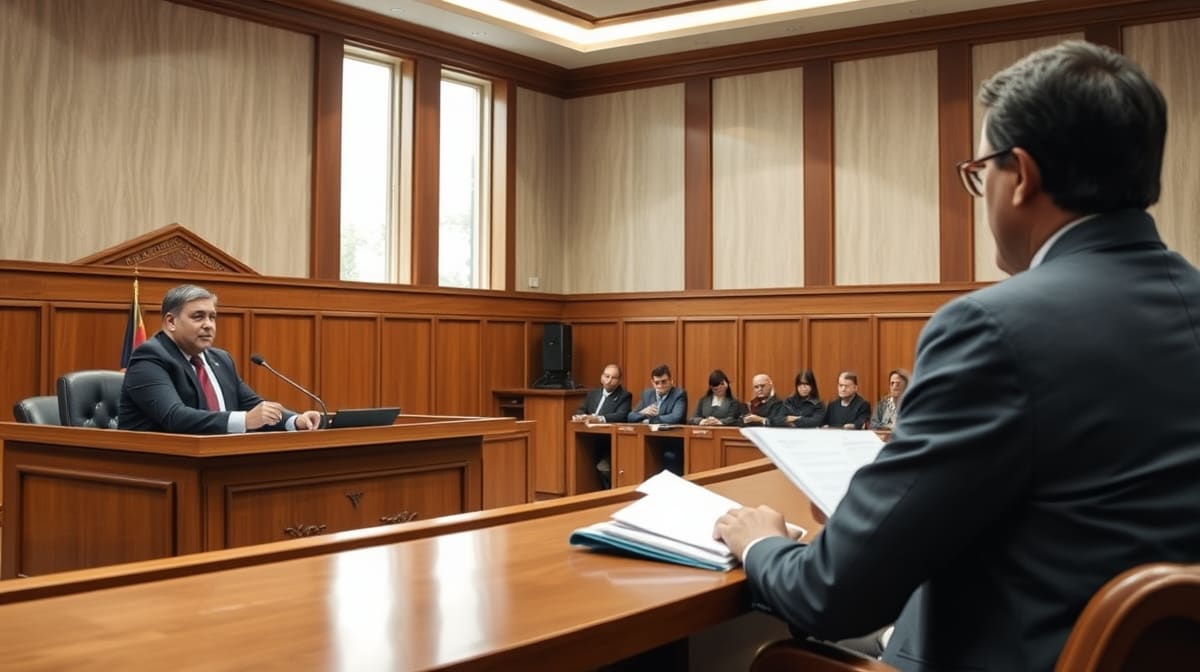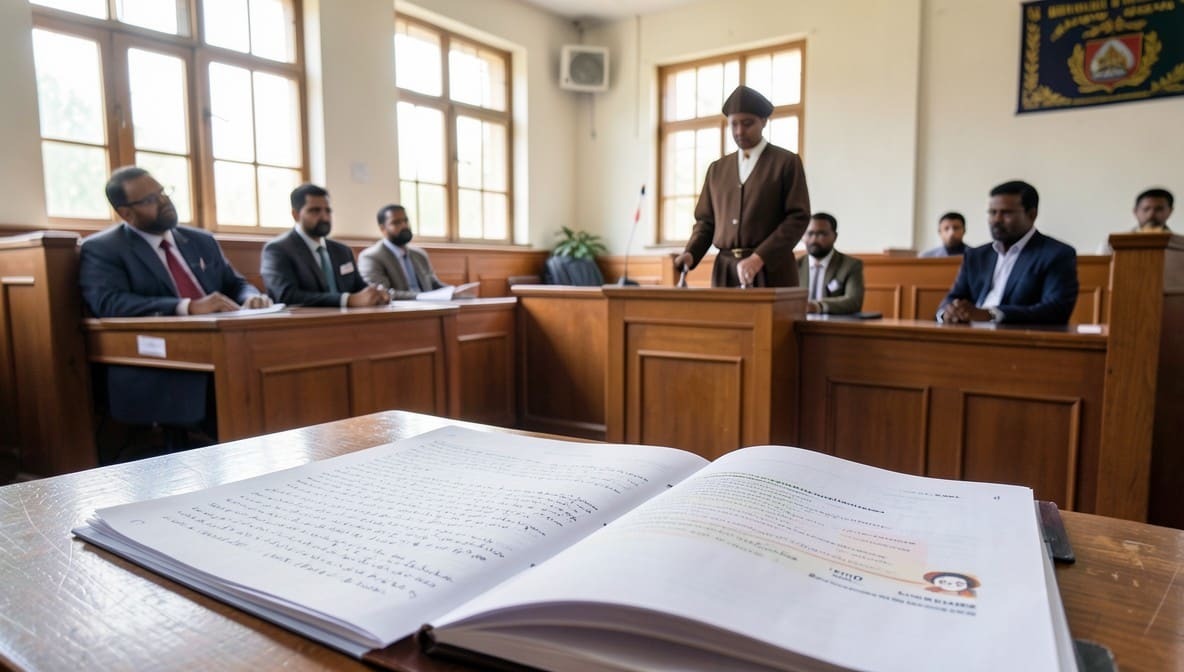
The Allahabad High Court has reaffirmed that the power under Section 319 CrPC to summon additional accused persons is not a routine procedural tool but a judicial safeguard requiring strong, cogent evidence emerging from trial testimony. This ruling clarifies the threshold for invoking extraordinary powers to expand the array of accused beyond those named in the FIR or charge sheet.
Background & Facts
The Dispute
The dispute arises from a violent incident on 11.08.2020 at around 9:30 am in the village of Harpur Budhat, District Gorakhpur, during a panchayat meeting concerning land partition between Ramashankar and Ramashish. The informant, Jaygovind Yadav, and his family were present at their home adjacent to the gathering. His father, Kamla Yadav, stood near the veranda, attempting to mediate the dispute. In a sudden escalation, the revisionists - Motilal, Ashok, and Pawan - and thirteen others allegedly became enraged, began hurling abuses at Kamla Yadav, and launched a violent assault using sticks, iron rods, hockey sticks, axes, and spears. Shriram @ Santosh, armed with a licensed firearm belonging to Paras Yadav, joined the attack. Kamla Yadav was beaten to death on the spot.
Upon hearing the commotion, Jaygovind Yadav, his sisters Shakuntala and Ritu, and Neetu rushed out to intervene. All accused persons, including the revisionists, then stormed into the family home, continued the assault, and threatened to kill Jaygovind and his family, uttering statements such as, "We have already killed his father; now we must finish him off as well." The family retreated inside, sustaining injuries. The accused fled after the violence.
Key Facts
- The incident occurred on 11.08.2020 at approximately 9:30 am
- Case Crime No. 392 of 2020 was registered at Police Station Harpur Budhat on the same day
- The FIR named Paras Yadav and others as accused but did not include Motilal, Ashok, or Pawan
- The charge sheet filed by the Investigating Officer did not array Motilal, Ashok, or Pawan as accused
- The prosecution examined five witnesses: PW1 (Jaygovind Yadav), PW2 (Bindu Devi), PW3 (Shakuntala), PW4 (Neetu), and PW5 (Ritu)
- PW1, PW3, PW4, and PW5 all testified in court that Motilal, Ashok, and Pawan were actively involved in the assault both outside and inside the house
- The Investigating Officer recorded statements under Section 161 CrPC from the informant and independent witnesses, but none of these statements formed the basis for summoning under Section 319 CrPC
Procedural History
- 11.08.2020: Incident occurred at Harpur Budhat, Gorakhpur
- 11.08.2020: FIR registered as Case Crime No. 392 of 2020
- [Date unspecified]: Charge sheet filed naming Paras Yadav and others, excluding Motilal, Ashok, and Pawan
- [Date unspecified]: Trial commenced in Sessions Trial No. 582 of 2022
- 22.08.2025: Additional Sessions Judge/Special Judge (Anti-Corruption Act), Gorakhpur, allowed application under Section 319 CrPC to summon Motilal, Ashok, and Pawan as additional accused
- 29.09.2025: Motilal filed Criminal Revision No. 6034 of 2025
- 29.09.2025: Ashok filed Criminal Revision No. 5736 of 2025
- 08.04.2026: Judgment reserved
- 29.04.2026: Judgment delivered by the Allahabad High Court
The Parties' Positions
For the Revisionists (Motilal, Ashok, Pawan)
- Argued that no specific role was established against them in the testimony of PW1 and PW4
- Contended that the incident occurred suddenly during a public gathering, making collective liability under Sections 147, 148, and 149 IPC untenable
- Asserted that the court below ignored the Investigating Officer’s assessment, which had dropped them from the charge sheet
- Claimed that summoning them violated the principle that Section 319 CrPC cannot be invoked based on suspicion or mere inclusion in the FIR
For the Respondent (State and Informant)
- Submitted that the testimony of PW1, PW3, PW4, and PW5 clearly implicated Motilal, Ashok, and Pawan in the assault
- Emphasized that the evidence adduced in court, not the charge sheet or FIR, is the sole basis for invoking Section 319 CrPC
- Argued that the court below correctly applied the standard laid down in Hardeep Singh v. State of Punjab and Omi @ Omkar Rathore v. State of Madhya Pradesh
- Stated that the revisionists’ exclusion from the charge sheet does not bar their addition if trial evidence establishes complicity
Relief Sought
The revisionists sought quashing of the order dated 22.08.2025 summoning them as accused under Section 319 CrPC, arguing that the order was illegal, arbitrary, and contrary to settled law.
The Legal Issue
The central question was whether the court below correctly applied the legal standard under Section 319 CrPC to summon Motilal, Ashok, and Pawan as additional accused, given that their involvement was not reflected in the FIR or charge sheet but was alleged in the testimony of prosecution witnesses.
Arguments Presented
For the Appellant/Petitioner
The revisionists relied on Hardeep Singh v. State of Punjab and Omi @ Omkar Rathore v. State of Madhya Pradesh to argue that Section 319 CrPC requires evidence that is not merely probable but strong and cogent - significantly beyond the prima facie standard for framing charges. They contended that the testimony of PW1 and PW4 was vague and lacked specificity regarding their individual roles. They further argued that the Investigating Officer’s decision to exclude them from the charge sheet should carry weight, and that the court below erred by disregarding the investigative record. They asserted that summoning them amounted to a premature trial within a trial, violating the principle that Section 319 is not meant for speculative additions.
For the Respondent/State
The State and informant countered that the evidence adduced in court - specifically the consistent testimonies of PW1, PW3, PW4, and PW5 - clearly placed Motilal, Ashok, and Pawan at the scene, actively participating in the assault both outside and inside the house. They emphasized that Section 319 CrPC is not bound by the Investigating Officer’s conclusions or the contents of the charge sheet. Citing Shivbaran v. State of U.P., they argued that the court’s duty is to ensure no guilty person escapes justice, and that the standard under Section 319 is not whether conviction is certain, but whether the evidence, if unrebutted, would lead to conviction. They maintained that the court below correctly applied the law and that the revisionists’ exclusion from the charge sheet was irrelevant.
The Court's Analysis
The Court undertook a detailed review of the evidence recorded during the trial, particularly the testimonies of PW1 (Jaygovind Yadav), PW3 (Shakuntala), PW4 (Neetu), and PW5 (Ritu). All four witnesses, despite being family members, provided consistent and corroborative accounts of the revisionists’ active participation in the assault. PW1 described Motilal, Ashok, and Pawan as part of the group that stormed the house, beat the family, and threatened to kill them. PW3 and PW4 corroborated this, identifying them by name and describing their actions during the attack.
The Court rejected the revisionists’ argument that the Investigating Officer’s decision to exclude them from the charge sheet should preclude their summoning. Quoting Omi @ Omkar Rathore, the Court held:
"The trial court can take such a step to add such persons as accused only on the basis of evidence adduced before it and not on the basis of materials available in the charge sheet or the case diary, because such materials contained in the charge sheet or the case diary do not constitute evidence."
The Court further emphasized that the power under Section 319 CrPC is not governed by whether a person was named in the FIR. It noted that the revisionists were not merely named in the FIR but were directly implicated by multiple eyewitnesses whose testimony was recorded under Section 164 CrPC and examined in court.
The Court applied the test from Hardeep Singh: the evidence must be more than a prima facie case required for framing charges, but need not reach the level of proof beyond reasonable doubt. The Court found that the testimonies, if unrebutted, would likely lead to conviction under Sections 147, 148, 149, 302, and 323 IPC. The Court observed that the Additional Sessions Judge had not acted cavalierly but had applied judicial scrutiny to the evidence.
The Court also dismissed the argument that the sudden nature of the incident negated individual liability. It held that participation in a common object under Section 149 IPC does not require proof of a specific act if the person was present and shared the common intention.
The Verdict
The revisionists’ petitions were dismissed. The Allahabad High Court upheld the order dated 22.08.2025 summoning Motilal, Ashok, and Pawan as additional accused under Section 319 CrPC. The Court confirmed that the evidence adduced in court - specifically the consistent testimonies of PW1, PW3, PW4, and PW5 - met the threshold of strong and cogent evidence required under Section 319 CrPC. The trial shall proceed against them for offences under Sections 147, 148, 149, 302, 307, 308, 325, 452, 323, 504, and 506 IPC.
What This Means For Similar Cases
Evidence at Trial Trumps Investigative Discretion
- Practitioners must now argue that the Investigating Officer’s decision to drop an accused from the charge sheet is irrelevant if trial testimony clearly inculpates them
- Section 319 CrPC applications must be evaluated solely on the basis of evidence recorded in court, not on investigative reports or FIR contents
- Prosecutors should prioritize securing detailed, consistent eyewitness testimony to support applications under Section 319 CrPC
The Threshold Is Higher Than Prima Facie, Lower Than Conviction
- The standard under Section 319 CrPC is not "probable guilt" but "strong and cogent evidence" that, if unrebutted, would lead to conviction
- Courts must avoid conducting a mini-trial; however, they must scrutinize witness credibility and consistency
- Vague or general allegations will not suffice - specific identification and participation must be established
Collective Liability Under Section 149 IPC Is Not a Shield for Non-Participants
- Presence at the scene of a violent mob incident, coupled with active participation in the assault, satisfies the requirement of common intention
- Even if the initial act was spontaneous, continued participation and threats after the killing establish liability under Section 149 IPC
- Defense arguments based on "sudden outbreak" cannot automatically absolve individuals who actively joined the violence