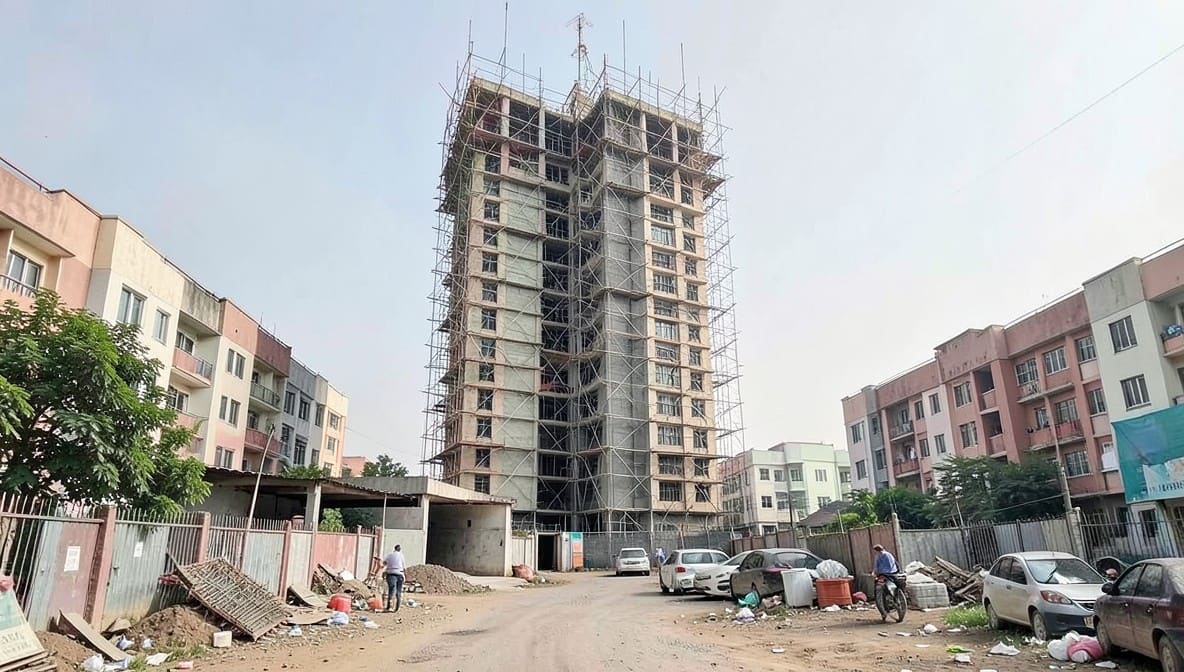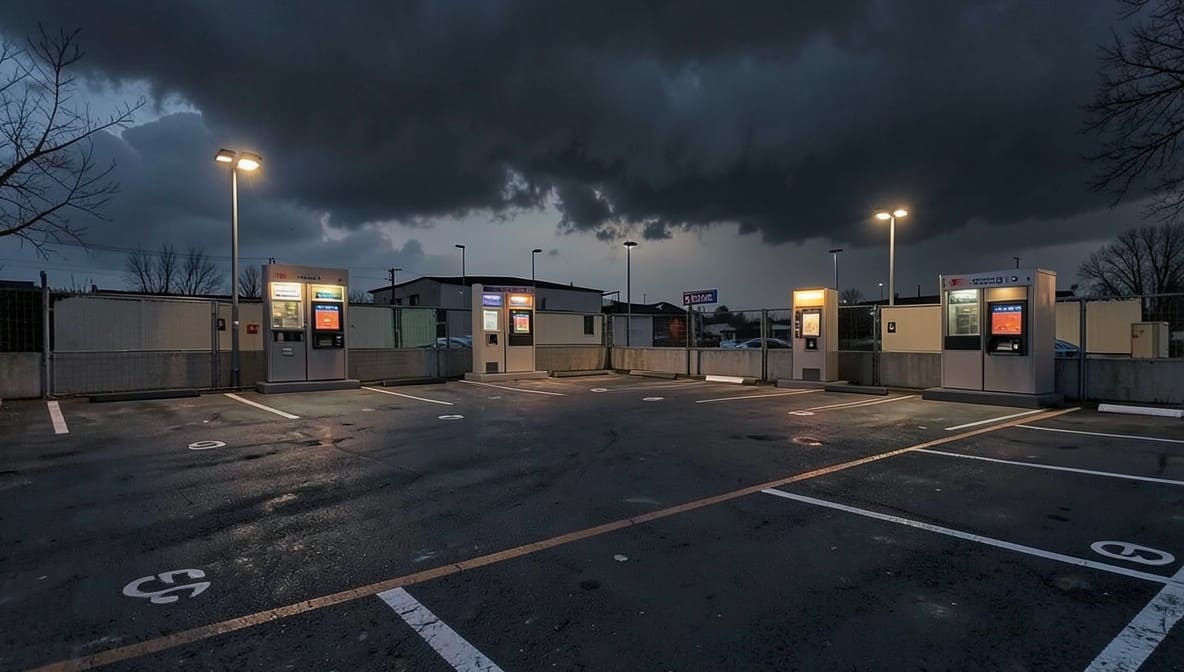
The Punjab and Haryana High Court has clarified that a Collector adjudicating stamp duty under Section 31 of the Indian Stamp Act, 1899 lacks jurisdiction to impose penalties or direct recovery of deficient duty, limiting the role to determination of the proper duty payable. The Court also affirmed that parking contracts awarded by municipal corporations constitute leases under Section 2(16)(c) of the Act, as they involve letting of tolls of any description.
Background & Facts
The Dispute
The petitioner, Ram Sunder Prasad Singh, emerged as the highest bidder for the operation and management of 32 paid parking sites in Chandigarh, with a bid of ₹5,01,03,001 per annum against a reserve price of ₹2.12 crores per annum. A Letter of Intent was issued on 16.01.2020, and the petitioner furnished three bank guarantees each equivalent to 10% of the annual bid amount. The petitioner was required to execute a licence deed on stamp paper within fifteen days but failed to do so, leading to a show-cause notice dated 08.07.2020 and a subsequent communication dated 07.07.2021.
Key Facts
- The petitioner executed the licence deed on 16.07.2021, affixing stamp duty of ₹3,34,020 and registering it before the Sub-Registrar, Chandigarh
- The original licence deed was deposited with the Municipal Corporation, Chandigarh (MCC) as per tender conditions
- The parking contract was set to expire on 31.01.2023
- During audit, the MCC Audit Department found a misleading recital in the licence deed stating the annual rent as ₹1,67,01,000 (approx.) instead of the correct average annual value
- The Joint Commissioner, MCC impounded the instrument on 16.05.2023 under Section 33 of the Stamp Act and forwarded it to the Collector for adjudication
- The Collector, vide order dated 26.09.2024, determined the deficient stamp duty at ₹7,93,298 and imposed a penalty of 50% (₹3,96,649), directing recovery of ₹11,89,947
Procedural History
- 16.01.2020: Letter of Intent issued to petitioner as highest bidder
- 08.07.2020: Show-cause notice issued for non-execution of licence deed
- 07.07.2021: MCC communication calling for licence deed execution
- 16.07.2021: Licence deed executed and registered with stamp duty of ₹3,34,020
- 31.01.2023: Parking contract expired
- 16.05.2023: Joint Commissioner, MCC impounded the instrument under Section 33
- 26.09.2024: Collector passed impugned order determining deficiency and imposing penalty
- 2024: Writ petition (CWP-34700-2024) filed before Punjab and Haryana High Court
- 04.08.2026: Matter reserved for judgment
- 10.08.2026: Judgment pronounced
Relief Sought
The petitioner sought quashing of the Collector's order dated 26.09.2024, contending that the instrument was a simpliciter operation and management agreement attracting stamp duty of ₹15 under Article 5(d) of Schedule I-A, that the Joint Commissioner lacked jurisdiction to impound after contract expiry, and that the Collector had no power to impose penalty or direct recovery under Section 31.
The Legal Issue
The Court framed five issues: (i) Whether the instrument is a simpliciter operation and management agreement or a lease deed; (ii) Whether the Joint Commissioner became functus officio upon expiry of the licence agreement on 31.01.2023, given impounding occurred on 16.05.2023; (iii) Whether the Joint Commissioner's opinion on insufficiency of stamp duty is grounded in reasons; (iv) Whether the Joint Commissioner holds a public office within the meaning of Section 33; (v) Whether the Collector under Section 31 is competent to impose penalty and enforce recovery of deficient stamp duty.
Arguments Presented
For the Petitioner
Counsel contended that at registration, the Sub-Registrar raised no objection to stamp duty sufficiency. The instrument was a mere operation and management agreement falling under Article 5(d) of Schedule I-A attracting ₹15 stamp duty. The Collector's finding that it is a lease deed was assailed, arguing nomenclature is not determinative and true nature must be gathered from contents. The Audit Department lacks statutory power under the Stamp Act to determine instrument nature or duty quantum. The communication dated 05.04.2023 requesting recovery was without jurisdiction as the licence agreement expired on 31.01.2023, rendering the Joint Commissioner functus officio. No determination under Section 33(3) declared MCC a public office or the Joint Commissioner a person in charge thereof. No opinion on insufficiency was recorded before impounding. Under Section 38(2), the original instrument must be forwarded to the Collector; since only a photocopy was sent, proceedings are vitiated, relying on Hariom Agrawal vs. Prakash Chand Malviya, AIR 2008 SC 166. The Collector under Section 31 cannot impose penalty or enforce recovery, relying on Government of Uttar Pradesh vs. Raja Mohammad Amir Ahmad Khan, AIR 1961 SC 787 and M. Chowdhury vs. Collector of Stamps, Delhi, (1970) ILR 1 Delhi 606.
For the Respondents
Counsel submitted that the petitioner, as highest bidder, was required to execute the licence deed after confirming stamp paper value from the Sub-Registrar. The Sub-Registrar opined that if treated as a service agreement, stamp duty was 3% of consideration plus ₹10,020 registration charges; if a lease deed, 2% on average annual rent plus 3% on security amount. Parking contracts attract stamp duty as lease deeds. The petitioner does not dispute liability, only quantum. The petitioner deliberately misdescribed the value to evade proper duty. The Audit Department raised objection, placed it before the Joint Commissioner, who formed an opinion and impounded under Section 33. The instrument falls within the definition of "lease" under Section 2(16) which includes "any instrument by which tolls of any description are let." Reliance was placed on Nasiruddin vs. State of Uttar Pradesh, 2018(1) RCR (Civil) 1004, holding that contracts for collection of tolls/parking fees amount to a lease.
The Court's Analysis
On Issue (i), the Court examined the factual matrix: MCC invited bids for operation and management of 32 paid parking sites for three years. The petitioner, as highest bidder, was given possession. The tender required execution of a Memorandum of Understanding/Licence Deed. The Court referred to Section 2(16) of the Stamp Act, which defines "lease" to include "any instrument by which tolls of any description are let." Reading the facts with this definition, the Court concluded the parking sites were leased out through the instrument, making it a lease deed attracting stamp duty under Schedule I-A read with Section 3. The instrument cannot be regarded as a simpliciter operation and management agreement.
"The aforesaid factual matrix, when read in conjunction with the statutory definition of 'lease', unmistakably leads to the conclusion that the parking sites were leased out by the M.C.C. to the petitioner through execution of the instrument in question. The instrument, therefore, falls within the ambit of a lease deed and consequently attracts the stamp duty payable under Schedule I-A, read with Section 3 of the Stamp Act."
The Court relied on Nasiruddin (supra), where the Supreme Court held that contracts for collection of tolls (fees) from squatters, vendors, kiosks, and parking fees amount to a lease. The definition of "lease" under the Stamp Act is extensive, wider than under the Transfer of Property Act, by virtue of the phrase "and includes also" in Section 2(16).
On Issue (ii), the Court held the doctrine of functus officio has no application in administrative law. The impounding of a document under Section 33 is a purely administrative function, while assessment by the Collector under Sections 31, 40, and 47-A is quasi-judicial. Relying on Orissa Administrative Tribunal Bar Association vs. Union of India, 2023 SCC OnLine SC 309, the Court observed that applying functus officio to administrative decision-making would cripple executive power. The Audit Stamp Department is duty-bound to examine documents annually; where an instrument is found insufficiently stamped, it must bring it to the competent authority. The Joint Commissioner, upon receiving the audit report, examined the instrument, formed an opinion, and impounded it - all in discharge of official duties. The Delhi High Court's decision in M. Chowdhury (supra) was distinguished as it concerned a Sub-Judge who had passed a final decree, a judicial function, unlike the present administrative function.
On Issue (iii), the Court found the Joint Commissioner's opinion was grounded in reasons. The Audit Department observed the head-note contained an incorrect description: the petitioner bid ₹5,01,03,001 per annum, and as a lease, was obligated to pay stamp duty at 2% of average annual value (₹10,02,060) plus 3% on security amount of ₹41,75,250 (₹1,25,257.50). However, the petitioner paid only ₹3,34,020 by erroneously computing one year's rent as ₹1,67,01,000. The Audit Department brought this misleading conduct to the Joint Commissioner, who relied on the audit report and the instrument itself - sufficient evidence to form the opinion that the instrument was inadequately stamped.
On Issue (iv), the Court held the Joint Commissioner, MCC holds a public office within Section 33. Section 33(3) states the State Government "may determine what offices shall be deemed to be public offices" only "in cases of doubt." The office of the Joint Commissioner, MCC cannot by any reasonable construction be regarded as other than a public office. The mere non-determination by the State Government does not curtail the powers to impound.
On Issue (v), the Court held the Collector under Section 31 is not competent to impose penalty or direct recovery. Section 31 is complete by itself and ends with the Collector determining the duty chargeable. It does not postulate any further action. Relying on Raja Mohammad Amir Ahmad Khan (supra), the Supreme Court held that after giving his opinion under Section 31, the Collector becomes functus officio and the provisions of Section 33 have no application. The scheme of the Act shows that where a person seeks the Collector's opinion under Section 31, no penalty consequence follows. Had the instrument been forwarded under Section 38, the position would differ, but here it was sent under Section 31.
The Court rejected the petitioner's contention that the original instrument was not forwarded, noting the original licence deed remained in MCC's custody after registration on 16.07.2021. Neither Section 31 nor Section 33 mandates production of the original before the Collector. The object of impounding is to prevent further use of the instrument. Hariom Agrawal (supra) was distinguished as it concerned evidentiary value of a photocopy where the original was stolen, not the present scenario.
The Verdict
The writ petition was partly allowed. The impugned order dated 26.09.2024 was set aside insofar as it directed recovery of the deficient stamp duty (₹7,93,298) and imposed a penalty of 50% (₹3,96,649), totalling ₹11,89,947. The Court upheld the determination that the instrument is a lease deed attracting stamp duty under Schedule I-A read with Section 3. Liberty was reserved in favour of MCC to take further necessary steps for recovery of the assessed deficient stamp duty in accordance with law. No costs were awarded.
What This Means For Similar Cases
Collector's Section 31 Role Is Strictly Adjudicatory
The Collector's function under Section 31 is limited to determining the proper stamp duty chargeable. Once this determination is made, the Collector becomes functus officio and cannot impose penalties or direct recovery. Practitioners must ensure that if penalty proceedings are intended, the instrument is forwarded under Section 38 (impounded instruments) rather than Section 31 (voluntary adjudication). This distinction is critical for municipal corporations and public authorities seeking to recover stamp duty deficiencies.
Parking Contracts Are Leases Under the Stamp Act
Any instrument by which tolls of any description are let - including parking fees - falls within the statutory definition of "lease" under Section 2(16)(c). The Stamp Act's definition is extensive and wider than the Transfer of Property Act. Municipal corporations awarding parking contracts must ensure stamp duty is calculated at lease rates (2% on average annual rent plus 3% on security deposit) rather than as service agreements. Bidders and licensees should factor this into their financial planning.
Administrative Authorities Retain Impounding Powers Post-Contract Expiry
The doctrine of functus officio does not apply to administrative functions under Section 33. Audit departments and competent authorities can impound insufficiently stamped instruments even after the underlying contract expires, as annual audit scrutiny is an ongoing statutory duty. Public offices need not await a specific State Government notification under Section 33(3) unless there is genuine doubt about their status. The Joint Commissioner, MCC and similar municipal officers possess inherent authority to impound.
- Actionable takeaway: When drafting parking or toll-collection agreements, classify them as leases for stamp duty purposes from the outset
- Actionable takeaway: If seeking Collector's opinion under Section 31, do not expect penalty enforcement; use Section 38 route for that
- Actionable takeaway: Authorities can audit and impound post-expiry; limitation does not extinguish stamp duty liability