The Rajasthan High Court has affirmed a conviction for murder and destruction of evidence under Sections 302 and 201 IPC based entirely on circumstantial evidence, reinforcing that a complete chain of circumstances excluding every reasonable hypothesis of innocence is sufficient for conviction in the absence of direct evidence.
Background & Facts
The Dispute
The accused-appellant, Bhawani Singh @ Mukesh Shekhawat, was charged with the brutal murder and dismemberment of his brother-in-law, Neeraj Singh, on 25.12.2013. The prosecution alleged that the appellant, having obtained two blank stamp papers signed by the deceased’s mother and sister, feared their misuse to fraudulently claim immovable property. Under the pretext of returning the papers, he lured the deceased to his residence on 25.12.2013, murdered him, dismembered the body, and disposed of the parts.
Key Facts
- The deceased, Neeraj Singh, was the brother of the appellant’s wife, Roli @ Neetu, and son of Shakuntala.
- Two blank stamp papers (Ex.P38 and Ex.P39), each worth Rs.10, bearing the signatures of Shakuntala and Roli, were recovered from the appellant’s residence on 28.12.2013.
- The deceased was last seen alive on 25.12.2013 at approximately 10:00 - 10:30 AM, when he left with the appellant on a motorcycle.
- On 27.12.2013 at 10:50 AM, a severed human head and a blood-stained plastic sack were found near the Ajmer Pulia railway line, Jaipur.
- The postmortem report (Ex.P23), dated 30.12.2013, concluded that death occurred 5 - 6 days prior, placing it around 25.12.2013.
- The body was found cut into six parts: head, torso, and four limbs.
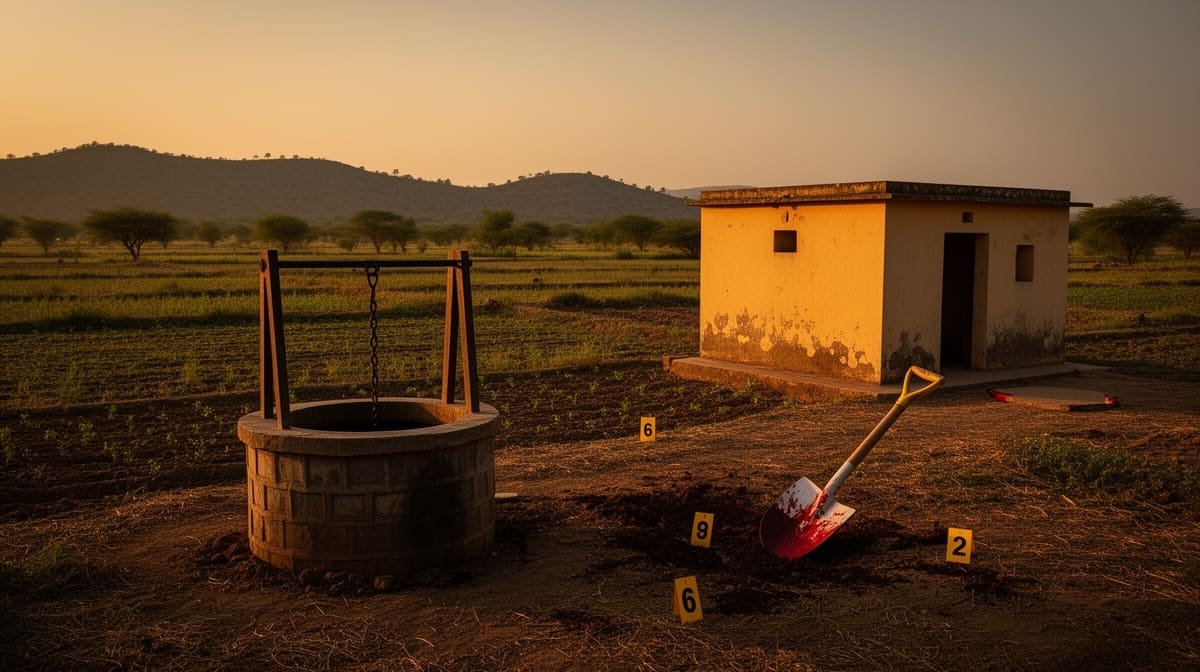
- Five body parts (torso and limbs) were recovered on 29.12.2013 from near Amanishah Nala, Jaipur, on the appellant’s disclosure under Section 27 of the Evidence Act.
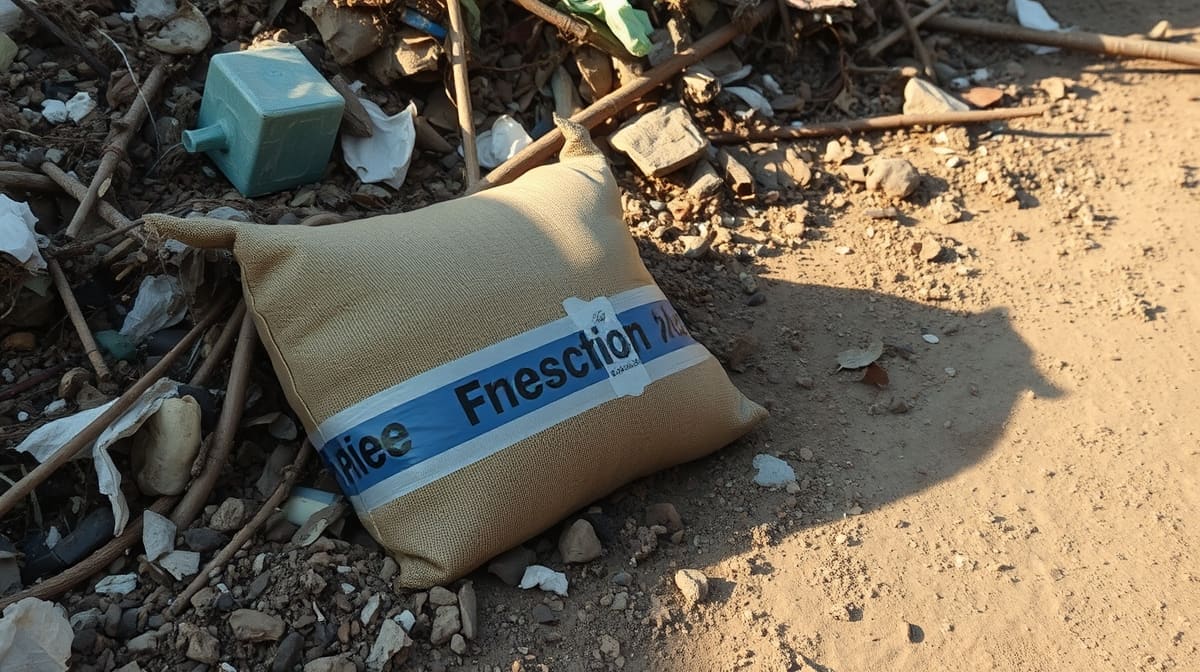
- The body parts were stuffed in a sealed jute sack and hidden in a garbage pile.
- On 28.12.2013, blood-stained items including soil, pillows, mattress, axe, spade, wooden strip, plastic sack, shirt, pant, and underwear were recovered from Plot No.6, Durga Vihar Colony, Jaipur - the appellant’s residence.
- DNA analysis (Ex.P64) confirmed the body parts belonged to Neeraj Singh, matching DNA from his mother and brother.
- The appellant’s motorcycle, registered in his name at the same address, was recovered on 03.01.2014.
- Roli @ Neetu (PW11), the appellant’s wife and the deceased’s sister, testified that the next day, the appellant told her: "I have murdered your brother; you can file a report wherever you want."
- This statement was not challenged during cross-examination.
Procedural History
- 27.12.2013: FIR No.323 registered at GRP Police Station, Jaipur, under Sections 302, 201 IPC.
- 29.12.2013: Arrest of the appellant (Arrest Memo Ex.P11).
- 29.12.2013: Recovery of five body parts under Section 27, Evidence Act (Seizure Memo Ex.P13).
- 28.12.2013: Recovery of blood-stained articles and blank stamp papers from appellant’s residence (Seizure Memo Ex.P4).
- 03.01.2014: Recovery of motorcycle (Seizure Memo Ex.P24).
- 30.12.2013: Postmortem report (Ex.P23) submitted.
- 06.03.2018: Trial Court (Additional Sessions Judge No.17, Jaipur) convicted the appellant and sentenced him to life imprisonment under Section 302 IPC and seven years under Section 201 IPC, with concurrent sentences and fines.
- 27.02.2018: Judgment of conviction pronounced.
- 28.04.2026: Arguments concluded before the Division Bench of Rajasthan High Court.
- 30.04.2026: Judgment pronounced.
The Parties' Positions
For the Appellant
- Argued that the last seen evidence was unreliable due to a two-day gap between last sighting and discovery of the head.
- Contended that recovery of body parts from an open area rendered it suspect.
- Asserted that the prosecution failed to prove ownership or possession of the residence where incriminating articles were found.
- Claimed no evidence established the place of murder.
- Argued that the extra-judicial confession was not proved.
For the Respondent
- Maintained that the last seen evidence was corroborated by the autopsy timeline.
- Emphasized that the body parts were concealed in a sealed jute sack, not casually discarded.
- Presented evidence linking the residence to the appellant through registration documents, witness testimony, and unchallenged admissions.
- Highlighted the unchallenged extra-judicial confession as a powerful admission.
- Stressed that motive, last seen, recovery, and confession formed an unbroken chain.
Relief Sought
The appellant sought acquittal, quashing of the conviction and sentence, and release from custody. The State sought dismissal of the appeal and confirmation of the trial court’s judgment.
The Legal Issue
Can a conviction under Sections 302 and 201 IPC be sustained solely on circumstantial evidence when the chain includes last seen, recovery of body parts and incriminating articles from the accused’s residence, and an unchallenged extra-judicial confession?
Arguments Presented
For the Appellant
The appellant’s counsel relied on Sharad Birdhichand Sarda v. State of Maharashtra to argue that the prosecution failed to establish the five golden principles of circumstantial evidence. He contended that the time gap between last seen and discovery of the head undermined the inference of guilt. He challenged the recovery of body parts as occurring in a public place, rendering it unreliable. He further argued that the prosecution did not prove the residence was under the appellant’s exclusive control, and that the extra-judicial confession was not properly proved or corroborated.
For the Respondent
The Public Prosecutor relied on Sharad Birdhichand Sarda to demonstrate that the circumstances were fully established, mutually consistent, and excluded all other hypotheses. He emphasized that the autopsy report fixed the time of death to 25.12.2013, aligning with the last seen evidence. He pointed to the sealed jute sack as proof of concealment, the recovery of the appellant’s motorcycle and registration documents as proof of ownership, and the unchallenged extra-judicial confession as a powerful admission. He argued that the failure to cross-examine on key testimonies amounted to admission under the law.
The Court's Analysis
The Court undertook a rigorous application of the five golden principles laid down in Sharad Birdhichand Sarda v. State of Maharashtra. It held that each circumstance must be fully established, consistent only with guilt, conclusive in nature, exclude every other hypothesis, and form a complete chain.
"There is not only a grammatical but a legal distinction between 'may be proved' and 'must be or should be proved'... the mental distance between 'may be' and 'must be' is long and divides vague conjectures from sure conclusions."
The Court found the last seen evidence compelling. The testimony of Deepak (PW7), Roli @ Neetu (PW11), and Shakuntala (PW30) was consistent and unchallenged during cross-examination. The Court noted that failure to cross-examine on material facts amounts to admission. The autopsy report, placing death on 25.12.2013, directly corroborated the last seen timeline.
Regarding recovery, the Court rejected the argument that the open location invalidated the seizure. It observed that the body parts were found in a sealed jute sack hidden in a garbage pile near a nala with no nearby residences, indicating deliberate concealment. The DNA match confirmed the identity of the remains.
The Court held that ownership of the residence was established through multiple converging facts: the recovery of the appellant’s motorcycle with his registered address, the testimony of neighbors, the arrest memo listing his address, and the unchallenged statements of the last seen witnesses that the deceased was taken to the appellant’s home.
Crucially, the Court treated the extra-judicial confession made by the appellant to his wife as a critical link. Roli @ Neetu testified that the appellant admitted: "I have murdered your brother; you can file a report wherever you want." This statement was not challenged during cross-examination. The Court held that such an admission, when uncontroverted, is admissible and carries significant weight.
The Court concluded: "The prosecution has been able to establish, beyond reasonable doubt, by leading a complete chain of circumstantial evidence that the appellant had committed murder of the deceased Neeraj Singh and concealed the evidence about commission of the same."
The Verdict
The appeal was dismissed. The conviction and sentence under Section 302 IPC (life imprisonment and fine of Rs.2,00,000) and Section 201 IPC (seven years’ rigorous imprisonment and fine of Rs.50,000) were confirmed. All sentences were to run concurrently. In default of payment of fines, the appellant was to undergo additional rigorous imprisonment - three years for the Section 302 fine and one year for the Section 201 fine. The judgment of the trial court dated 27.02.2018 was upheld in its entirety.
What This Means For Similar Cases
Extra-Judicial Confessions Are Powerful When Unchallenged
- Practitioners must treat unchallenged extra-judicial admissions as critical evidence, even if made to a family member.
- Failure to cross-examine on such statements constitutes tacit admission under Section 157 and 145 of the Evidence Act.
- Courts will treat such confessions as corroborative links in circumstantial chains.
Recovery from Open Areas Is Not Automatically Invalid
- The location of recovery alone does not invalidate evidence; concealment and context matter.
- Sealed containers, hidden placement, and absence of public access can sustain the reliability of recovery.
- Prosecution must establish the nature of concealment, not merely the physical location.
Last Seen Evidence Gains Strength with Corroborative Forensic Data
- A time gap between last seen and discovery does not automatically break the chain if forensic evidence (e.g., autopsy) confirms the timeline.
- Courts will accept last seen evidence if it aligns with scientific data and is unchallenged.
- Multiple independent witnesses corroborating the last seen event significantly strengthen the prosecution’s case.