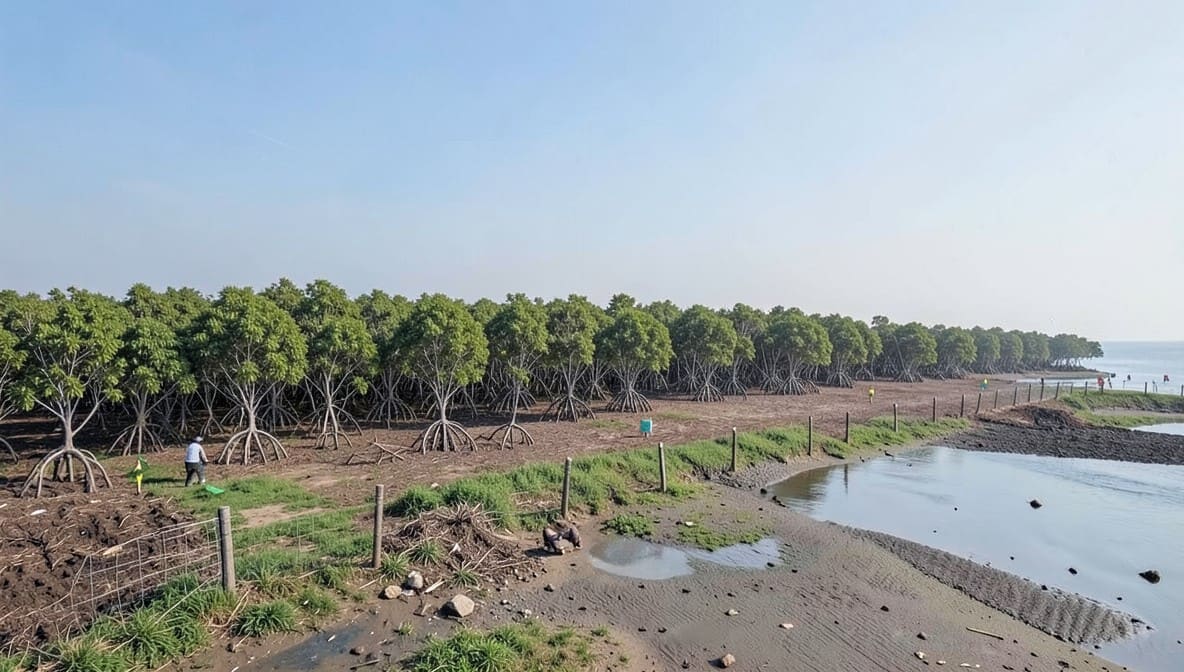
The Himachal Pradesh High Court has reaffirmed that convictions under Section 447 of the Indian Penal Code and Section 26 of the Indian Forest Act cannot rest on mere possession of government land. The judgment underscores that both lawful demarcation of boundaries and formal notification of reserved forest status are indispensable prerequisites for prosecution, and their absence renders any conviction unsustainable.
Background & Facts
The Dispute
The State of Himachal Pradesh appealed against the acquittal of Kalyan Singh by the Judicial Magistrate First Class, Rajgarh, on charges of criminal trespass under Section 447 IPC and unauthorized use of land under Section 26 of the Indian Forest Act. The prosecution alleged that the accused had encroached upon 30 bighas 13 biswas of government land in the Reserved Forest area of Manva and Kaloha, by constructing an apple orchard and a house.
Key Facts
- The complaint was filed by Amar Singh (PW6) on an unspecified date, alleging encroachment of over 10 bighas of government land.
- An FIR (Ex.PW7/A) was registered on the basis of this complaint.
- Yoginder Sain (PW5), a revenue official, conducted a demarcation of Khasra Nos. 644/1, 646/1, and 804/641/1, claiming the accused had encroached upon 30 bighas 13 biswas.
- A site plan (Ex.PW7/B) and photographs (Ex.P1 to Ex.P4) were prepared by HC Sanjay Kumar (PW7).
- Notification (Ex.PW6/B) and a copy of the working plan (Ex.PW6/C) were seized by police.
- The accused, Kalyan Singh, claimed ancestral possession of the land and denied any illegal encroachment.
- No notice was issued to the accused prior to demarcation.
- The demarcation report (Ex.PW5/A) did not record the three permanent points as required under revenue procedures.
- No copy of the notification declaring the land as a Reserved Forest was produced in court.
- The accused’s father had previously faced an ejectment proceeding by the Divisional Forest Officer, Rajgarh, which the prosecution cited as evidence of awareness.
Procedural History
- Date of alleged encroachment: Prior to 2014 (exact date not specified)
- Date of complaint: Unspecified, but filed before police (Ex.PW6/A)
- Date of FIR registration: Unspecified, but recorded as Ex.PW7/A
- Date of demarcation: Unspecified, but conducted by Yoginder Sain (PW5)
- Date of trial commencement: Unspecified
- 30.05.2014: Judgment of acquittal passed by Judicial Magistrate First Class, Rajgarh
- 03.03.2026: Appeal heard by the Himachal Pradesh High Court
- 01.04.2026: Judgment delivered by Justice Rakesh Kainthla
The Parties' Positions
For the State (Appellant):
- Argued that the demarcation was legally conducted and the report was reliable.
- Contended that the accused’s continued possession after his father’s prior ejectment proceeding demonstrated criminal intent.
- Asserted that the prosecution had proved encroachment beyond reasonable doubt.
- Claimed the Trial Court erred in rejecting the demarcation report and ignoring the presumption of legality of government land.
For the Accused (Respondent):
- Argued that demarcation was conducted without following mandatory procedures: no three permanent points were recorded, no notice was served, and the accused was not present.
- Stated that no notification under Section 4 of the Indian Forest Act was produced to establish the land as a Reserved Forest.
- Emphasized that mere possession, without proof of intent to insult, intimidate, or annoy, cannot constitute criminal trespass.
- Maintained that the Trial Court’s acquittal was reasonable and based on evidentiary deficiencies.
Relief Sought
The State sought reversal of the acquittal, conviction of the accused under Sections 447 IPC and 26 of the Indian Forest Act, and imposition of appropriate punishment. The accused sought dismissal of the appeal and confirmation of the acquittal.
The Legal Issue
The central question was whether criminal trespass under Section 447 IPC and unauthorized use of land under Section 26 of the Indian Forest Act can be established without lawful demarcation of boundaries and formal notification of the land as a Reserved Forest.
Arguments Presented
For the Appellant
The State contended that the demarcation report (Ex.PW5/A) was sufficient to prove encroachment, and that the accused’s awareness of the land’s government status - evidenced by his father’s prior ejectment proceeding - established criminal intent. It argued that the Trial Court erred in requiring technical compliance with revenue demarcation procedures, and that the prosecution’s evidence, including photographs and site plans, was adequate to prove guilt beyond reasonable doubt. The State relied on the principle that possession of government land without authority is prima facie illegal.
For the Respondent
The accused’s counsel argued that the demarcation was procedurally invalid under the Financial Commissioner’s instructions, as no three permanent points were recorded, no notice was served to the accused, and the demarcating officer admitted he was not competent to conduct the demarcation. He further submitted that no notification under Section 4 of the Indian Forest Act was produced, and no evidence showed that the required vernacular publication under Section 6 had occurred. Without these, the prosecution could not prove the land was a Reserved Forest or that the accused had knowledge of the restriction. Mere possession, without intent to insult or annoy, could not satisfy Section 441 IPC.
The Court's Analysis
The Court began by recalling the settled legal principle that appellate interference with an acquittal is permissible only if the judgment is patently perverse, based on misreading of evidence, or if no reasonable person could have acquitted the accused (Surendra Singh v. State of Uttarakhand, (2025) 5 SCC 433; State of M.P. v. Ramveer Singh, 2025 SCC OnLine SC 1743). The Court emphasized that where two reasonable views are possible, the appellate court must uphold the acquittal.
The Court then examined the demarcation report (Ex.PW5/A) in light of State of H.P. v. Laxmi Nand, 1992 SCC OnLine HP 41, which laid down exhaustive procedural requirements for lawful demarcation: the demarcating officer must identify three undisputed permanent points, chain them, compare with the Shajra, draw perpendiculars, and record the process in the field book. The report must also include the statements of interested parties and any objections raised. In this case, Yoginder Sain (PW5) admitted in cross-examination that he did not remember the Khasra numbers of the permanent points, did not serve notice to the accused, and was not competent to conduct the demarcation. HC Sanjay Kumar (PW7) confirmed the accused was not present. The report contained no sketch of the three points or field book entries.
"In the absence of there being any report of demarcation, it is not possible to place reliance upon these certificates..."
The Court held that the demarcation report was inadmissible and could not form the basis of conviction.
Regarding Section 447 IPC, the Court turned to Mathri v. State of Punjab, 1963 SCC OnLine SC 180, and Rajinder v. State of Haryana, (1995) 5 SCC 187, which require proof that the entry was made with the specific intent to intimidate, insult, or annoy. The complaint (Ex.PW6/A) merely stated that encroachment had occurred and requested action. No averment was made regarding intent. The Court held that even if the accused knew the land was government-owned, this alone does not establish the requisite criminal intent under Section 441 IPC.
On Section 26 of the Indian Forest Act, the Court examined Sections 4 and 6, which mandate that a Reserved Forest must be declared by a Gazette notification and that the notification must be published in the vernacular in all nearby villages. The Court relied on State of H.P. v. Amin Chand, 1992 (2) Shim.LC 169, and State of H.P. v. Ravi Kumar, 2008 HLJ 363, to hold that without proof of notification and its publication, the provisions of the Act cannot be invoked. The document marked Ex.PW6/B, referred to as a notification, did not specify any Khasra number and was insufficient to establish the land’s status. The Court concluded:
"In the absence of such procedure having not been followed... it would be against the principle of natural justice to permit the subject... to be punished by laws of which they had no knowledge."
The Court found no evidence linking the accused’s structures to a legally notified Reserved Forest. The Trial Court’s acquittal was therefore not perverse.
The Verdict
The appeal was dismissed. The acquittal of Kalyan Singh under Sections 447 IPC and 26 of the Indian Forest Act was upheld. The Court directed the respondent to furnish bail bonds of ₹25,000 with one surety of like amount to the satisfaction of the Trial Court within four weeks. The bail bond shall remain effective for six months, with the stipulation that if a Special Leave Petition is filed against this judgment or leave is granted, the accused must appear before the Supreme Court upon receipt of notice. The records were directed to be sent back to the Trial Court forthwith.
What This Means For Similar Cases
Demarcation Must Follow Statutory Procedure
- Practitioners must verify that demarcation reports in land encroachment cases include: three permanent points, chain measurements, comparison with Shajra, field book entries, and recorded statements of parties.
- Absence of any of these elements renders the report inadmissible under Laxmi Nand.
- Prosecution cannot rely on certificates or summaries; the full demarcation record must be produced.
Notification Is Non-Negotiable for Forest Offences
- In any prosecution under the Indian Forest Act, the prosecution must produce the original Gazette notification and proof of vernacular publication under Sections 4 and 6.
- Mere possession of a document labeled "notification" without Khasra details or publication proof is insufficient.
- Courts will invoke natural justice to dismiss charges where the accused had no reasonable means of knowing the land was restricted.
Intent Cannot Be Presumed in Criminal Trespass
- Mere illegal possession or knowledge of government ownership does not satisfy the intent requirement under Section 441 IPC.
- Prosecution must lead specific evidence - such as threats, defiance, or prior notices - to prove intent to insult, intimidate, or annoy.
- Complaints stating only "encroachment occurred" are legally inadequate to invoke Section 447 IPC.