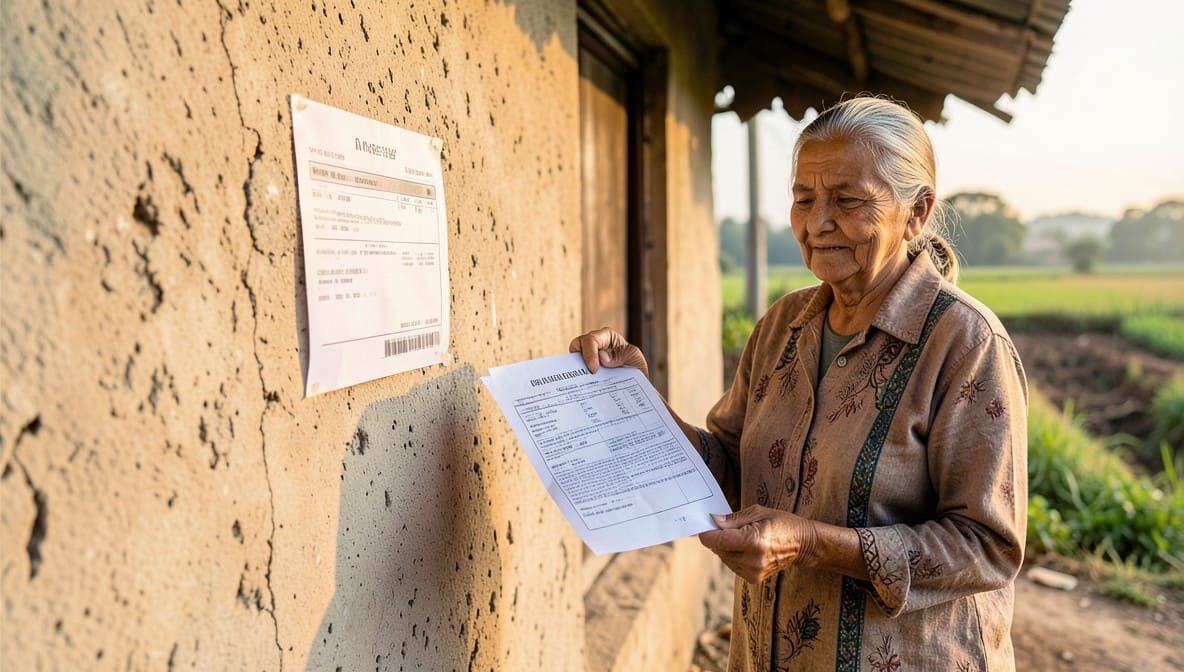
The Income Tax Appellate Tribunal, Bangalore, has clarified that a senior citizen’s inability to access an assessment order via the e-filing portal due to technical and logistical constraints, coupled with the absence of their tax consultant abroad, constitutes sufficient cause for condoning a delay of 122 days in filing an appeal. This ruling reinforces the principle that procedural rigidity must yield to equitable considerations when the taxpayer’s circumstances are genuinely disadvantaged.
Background & Facts
The Dispute
The appellant, a senior citizen, challenged the order of the Commissioner of Income Tax (Appeals) [CIT(A)] which dismissed his appeal against a reassessment order dated 27.03.2022 under Section 147 read with Sections 144 and 144B of the Income Tax Act, 1961, on the ground of delay. The CIT(A) held that the appeal, filed on 26.08.2022, was filed 122 days beyond the statutory period and no petition for condonation of delay was submitted.
Key Facts
- The reassessment order was passed on 27.03.2022 by the National Faceless Assessment Centre, Delhi.
- The appellant, a senior citizen, did not receive physical notice or email intimation of the order.
- He first became aware of the order on 04.08.2022, when he logged into the ITBA e-filing portal and accessed the assessment order and notice of demand.
- The appeal was filed on 26.08.2022, within 30 days of this date.
- The appellant’s tax consultant was abroad from the first week of March 2022 until the end of April 2022.
- The appellant received reminders for penalties under Section 271B and Section 271F dated 25.07.2022, which prompted him to inquire about the assessment.
- Records for assessment year 2013-14, including Form 16, were not readily available.
- In Form No. 35, the appellant stated the date of receipt of the order as 04.08.2022.
- The appellant submitted replies on 08.03.2024, 22.01.2025, and 25.07.2022, seeking condonation of delay.
- The CIT(A) rejected the appeal without examining the merits, citing lack of evidence for the delay.
Procedural History
- 27.03.2022: Reassessment order issued by National Faceless Assessment Centre, Delhi.
- 25.07.2022: Penalty reminders under Sections 271B and 271F received by appellant.
- 04.08.2022: Appellant accessed assessment order via e-filing portal.
- 26.08.2022: Appeal filed before CIT(A) (Form No. 35 submitted).
- 08.08.2025: CIT(A) order dismissing appeal in limine for delay of 122 days.
- 20.03.2026: ITAT Bangalore delivered judgment allowing appeal.
Relief Sought
The appellant sought condonation of delay of 122 days and admission of his appeal for adjudication on merits. He also requested that the CIT(A) be directed to decide the appeal on its substantive grounds after granting a fair hearing.
The Legal Issue
The central question was whether the delay of 122 days in filing an appeal before the CIT(A), attributable to a senior citizen’s delayed access to the e-filing portal and the unavailability of his tax consultant abroad, constitutes sufficient cause under the law to warrant condonation under Section 249(2) of the Income Tax Act, 1961.
Arguments Presented
For the Appellant
The appellant’s counsel, Shri Bhardwaj Sheshadri, argued that the appellant, being a senior citizen, had no means to receive the assessment order electronically or physically before 04.08.2022. The absence of email communication on the portal and the unavailability of the tax consultant during March - April 2022 created a genuine impediment. The preparation of the appeal was delayed due to the unavailability of records for assessment year 2013-14. The appellant had repeatedly sought condonation in writing and had acted promptly upon discovering the order. The CIT(A) erred in demanding documentary proof for circumstances inherently beyond the appellant’s control.
For the Respondent
The departmental representative, Shri Subramanian, JCIT, contended that the appellant failed to provide any tangible evidence - such as email logs, communication records, or proof of consultant’s travel - to substantiate the delay. The CIT(A) correctly applied settled principles that delay must be explained with credible evidence, and mere assertions by the assessee are insufficient. The 122-day delay was unexplained and therefore not condonable.
The Court's Analysis
The Tribunal emphasized that the crucial date for computing limitation is not the date of the order’s issuance, but the date on which the assessee became aware of it. The CIT(A) did not dispute that the appellant accessed the order on 04.08.2022 via the portal, nor did it establish that the appellant had received the order earlier.
"The crucial date is when the assessee came to know about the assessment order. The assessee first contended that if the date of receipt is 4 August 2022, the appeal instituted on 26th of August 2022 and therefore it is on time and there was no delay."
The Tribunal further noted that the appellant’s explanation - that he was a senior citizen, unaware of the order until penalty reminders triggered inquiry, and that his consultant was overseas - was plausible and consistent with the facts. The absence of formal documentation (e.g., email records) could not be held against him, especially where the portal itself did not provide proof of delivery.
"Even if the assessee cannot produce any evidence to the satisfaction of the appellate authority, if the circumstantial evidence supports the case of the assessee, then, at least for condonation of delay, the benefit should go in favour of the assessee."
The Tribunal rejected the rigid application of precedent that demands documentary proof in every case. It held that sufficient cause must be assessed contextually, particularly when the taxpayer is vulnerable or lacks technical access. The burden of disproving the appellant’s explanation lay with the department, which failed to discharge it.
The Verdict
The appeal was allowed. The Tribunal set aside the CIT(A)’s order dated 08.08.2025, directed the CIT(A) to condone the delay of 122 days, and remanded the appeal for adjudication on its merits. The CIT(A) was directed to afford the appellant a full opportunity of hearing and decide the appeal on substantive grounds within six weeks of receipt of this order.
What This Means For Similar Cases
Delay Due to E-Filing Access Gaps Is Sufficient Cause
- Practitioners must now argue that delays arising from non-receipt of notices via e-filing portals - especially where no email or physical copy is sent - constitute valid grounds for condonation.
- The date of portal access, if documented, can serve as the legally recognized date of receipt.
Senior Citizens Are Entitled to Equitable Consideration
- Tribunals must account for age-related vulnerabilities, including digital illiteracy, reliance on third-party consultants, and difficulty retrieving old records.
- Absence of formal proof (e.g., travel records, emails) does not automatically invalidate a claim of sufficient cause if the explanation is plausible and uncontradicted.
Circumstantial Evidence Suffices for Condonation
- The burden shifts to the revenue to disprove the assessee’s explanation, not to the assessee to prove it beyond doubt.
- Where the facts are consistent and no contrary evidence exists, the benefit of doubt must be given to the taxpayer in matters of delay condonation.