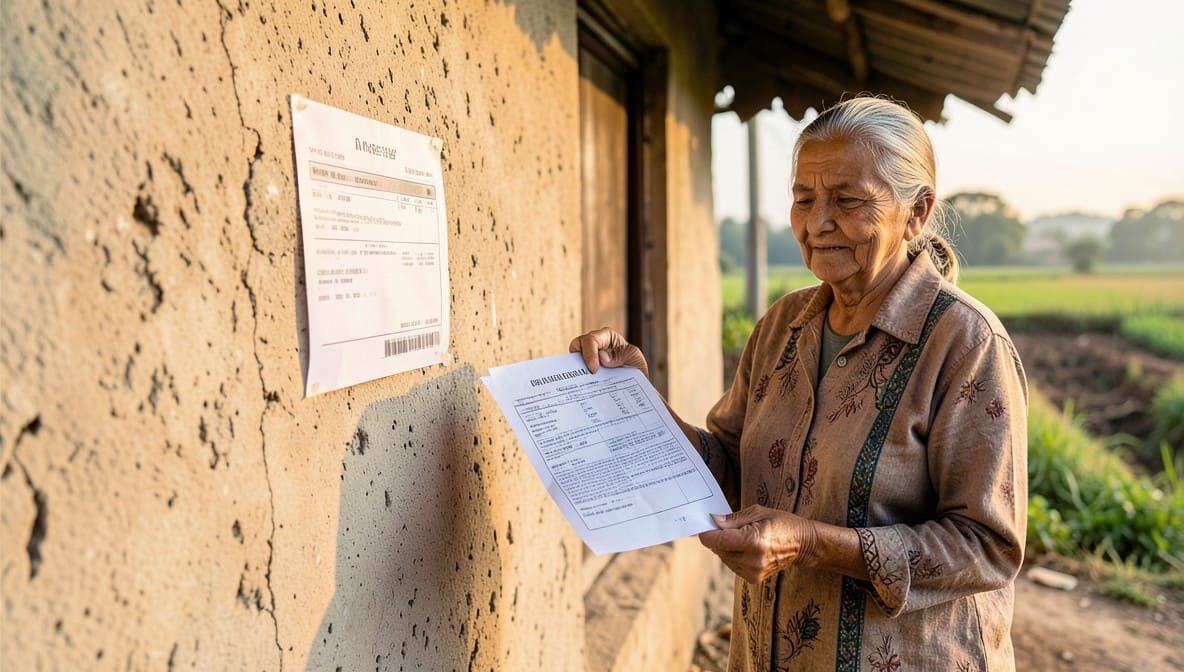
The ITAT Mumbai has set a significant precedent by condoning a substantial delay in filing an income tax appeal due to the assessee’s lack of digital access, educational limitations, and non-receipt of statutory notices. In a ruling grounded in principles of substantive justice, the Tribunal restored the assessment to the Assessing Officer for fresh adjudication, emphasizing that procedural rigidity must yield to fairness when technical defaults stem from systemic disadvantage.
Background & Facts
The Dispute
The appellant, Uganti Yadav, an uneducated rural woman from Rewari, Haryana, received compensation for compulsory acquisition of her agricultural land under the Land Acquisition Act, 1894. The Income Tax Department issued a notice under Section 148A for the assessment year 2018-19, alleging that the enhanced compensation, solatium, and interest received were taxable. The Assessing Officer completed the assessment under Section 147 read with Sections 144 and 144B on a best judgment basis, raising a demand without considering the appellant’s claim that such amounts were exempt under Section 10(37) of the Income Tax Act, 1961.
Key Facts
- The appellant owned agricultural land acquired by the state for public infrastructure in 2013
- She received 75% of the compensation on 08.12.2015
- The enhanced compensation included solatium under Section 23(2) and interest under Section 28 of the Land Acquisition Act, 1894
- She had no email address, no e-filing account, and no digital literacy
- No notice under Section 148A mentioned her email address
- The demand notice was physically affixed on the wall of her house in Mumbai
- She only became aware of the assessment after the demand notice was served
- She filed the appeal before the CIT(A) only after creating an e-filing account using her son’s email
Procedural History
- 08.12.2015: Appellant received 75% of compensation for acquired land
- 2018-19: Assessment year in question
- 2024: Notice under Section 148A issued (no email provided in notice)
- 24.11.2025: CIT(A) dismissed appeal on grounds of delay without adjudicating merits
- 30.03.2026: Hearing before ITAT Mumbai
- 06.04.2026: ITAT Mumbai delivers order
The Parties' Positions
For the Appellant:
- Claimed ignorance of income tax laws due to lack of education
- Stated she never received any notice via email or post
- Cited judicial precedents from ITAT Chandigarh, Delhi, and Gujarat holding that solatium and interest under Land Acquisition Act are not taxable
- Relied on Anilaben Rohitbhai Modi v. ITO (Gujarat HC, 23.06.2023) affirming exemption under Section 10(37)
- Argued that non-receipt of notices was not due to negligence but systemic exclusion
For the Revenue:
- Contended that the appeal was filed beyond the statutory period of 30 days under Section 250
- Did not contest the factual claims but insisted on strict compliance with procedural timelines
- Argued that the assessee had access to family members who could have acted on her behalf
Relief Sought
The appellant sought:
- Condonation of delay in filing the appeal
- Deletion of the addition made under Section 147/144/144B
- Recognition of the enhanced compensation, solatium, and interest as exempt under Section 10(37)
- Restoration of the case for fresh assessment with opportunity to produce evidence
The Legal Issue
The central question was whether the delay in filing an appeal under Section 250 of the Income Tax Act, 1961, can be condoned when the assessee’s non-receipt of notices stems from lack of digital access, illiteracy, and absence of email communication, and whether such circumstances constitute sufficient cause under the doctrine of substantial justice.
Arguments Presented
For the Appellant
The appellant’s counsel relied on the Supreme Court’s decision in Collector, Land Acquisition, Anantnag v. MST Katiji (1987) 2 SCR 387, which holds that procedural rules are handmaids of justice and must yield to substantial justice. He argued that the appellant’s lack of education, absence of digital infrastructure, and non-inclusion of email in statutory notices rendered her incapable of timely compliance. He cited multiple ITAT rulings from Chandigarh, Delhi, and Panchkula where similar claims of exemption under Section 10(37) were upheld. He further emphasized that the demand notice was physically affixed on her house wall, indicating the department’s own failure to ensure proper service.
For the Respondent
The Revenue did not dispute the factual matrix but maintained that the appeal was filed beyond the limitation period and that the assessee had access to family members who could have acted on her behalf. The Revenue argued that the ITAT should not set aside the CIT(A)’s order on procedural grounds without a clear statutory exception.
The Court's Analysis
The Tribunal examined the nature of the appellant’s disability and the department’s communication practices. It noted that the notice under Section 148A did not contain any email address, making digital service impossible. The fact that the demand notice was affixed on the wall of her house demonstrated that the department resorted to physical service only after other methods failed.
"Rules of procedure are handmaid of justice. When substantial justice and technical considerations are pitted against each other, the cause of substantial justice deserves to be preferred."
The Tribunal held that the appellant’s lack of digital literacy and access was not a case of negligence but of systemic exclusion. It distinguished this case from those where delay arises from apathy or deliberate avoidance. The Tribunal further observed that the appellant had acted promptly upon learning of the demand, immediately engaging a consultant and filing the appeal.
The Tribunal rejected the notion that family members’ availability should absolve the department of its duty to ensure proper service. It emphasized that the burden of ensuring communication lies with the revenue authority, particularly when dealing with vulnerable taxpayers.
The Verdict
The appeal was allowed for statistical purposes. The impugned order of the CIT(A) dated 24.11.2025 was set aside. The case was restored to the file of the jurisdictional Assessing Officer for de novo adjudication on merits. The appellant was directed to cooperate fully and furnish all documents sought. The AO was directed to provide a full opportunity of hearing and consider all submissions, including those based on Anilaben Rohitbhai Modi and Section 10(37). No monetary relief was granted at this stage.
What This Means For Similar Cases
Digital Exclusion Is a Valid Ground for Condoning Delay
- Practitioners representing elderly, rural, or illiterate taxpayers must now explicitly plead lack of digital access as a ground for condonation of delay
- Notices without email addresses cannot be presumed to have been received by taxpayers without digital infrastructure
- Revenue authorities must document attempts at physical service before relying on deemed service via email
Section 10(37) Exemption Applies to Solatium and Interest Under Land Acquisition Act
- The ITAT reaffirmed that solatium under Section 23(2) and interest under Section 28 of the Land Acquisition Act, 1894, form part of enhanced compensation and are exempt under Section 10(37)
- Taxpayers must retain court orders from Land Acquisition cases to substantiate claims
- Revenue authorities must not treat these components as separate taxable income
De Novo Assessment Is the Proper Remedy, Not Direct Relief
- ITAT will not adjudicate merits directly when the original assessment was incomplete or ex parte
- The correct course is restoration to the AO, not deletion of addition
- Practitioners should frame relief sought as "restoration for fresh assessment" rather than "deletion of demand"