The Kerala High Court has clarified that offences under Section 22(b) of the NDPS Act, which carry a maximum punishment of ten years but no minimum term, trigger a sixty-day default bail window under the Bharatiya Nagarik Suraksha Sanhita, 2023. This decision reinforces the constitutional right to liberty and limits prolonged pre-trial detention in cases where the legislature has not prescribed a minimum sentence of ten years.
Background & Facts
The Dispute
The petitioners, Abubacker Siddique and Abdul Rouf M., were arrested on 30/12/2025 from a homestay in Koppala, Adhur Panchayat, Kasaragod District, for allegedly possessing 4.22 grams of MDMA intended for personal use and sale. They were charged under Sections 22(b) and 29 of the Narcotic Drugs and Psychotropic Substances Act, 1985. The prosecution filed a final report seeking to invoke the ninety-day investigation period under Section 187(3)(i) of the Bharatiya Nagarik Suraksha Sanhita, 2023 (BNSS), arguing that the maximum punishment of ten years triggered the longer limit.
Key Facts
- The accused were arrested on 30/12/2025 and remanded to judicial custody on the same day.
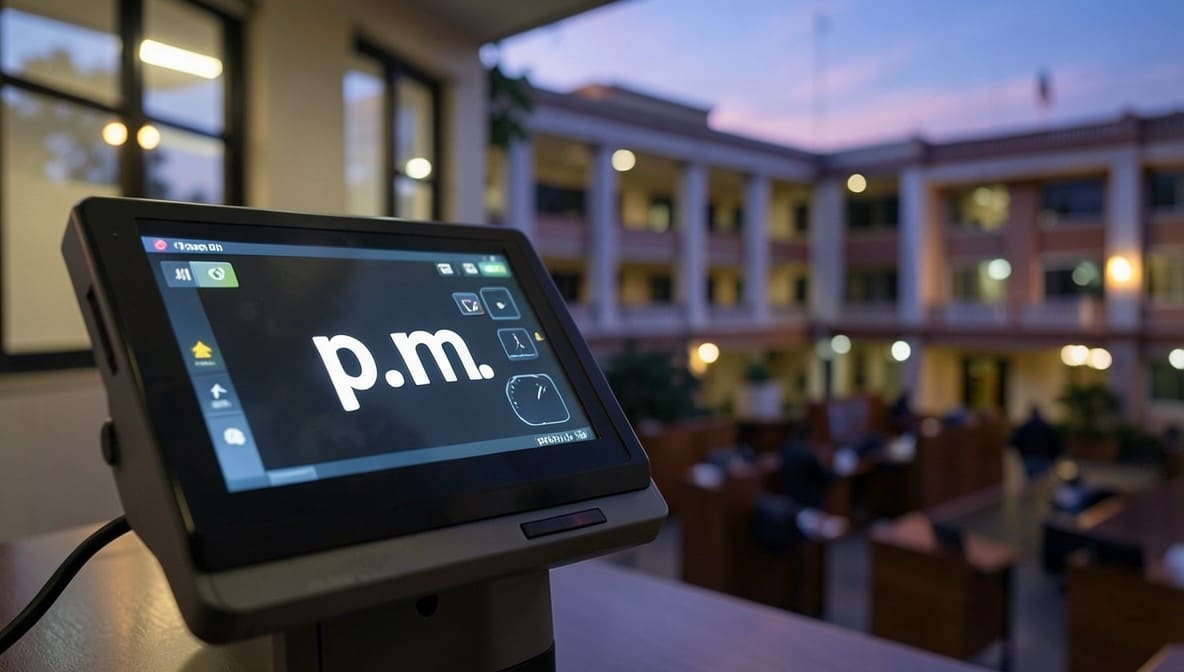
- The final report was electronically filed on 28/02/2026 at 6:02 p.m.
- The physical copy was received by the trial court on 02/03/2026.
- The offence under Section 22(b) NDPS Act prescribes imprisonment up to ten years with fine, but no minimum term.
- The accused filed a bail application under Section 483 BNSS on the ground of default bail, contending that the investigation exceeded the sixty-day statutory limit.
Procedural History
- 30/12/2025: Arrest and remand of petitioners.
- 28/02/2026: Final report e-filed at 6:02 p.m.
- 02/03/2026: Physical copy of final report received by Sessions Court.
- 03/03/2026: Sessions Court, Kasaragod, rejected the bail application.
- 19/05/2026: Bail application admitted for hearing before the Kerala High Court.
- 01/06/2026: Judgment delivered by Justice Kauser Edappagath.
Relief Sought
The petitioners sought regular bail on the ground that the final report was not filed within sixty days of arrest, thereby entitling them to default bail under Section 187(3)(ii) of the BNSS.
The Legal Issue
The central question was whether an offence under Section 22(b) of the NDPS Act, punishable with imprisonment up to ten years but without a minimum term, attracts the ninety-day investigation period under Section 187(3)(i) of the BNSS, or whether it falls within the sixty-day default bail category under Section 187(3)(ii).
Arguments Presented
For the Petitioner
The learned counsel argued that the phrase "imprisonment for a term of ten years or more" in Section 187(3)(i) BNSS must be interpreted consistently with the Supreme Court’s ruling in Rakesh Kumar Paul v. State of Assam. The term requires a minimum sentence of ten years, not merely a maximum. Since Section 22(b) NDPS Act has no minimum term, it cannot trigger the ninety-day period. The e-filing on 28/02/2026 at 6:02 p.m. was beyond the statutory limit under Rule 13 of the Electronic Filing Rules, as filings after 5:00 p.m. are deemed filed on the next day.
For the Respondent
The Senior Public Prosecutor contended that the legislature intentionally replaced "not less than ten years" with "ten years or more" to broaden the scope of the ninety-day period. Relying on Sayyad S.A. v. State of Kerala, the State argued that any offence punishable up to ten years, including those without a minimum, should fall under the ninety-day category. It further argued that e-filing on 28/02/2026, even if after hours, should be deemed timely as the investigation was completed within sixty days.
The Court's Analysis
The Court undertook a detailed textual, contextual, and purposive analysis of Section 187(3)(i) BNSS and its predecessor, Section 167(2)(a)(i) CrPC. It emphasized that the Supreme Court in Rakesh Kumar Paul had held that "not less than ten years" meant a minimum sentence of ten years, excluding offences with a maximum of ten years but no minimum. The Court found that the substitution of "ten years or more" in the BNSS was not a substantive change but a clarification to eliminate ambiguity.
"The expression 'imprisonment for a term of ten years or more' in Section 187(3)(i) of the BNSS does not alter the threshold established in Rakesh Kumar Paul. It continues to require a minimum sentence of ten years, not merely a maximum."
The Court distinguished Sayyad S.A., which dealt with an offence under Section 310(2) BNS punishable with life imprisonment or up to ten years. That case was inapplicable because life imprisonment was a component of the punishment, triggering Section 187(3)(i). In contrast, Section 22(b) NDPS Act has no life imprisonment component and no minimum term.
The Court further examined Rule 13 of the Electronic Filing Rules and the Criminal Rules of Practice, Kerala, 1982. It held that filings after 5:00 p.m. are deemed filed on the next working day. Since the final report was e-filed at 6:02 p.m. on 28/02/2026, it was legally deemed filed on 01/03/2026, which was beyond the sixty-day limit from the date of arrest (30/12/2025).
The Court reaffirmed that default bail is not a mere statutory right but a fundamental right under Article 21, and must be granted strictly as per legislative intent to prevent arbitrary detention.
The Verdict
The petitioners succeeded. The Court granted regular bail to both accused persons. The final report was deemed filed on 01/03/2026, beyond the sixty-day statutory limit. The petitioners are entitled to default bail under Section 187(3)(ii) BNSS. They shall be released on bail upon executing a bond of Rs. 1,00,000 each with two solvent sureties of the same amount, subject to conditions: (i) no commission of similar offences; (ii) no contact with prosecution witnesses; (iii) no departure from Kerala without court permission; and (iv) any application for modification of bail conditions must be filed in the trial court.
What This Means For Similar Cases
Default Bail Applies to Maximum-Only Punishments
- Practitioners must now argue that any offence under the BNSS with a maximum punishment of ten years but no minimum term (e.g., Section 22(b) NDPS Act, Section 304A IPC) triggers the sixty-day default bail window.
- The phrase "ten years or more" does not include offences where the punishment is "up to ten years" without a floor.
E-Filing Timelines Are Strictly Computed
- Electronic filings after 5:00 p.m. are deemed filed on the next working day under Kerala’s Electronic Filing Rules.
- Lawyers must calculate deadlines based on court office hours, not submission timestamps.
Precedent from Rakesh Kumar Paul Is Binding
- The Rakesh Kumar Paul interpretation remains authoritative under the BNSS.
- Courts cannot expand the ninety-day period to offences lacking a minimum sentence, even if the maximum is ten years.
Statutory Bail Is a Fundamental Right
- Default bail is not discretionary. If the statutory period lapses, the accused must be released, regardless of the nature of the offence.
- Prosecution cannot rely on physical filing delays to override the e-filing date for limitation purposes.