The Madras High Court set aside a single judge’s order refusing registration of a settlement deed, holding that a mere allegation by temple authorities without establishing title cannot trigger the bar under Section 22-A of the Registration Act, 1908, and that the final order of the Minor Inams Tribunal cannot be collaterally attacked.
Background & Facts
The Dispute
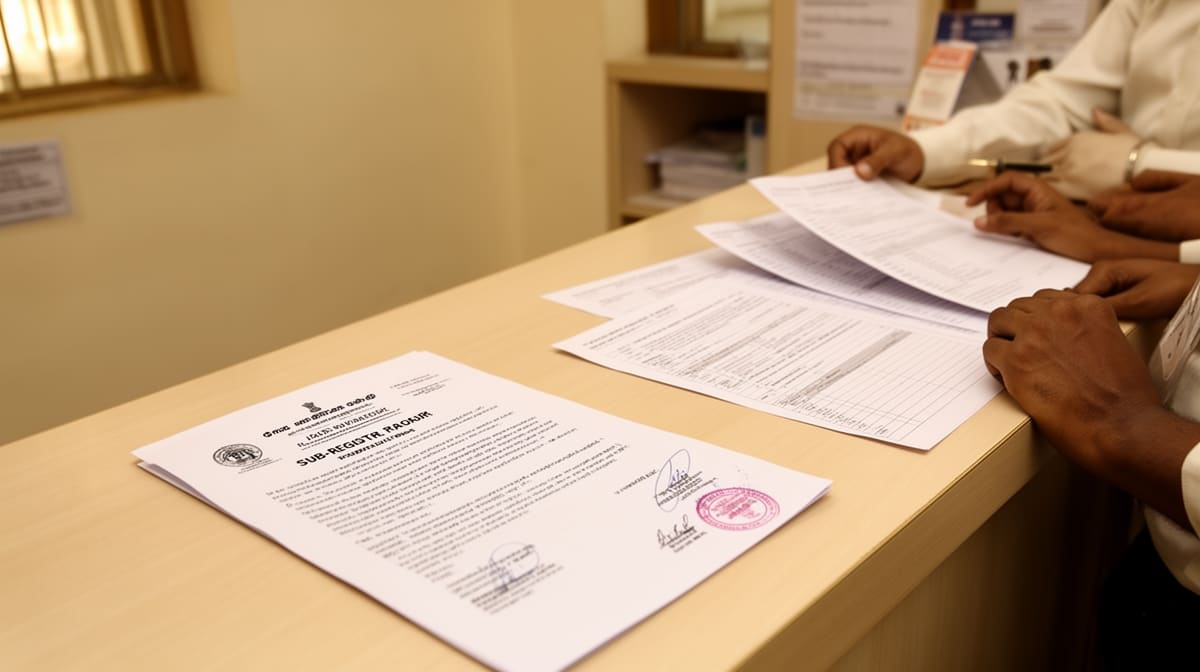
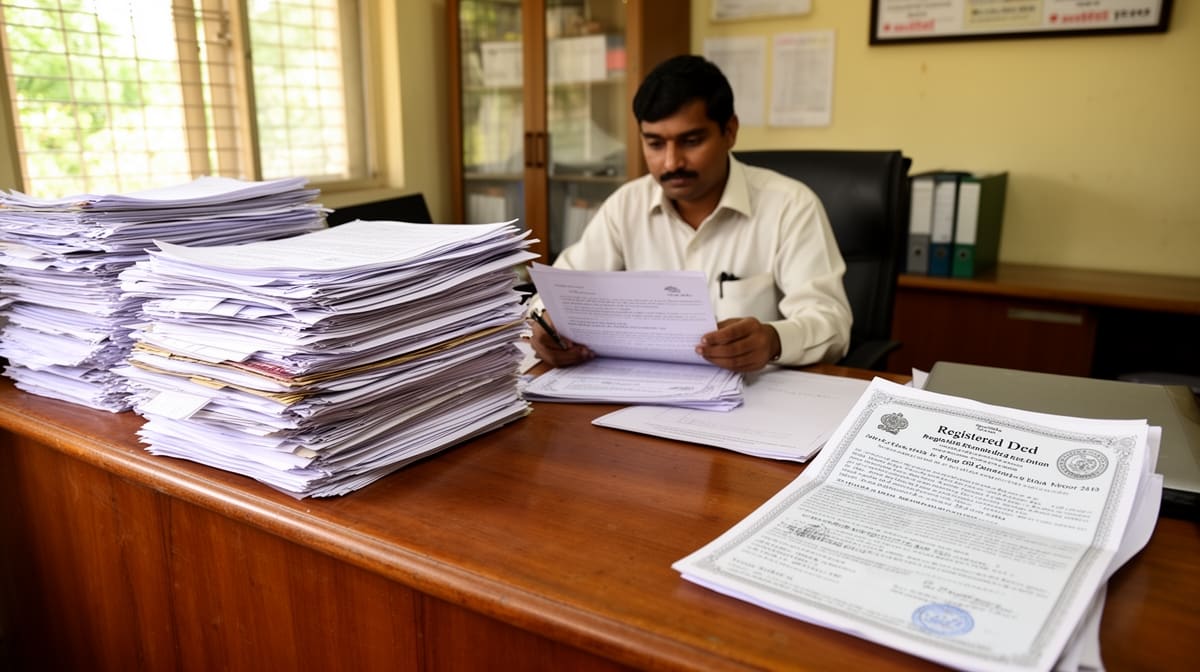
The appellant, S. Prabhu Shankar, sought to register a settlement deed dated 23.01.2017 transferring property in his favour. The Sub Registrar refused registration on the ground that the property belonged to a temple, relying on a letter dated 10.09.2018 from the Executive Officer of the Mariamman Vinayagar Temple. The appellant challenged this refusal slip via W.P.No. 22102 of 2023, which was dismissed by the learned Single Judge on 27.07.2023. The present writ appeal contests that dismissal.
Key Facts
- The properties in question comprise S.No.137/A (1.40 acres) and S.No.137/B2 (9.90 acres) in Mettupalayam village, Kinathukadavu taluk, Coimbatore District.
- Originally subject to proceedings under the Tamil Nadu Minor Inams (Abolition and Conversion into Ryotwari) Act, 1963 (Tamil Nadu Act 30 of 1963).
- The Settlement Tahsildar rejected the claimants’ patta claim and granted ryotwari patta to religious institutions under sections 8(2)(ii) read with section 11 of the Tamil Nadu Act 30 of 1963.
- A statutory appeal filed by Patti Gounder and others before the Minor Inams Tribunal (CMA No.511 of 1968) resulted in an order dated 19.12.1970 allowing the appeal and directing grant of ryotwari patta to Patti Gounder, Krishnaswamy Gounder and Subbe Gounder under section 8(2)(i)(a) of the Tamil Nadu Act 30 of 1963.
- The Tribunal’s order became final as no further appeal was filed by the second respondent or revenue authorities.
- Pursuant to the 19.12.1970 order, patta was issued in favour of Patti Gounder, Krishnaswamy Gounder (sons of Devanna Gounder) and Subbe Gounder (son of Marimuthu Gounder) for the aforementioned properties.
- R.Kandiappan purchased an undivided half share of S.No.137/B2 (4.95 acres) from Subbe Gounder by sale deed dated 23.10.1980.
- Kandiappan sold 2 acres of that share to Padma Shanmughasundaram (mother of the appellant) by sale deed dated 30.11.1989.
- The appellant’s mother also purchased 0.42 acres in S.No.137/B2C from Patti Gounder and others by sale deed dated 30.08.1990, and 0.58 acres in S.No.137/B2B from M/s. Niagara Finance by sale deed dated 30.08.1990.
- Layout permission for the properties was obtained from the Director of Town and Country Planning, Chennai vide Na.Ka.No.23483/92 L.A.2 dated 14.08.1992.
- A gift deed dated 18.02.1993 was executed in respect of road, public park, etc., to the local body.
- The appellant’s mother settled plot no.29 (part of S.Nos.137/B2B, 137/B2B1, 137/B2C) in favour of her husband V.Shanmughasundaram; the latter settled the same in favour of the appellant by deed of settlement dated 23.01.2017.
- The appellant presented the settlement deed dated 23.01.2017 for registration before the Sub Registrar on 19.05.2023.
- The Sub Registrar refused registration under section 22-A(ii) of the Registration Act, 1908, citing the temple’s letter dated 10.09.2018.
- The writ petition was filed challenging this refusal slip; it came before the learned Single Judge on 27.07.2023.
- On 27.07.2023, the learned Single Judge suo motu impleaded the Commissioner, Joint Commissioner and District Collector of the Hindu Religious and Charitable Endowments Department and dismissed the writ petition, holding the temple’s objection tenable under Section 22-A.
Procedural History
- 19.12.1970: Order of the Minor Inams Tribunal allowing appeal and directing grant of ryotwari patta (final).
- 23.10.1980: Sale deed from Subbe Gounder to R.Kandiappan (4.95 acres).
- 30.11.1989: Sale deed from Kandiappan to Padma Shanmughasundaram (2 acres).
- 30.08.1990: Sale deeds from Patti Gounder and others (0.42 acres) and from M/s. Niagara Finance (0.58 acres).
- 14.08.1992: Layout permission granted (Na.Ka.No.23483/92 L.A.2).
- 18.02.1993: Gift deed for road/public park.
- 23.01.2017: Deed of settlement in favour of the appellant.
- 10.09.2018: Letter from Executive Officer of the temple to registering authorities stating no document should be registered as property belongs to temple.
- 19.05.2023: Presentation of settlement deed for registration; refusal slip issued by Sub Registrar.
- 27.07.2023: Writ petition heard; learned Single Judge impleaded respondents 3-5 and dismissed the petition.
- Present writ appeal filed challenging the order of 27.07.2023.
- 01.10.2026: Judgment of the Division Bench pronounced.
The Parties' Positions
- Appellant: Contended that the Single Judge exceeded the writ’s scope by delving into settlement proceedings; that the temple’s letter alone cannot invoke Section 22-A without proof of title; that the Tribunal’s 19.12.1970 order is final and cannot be collaterally attacked; that the authorities had not challenged the Tribunal order for over fifty years.
- Respondents (R2-R5): Argued that the Tribunal proceedings were collusive; that the temple is a Devedaya Inam and thus entitled to patta; that the Single Judge correctly applied Section 22-A; reliance placed on A.T.S.Chinnaswami Chettiar and others Vs. Sri Kari Varadaraja Perumal Temple and another (1995 Supp (3) SCC 724), S.T.A.No.4 of 2013 (Arulmigu Jala Perumal Temple, Kallapalayam Vs. Settlement Tahsildar No.II, Gobichettupalayam and others), and Joint Commissioner, Hindu Religious and Charitable Endowments, Admn. Department Vs. Jayaraman ((2006) 1 SCC 257).
Relief Sought
The appellant sought to set aside the order dated 27.07.2023, quash the refusal slip No.RFL/Kinathukkadavu/36/2023 dated 19.05.2023, and direct the Sub Registrar to register the settlement deed forthwith.
The Legal Issue
The central question was whether a registering authority may refuse registration of a document under Section 22-A of the Registration Act, 1908 solely on the basis of a letter from a religious institution alleging title, without requiring the institution to prove its title in a civil court, and whether a final order of the Minor Inams Tribunal under the Tamil Nadu Act 30 of 1963 can be challenged in collateral proceedings.
Arguments Presented
For the Appellant
The appellant relied on the principle that Section 22-A requires the registering authority to have "clinching materials" to show that the property belongs to a religious institution before refusing registration, citing G.Rajasulochana Vs. The Inspector General of Registration (2024:MHC:1800). It was argued that the temple’s letter dated 10.09.2018, without any attempt to establish title over the preceding five decades, does not satisfy this requirement. Furthermore, the appellant contended that the learned Single Judge acted beyond the writ’s ambit by examining the settlement proceedings, which had attained finality under section 46 of the Tamil Nadu Act 30 of 1963 and were not challenged by the authorities. The appellant emphasized that the authorities’ recourse, if any, lay in a civil suit to establish title, not in obstructing registration.
For the Respondent
The counsel for the second respondent (and, by extension, the other respondents) submitted that the Temple was a party to the original settlement proceedings and that the Tribunal’s order was collusive, thereby justifying the Single Judge’s reliance on Section 22-A. Reference was made to A.T.S.Chinnaswami Chettiar and others Vs. Sri Kari Varadaraja Perumal Temple and another to assert that the Tribunal had considered sale deeds from 1892 and 1901 and found the transferees in possession for over sixty years before the appointed day. It was also argued that the Single Judge correctly impleaded the HR&CE Department to ensure that the temple’s title could be investigated, and that the refusal slip was tenable because the temple had communicated its objection in 2018.
The Court's Analysis
The Division Bench began by noting that the writ petition challenged only the refusal slip based on the temple’s letter, not the settlement proceedings themselves. It observed that the learned Single Judge had, suo motu, impleaded respondents 3-5 and proceeded to evaluate the settlement proceedings, thereby exceeding the relief sought. The Court held that Section 22-A of the Registration Act, 1908, as interpreted in P.Jeganathan Vs. The Inspector General of Registration (W.A.(MD)Nos.260 and 261 of 2023, order dated 07.06.2023) and G.Rajasulochana Vs. The Inspector General of Registration (2024:MHC:1800), mandates that the registering authority must have proof of the religious institution’s title before refusing registration; a mere letter without such proof is insufficient.
The Court further examined the finality of the Tribunal’s order under section 46 of the Tamil Nadu Act 30 of 1963, which declares that any order of the Tribunal, in the absence of appeal or revision, is final and shall not be questioned in any court of law. However, the Bench clarified that subsection (2) of section 46 does not oust the civil court’s jurisdiction to determine title; the authorities remain free to institute a civil suit to establish their claim. Since the temple had not taken any steps to prove title despite being aware of the settlement proceedings since 2018, the Single Judge’s reliance on the letter was misplaced.
The Bench also rejected the contention of collusiveness, pointing out that the Settlement Officer’s order showed notice had been issued to all authorities under section 11 of the Tamil Nadu Act 30 of 1963, and the temple had appeared as a party in the Tribunal appeal. The authorities’ inaction for over fifty years negated any claim of collusion. Consequently, the learned Single Judge’s order was set aside, the refusal slip quashed, and the Sub Registrar directed to register the settlement deed forthwith.
"The learned Single Judge has gone beyond the remit of the writ petition."
The Verdict
The appellant succeeded. The Court set aside the order dated 27.07.2023, quashed the refusal slip No.RFL/Kinathukkadavu/36/2023 dated 19.05.2023, and directed the Sub Registrar to register the settlement deed dated 23.01.2017 forthwith. It clarified that the registration would not prejudice the temple’s right to establish title before a competent civil court. No costs were awarded.
What This Means For Similar Cases
Registration Under Section 22-A Requires Proof of Title
- A registering authority cannot refuse registration solely on a letter from a religious institution; it must possess clinching evidence of the institution’s title.
- Authorities alleging title must prove the same in a civil court before invoking Section 22-A.
Finality of Tribunal Orders Cannot Be Collaterally Attacked
- Orders of the Minor Inams Tribunal under the Tamil Nadu Act 30 of 1963 attain finality under section 46 and are binding unless appealed or revised.
- Parties dissatisfied with such orders must seek relief through appeal or revision, not by challenging registration on collateral grounds.
Authorities Must Act Timely to Protect Their Interests
- The HR&CE Department and other respondents, having been notified under section 11 of the Tamil Nadu Act 30 of 1963, cannot rely on stale objections after decades of inaction.
- Timely action to establish title is essential; delay defeats the ability to block registration based on mere allegations.