The Calcutta High Court has clarified that the commercial nature of a dispute does not vanish merely because a lease has expired by efflux of time. This ruling redefines the scope of jurisdiction under the Commercial Courts Act, 2015, and has immediate implications for landlords and tenants in commercial real estate disputes across India.
Background & Facts
The Dispute
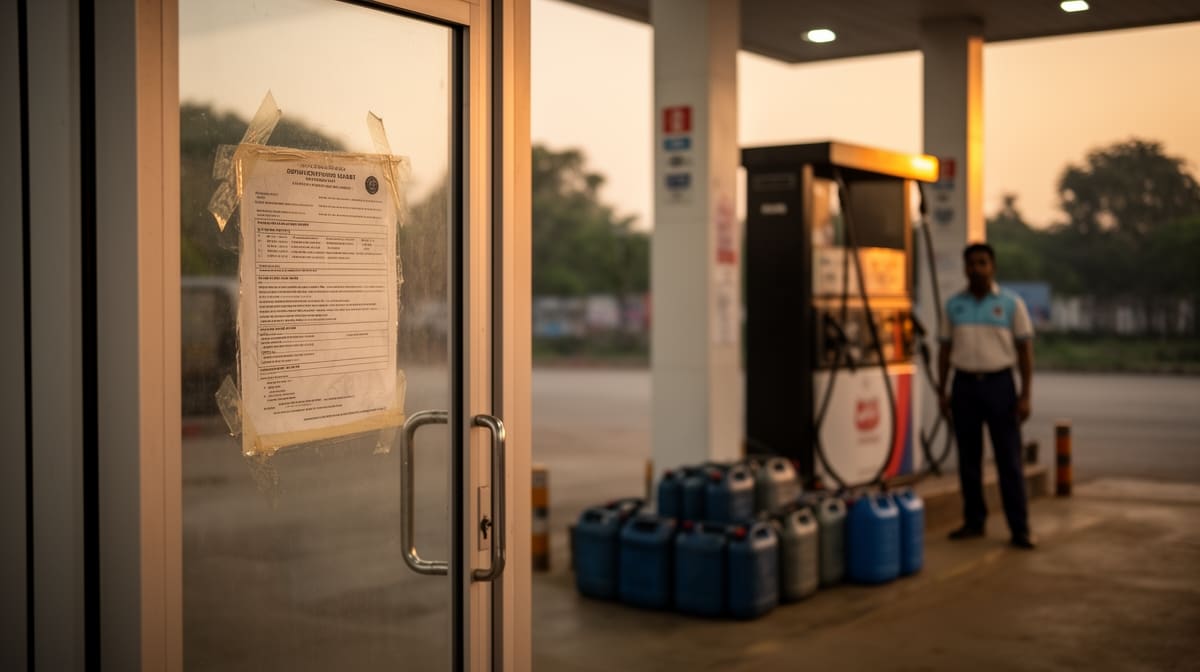
The appellant, Indian Oil Corporation Limited, leased two immovable properties from the respondents, Jayanta Krishna Datta and another, under two registered lease deeds dated September 10, 2008. The properties were used for operating petrol pumps. The leases expired on August 2, 2018. Despite the expiry, the appellant continued in possession, paying rent intermittently, which the respondents returned. The respondents then filed a suit for eviction under the Transfer of Property Act, 1882, alleging the appellant had become a tenant-in-sufferance akin to a trespasser.
Procedural History
- 2019: Respondents filed CS No. 83 of 2019 in the Original Side of the Calcutta High Court seeking eviction.
- 2023: A Single Judge passed a decree for eviction, rejecting the appellant’s objection that the suit belonged in the Commercial Division.
- 2023: Appellant filed APD 11 of 2023 challenging the jurisdictional error.
Relief Sought
The appellant sought to set aside the decree on grounds that the suit involved a commercial dispute under Section 2(1)(c)(vii) of the Commercial Courts Act, 2015, and therefore, the non-commercial division lacked jurisdiction. The respondents opposed, arguing that post-expiry possession rendered the dispute non-commercial.
The Legal Issue
The central question was whether a suit for eviction, following the expiry of a commercial lease, continues to constitute a commercial dispute under Section 2(1)(c)(vii) of the Commercial Courts Act, 2015, even when the tenant holds over without a valid contractual right.
Arguments Presented
For the Appellant
The appellant relied on Ambalal Sarabhai Enterprises Limited v. K.S. Infraspace LLP to argue that the property was used for commerce in presenti, satisfying the statutory definition. It cited T.E. Thomson & Company Limited v. Swarnalata Chopra to assert that expired lease deeds are admissible to determine the nature of the dispute. It further contended that the statutory right to evict arose directly from the lease terms, making the dispute inherently commercial.
For the Respondent
The respondents argued that after lease expiry, the appellant became a tenant-in-sufferance, with no contractual relationship. They relied on R.V. Bhupal Prasad to assert that such possession is akin to trespass and not a landlord-tenant relationship. They also cited Haldiram Bhujiawala and Raptakos Brett to argue that enforcement of statutory rights under the Transfer of Property Act, 1882, does not transform a non-contractual dispute into a commercial one.
The Court's Analysis
The Court undertook a detailed statutory interpretation of Section 2(1)(c)(vii), emphasizing that the legislative intent, as reflected in the Explanation, is to preserve the commercial character of a dispute even if recovery of property is sought. The Court held that the commercial use of the property - here, operation of petrol pumps - remained unchanged post-expiry.
"The expired contract of lease is a crucial piece of evidence in order to establish the corresponding statutory right of the landlord to seek eviction."
The Court distinguished Raptakos Brett not as a bar to examining lease terms, but as a clarification that statutory rights may coexist with contractual ones. It affirmed that T.E. Thomson squarely applied: the lease deed must be examined to determine the nature of the jural relationship, and its commercial character persists even after termination.
The Court rejected the notion that post-expiry possession negates commerciality. It noted that the appellant’s continued use of the premises for commercial activity - selling oil and lubricants - was undisputed. The fact that rent payments were returned did not alter the underlying commercial nature of the dispute.
Furthermore, the Court emphasized that Section 12A of the Act mandates pre-institution mediation for commercial disputes. Since the suit was filed after the Act’s commencement and without compliance, the jurisdictional defect was compounded.
The Verdict
The appellant succeeded. The Calcutta High Court held that the suit involved a commercial dispute under Section 2(1)(c)(vii) of the Commercial Courts Act, 2015. The judgment and decree passed by the non-commercial division were set aside. The suit was dismissed outright, as the respondents declined to seek return of plaint under Order VII Rule 10 CPC.
What This Means For Similar Cases
Commercial Use Determines Jurisdiction, Not Tenancy Status
- Practitioners must assess the current use of property, not just the legal status of possession, to determine jurisdiction under the Commercial Courts Act.
- A tenant-in-sufferance operating a business on the premises still triggers commercial jurisdiction.
- Eviction suits based on expired commercial leases must be filed in the Commercial Division.
Lease Deeds Remain Relevant Post-Expiry
- Expired lease agreements are admissible and necessary to establish the origin and character of the dispute.
- Courts must examine lease terms to determine whether the dispute arose from commercial activity, even if the contract has terminated.
- Relying solely on R.V. Bhupal Prasad to deny commercial jurisdiction is now legally unsound.
Pre-Institution Mediation Is Mandatory and Non-Waivable
- Failure to comply with Section 12A renders a suit invalid, even if filed in the correct court.
- Parties cannot waive this requirement unless urgent interim relief is sought.
- Practitioners must file a mediation certificate or plead urgency at the time of filing.