The Calcutta High Court has clarified that a civil suit for recovery of unpaid transport services constitutes a commercial dispute under the Commercial Courts Act, 2015, irrespective of prior insolvency proceedings or settlement agreements. This ruling reinforces the statutory mandate that courts must identify the nature of the dispute at the threshold, not the procedural posture of the parties.
Background & Facts
The Dispute
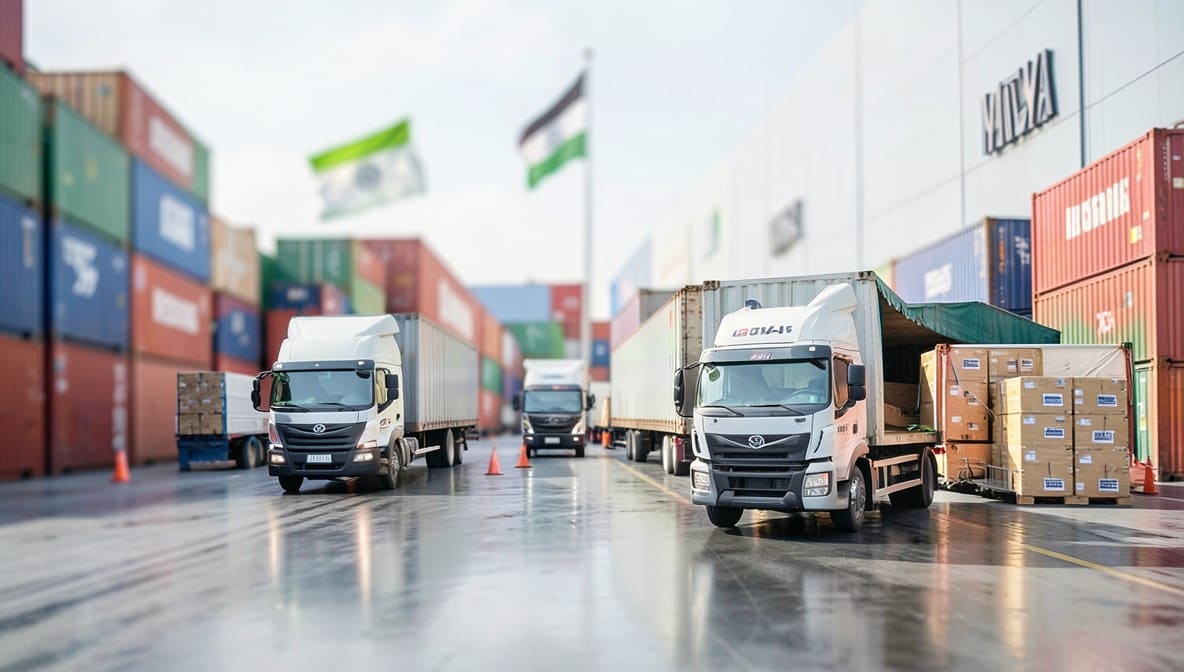
The appellant, Modern Roadways Corporation, entered into an agreement with the respondent, Simpex Infrastructure Limited, to provide transport services. The appellant rendered the services and raised invoices for the same. Despite repeated demands, the respondent failed to make full payment. The appellant initiated proceedings under the Insolvency and Bankruptcy Code, 2016 before the National Company Law Tribunal, Kolkata, as an operational creditor.
Key Facts
- The transport services agreement was executed on an unspecified date prior to 2021
- Invoices for services rendered were raised between 2020 and early 2022
- The total outstanding amount claimed in the suit was quantified but not specified in the judgment
- On 01.03.2022, a settlement was reached during the pendency of the IBC proceedings, wherein the respondent acknowledged the appellant as an operational creditor and agreed to pay a specified amount in full and final settlement
- A portion of the settled amount was paid; the balance remained unpaid
- The appellant filed a civil suit for recovery of the unpaid balance on an unspecified date in 2024
Procedural History
- 01.03.2022: Settlement agreement executed between parties during IBC proceedings
- 2024: Civil suit filed in the Commercial Division of the Calcutta High Court (GA-COM/4/2024)
- 25.07.2025: Learned Single Judge returned the plaint under Order VII Rule 10 CPC, directing the appellant to file the suit in the appropriate court
- 17.04.2026: Appeal filed before the Division Bench (APOT/233/2025) challenging the return of plaint
Relief Sought
The appellant sought setting aside of the order dated 25.07.2025, restoration of the suit in the Commercial Division, and continuation of proceedings on the merits. No specific monetary relief was sought in the appeal beyond reinstatement of the suit.
The Legal Issue
The central question was whether a civil suit for recovery of unpaid amounts arising from a transport services agreement qualifies as a commercial dispute under Section 2(1)(c)(xviii) of the Commercial Courts Act, 2015, even if the claim was previously pursued under the Insolvency and Bankruptcy Code and partially settled.
Arguments Presented
For the Appellant
The appellant’s counsel argued that the suit arose from an agreement for the provision of transport services, which is explicitly classified as a commercial dispute under Section 2(1)(c)(xviii) of the Commercial Courts Act, 2015. He submitted that the settlement agreement did not alter the nature of the underlying transaction. He further contended that the suit was filed after compliance with mandatory pre-litigation mediation under Section 12A of the Act, and therefore, the Commercial Division was the correct forum. He relied on the statutory definition and the legislative intent to centralize commercial disputes in specialized courts.
For the Respondent
The respondent’s counsel argued that the Memorandum of Appeal did not raise the issue of commercial dispute jurisdiction as a ground. He contended that the Single Judge’s order was merely procedural, returning the plaint due to lack of proper forum designation, and that the appellate court could not entertain a new ground not raised below. He cited Bhaskar Aditya v. Smt. Minati Majumdar to argue that appellate jurisdiction is confined to the grounds raised in the appeal.
The Court's Analysis
The Court rejected the respondent’s argument that the appeal could not raise a new ground. It held that the nature of the dispute - whether it is commercial - is a jurisdictional question that goes to the root of the court’s authority to hear the matter. The Court observed:
"The issue is whether, the Court vested with jurisdiction to try a commercial dispute abdicated such jurisdiction by passing the impugned order or not."
It emphasized that Section 2(1)(c)(xviii) explicitly includes agreements for the provision of services as commercial disputes. The plaint clearly pleaded the existence of a transport services agreement, the rendering of services, and non-payment of invoices - all elements that squarely fall within the statutory definition.
The Court further held that consent of the parties cannot confer jurisdiction on a court that lacks it. The Single Judge’s order returned the plaint on the basis of an alleged procedural misstep, not on the ground that the dispute was non-commercial. This was legally untenable. The Court noted:
"It is trite law that consent of the parties cannot confer jurisdiction in a Court which the Court does not possess."
The Court also affirmed that compliance with Section 12A (mandatory mediation) was established, as the suit was filed only after mediation failed. Therefore, the suit was not improperly instituted. The Commercial Division was the only competent forum to entertain the suit.
The Verdict
The appellant succeeded. The Calcutta High Court set aside the order dated 25.07.2025, restored the suit to the Commercial Division, and directed that all orders subsisting as of the date of the impugned order stand revived. The appeal was disposed of without any order as to costs.
What This Means For Similar Cases
Commercial Nature of Service Agreements Is Determinative
- Practitioners must now treat any suit arising from transport, logistics, freight, or other service agreements as presumptively commercial under Section 2(1)(c)(xviii)
- The existence of prior IBC proceedings or settlement does not negate the commercial character of the underlying transaction
- Courts cannot return plaints on procedural grounds if the subject matter clearly falls within the Act’s definition
Jurisdictional Errors Cannot Be Sanctioned by Consent
- Parties cannot waive or agree to forum shopping in commercial disputes
- Courts must independently examine the nature of the dispute at the stage of plaint filing
- Orders returning plaints under Order VII Rule 10 CPC must be grounded in a finding that the dispute is non-commercial, not merely on alleged procedural irregularities
Pre-Litigation Mediation Compliance Is Critical
- Filing a suit without attempting mediation under Section 12A remains a ground for rejection
- But compliance with mediation, as established here, removes any procedural defect
- Practitioners must maintain documentary proof of mediation attempts in all commercial suits