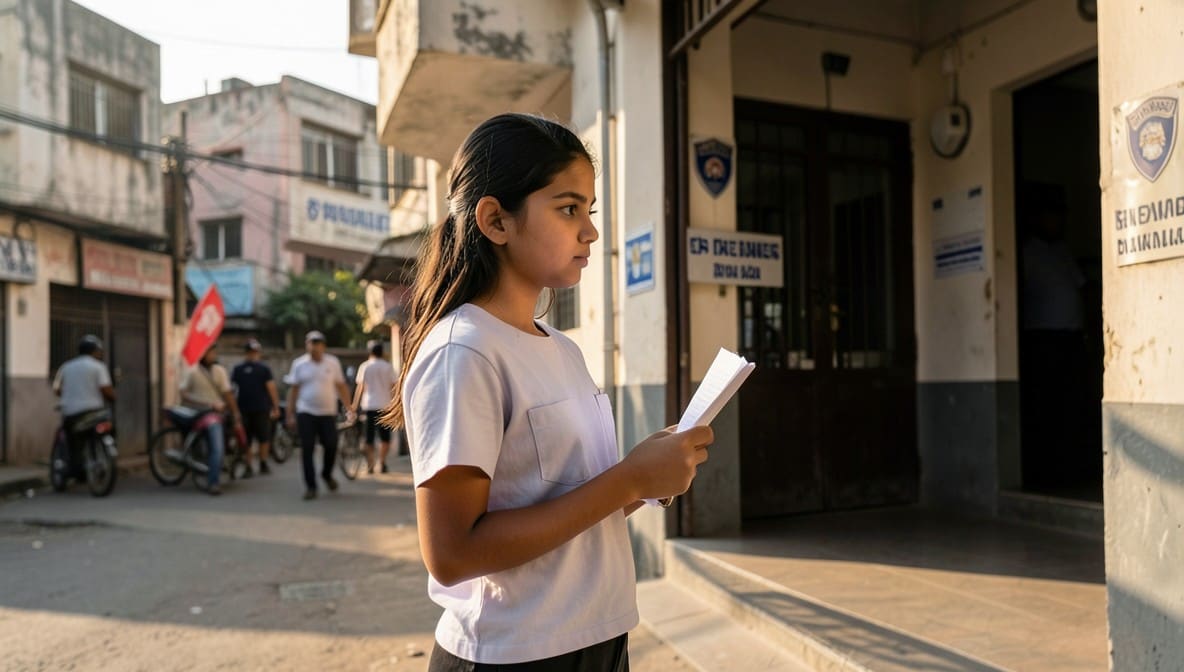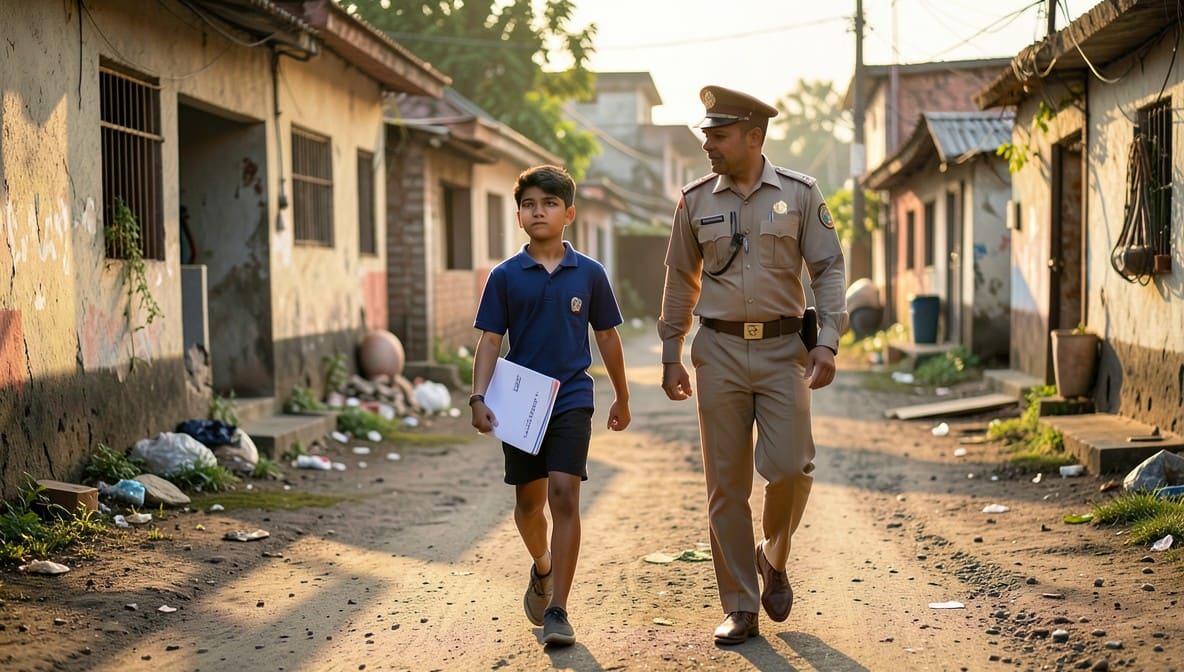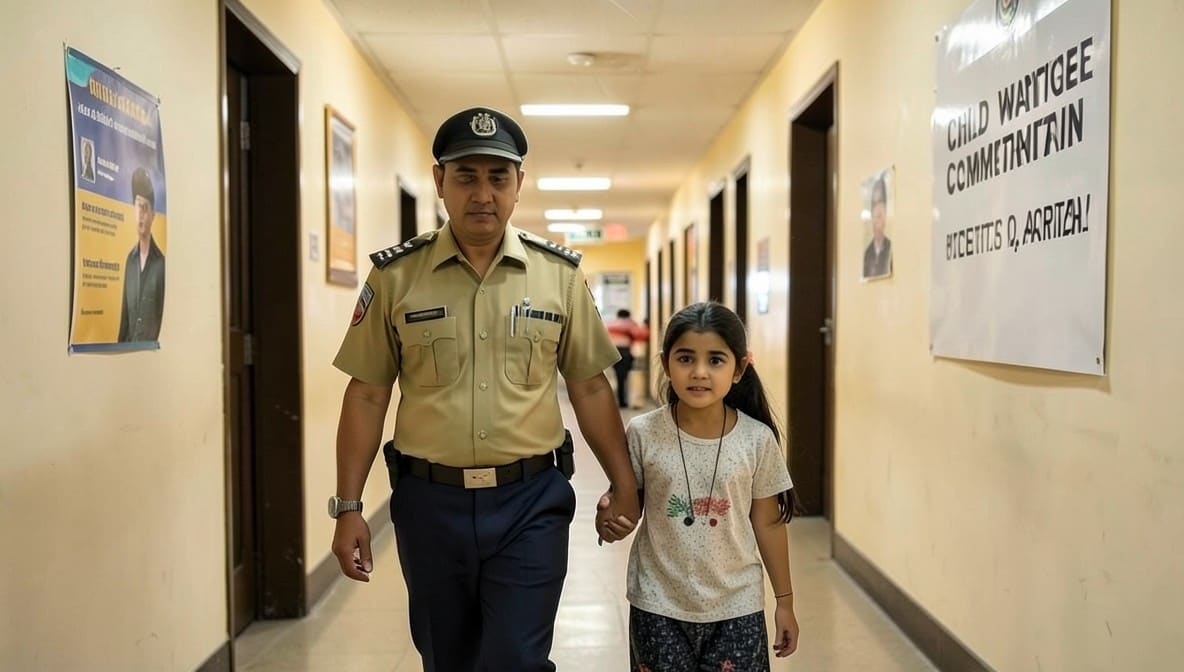
The Punjab and Haryana High Court has reaffirmed the state’s affirmative duty under the Juvenile Justice (Care and Protection of Children) Act, 2015 to protect minors at risk of forced marriage and unlawful confinement. In a decisive intervention, the Court mandated immediate procedural safeguards through the Child Welfare Committee, reinforcing that the liberty and safety of a minor supersede familial claims or social norms.
Background & Facts
The Dispute
The petitioners, a major male and his 17-year-old 3-month-old female companion, seek protection from their respective families, who are allegedly attempting to forcibly marry the minor against her will. The minor, petitioner No.2, fled her parental home due to threats and unlawful confinement. She has since been living with petitioner No.1, who is her next friend and guardian in this proceeding. The families of both petitioners oppose their association and have reportedly exerted pressure, including threats of violence, to separate them.
Key Facts
- Petitioner No.2 is 17 years and 3 months old as of the date of filing
- The private respondents are family members of both petitioners
- The minor was allegedly confined at home and subjected to coercion to enter into marriage
- On 23.03.2026, the petitioners submitted a representation (Annexure P-3) to the Senior Superintendent of Police, Ludhiana, and the Station House Officer, Basant Avenue, Ludhiana, seeking protection
- No effective action was taken by the police despite the representation
- The petitioners remain apprehensive of physical harm due to the alleged influence of the private respondents
Procedural History
- 23.03.2026: Representation filed with Ludhiana police authorities seeking protection
- 01.04.2026: Writ petition filed under Article 226 of the Constitution before the Punjab and Haryana High Court
- 01.04.2026: Court heard arguments and issued directions on the same day
Relief Sought
The petitioners sought a writ of mandamus directing the State and police authorities to:
- Protect their life and liberty from threats by private respondents
- Ensure the minor is not subjected to forced marriage
- Take immediate steps to secure her safety and well-being
The Legal Issue
The central question was whether the State, under Section 2(14)(vii) and (xii) of the Juvenile Justice (Care and Protection of Children) Act, 2015, is obligated to intervene and place a minor at risk of forced marriage before the Child Welfare Committee, even in the absence of a formal complaint or criminal FIR.
Arguments Presented
For the Petitioner
Learned counsel for the petitioners submitted that the minor qualifies as a "child in need of care and protection" under Section 2(14)(vii) (child subjected to harmful traditional practices) and Section 2(14)(xii) (child whose parents are unable to provide due care). He emphasized that the State’s duty under the JJ Act is non-discretionary and triggered by the mere apprehension of harm. Reliance was placed on the Court’s earlier decision in P...... Minor Through Vikram v. State of Haryana to show that proactive intervention is mandatory.
For the Respondent
The Additional Advocate General for Punjab accepted notice and did not oppose the petition. He acknowledged the vulnerability of the minor and conceded that the State’s duty under the JJ Act is triggered by the facts presented. He undertook to ensure compliance with the Court’s directions.
The Court's Analysis
The Court examined the provisions of the Juvenile Justice (Care and Protection of Children) Act, 2015, particularly Section 2(14) defining a child in need of care and protection, and Sections 36 and 37 prescribing the procedure for inquiry and disposal. The Court noted that the Act is a welfare statute designed to protect children from exploitation, coercion, and harm, regardless of whether a criminal case is pending.
"The minor in all these cases happen to fall within the definition of child in need of care and protection as provided under section 2(14)(vii) (xii) of Juvenile Justice (Care and Protection of Children) Act, 2015."
The Court held that the State’s obligation is not contingent upon a formal complaint or police action. The mere existence of a credible threat to a minor’s liberty and bodily integrity, especially in the context of forced marriage, activates the statutory duty under the JJ Act. The Court reiterated that the Child Welfare Committee must act as the primary safeguard, not merely as an adjudicatory body but as a protective mechanism.
The Court further emphasized that the police must not wait for a criminal complaint to act. The representation dated 23.03.2026, though informal, was sufficient to trigger the duty under the Act. The Court also clarified that its directions do not impede any ongoing criminal investigation, but they do require immediate protective action.
The Verdict
The petition succeeded. The Court directed the petitioners to appear before the Senior Superintendent of Police, Ludhiana, within 10 days. Upon their appearance, the SSP is directed to depute a Child Welfare Police Officer to produce petitioner No.2 before the Child Welfare Committee constituted under the Juvenile Justice (Care and Protection of Children) Act, 2015, within one week. The Committee shall conduct an inquiry under Section 36 and pass an order under Section 37, including interim custody and placement decisions. The SSP must also act on the representation dated 23.03.2026 to ensure protection from threat perception. The Court clarified that this order does not bar any lawful criminal proceedings.
What This Means For Similar Cases
State Duty Is Triggered by Apprehension, Not Just Crime
- Practitioners must now argue that any credible threat of forced marriage, confinement, or coercion against a minor activates the JJ Act’s protective framework, even without an FIR
- The burden is on the State to act proactively; waiting for a formal complaint is not lawful
- Representations to police or district authorities, even if informal, constitute sufficient notice under the Act
Child Welfare Committee as First Responder
- The Child Welfare Committee is not a last resort - it is the primary statutory mechanism for safeguarding minors in distress
- Its role includes immediate interim custody, safety assessment, and stakeholder consultation
- Courts will not permit delay or inaction by police or district authorities when a minor’s safety is at stake
Police Must Act Without Waiting for Criminal Process
- Police cannot claim lack of jurisdiction or absence of a crime to avoid intervention
- Deputing a Child Welfare Police Officer is a mandatory duty under the Act
- Failure to comply may attract contempt proceedings or departmental action