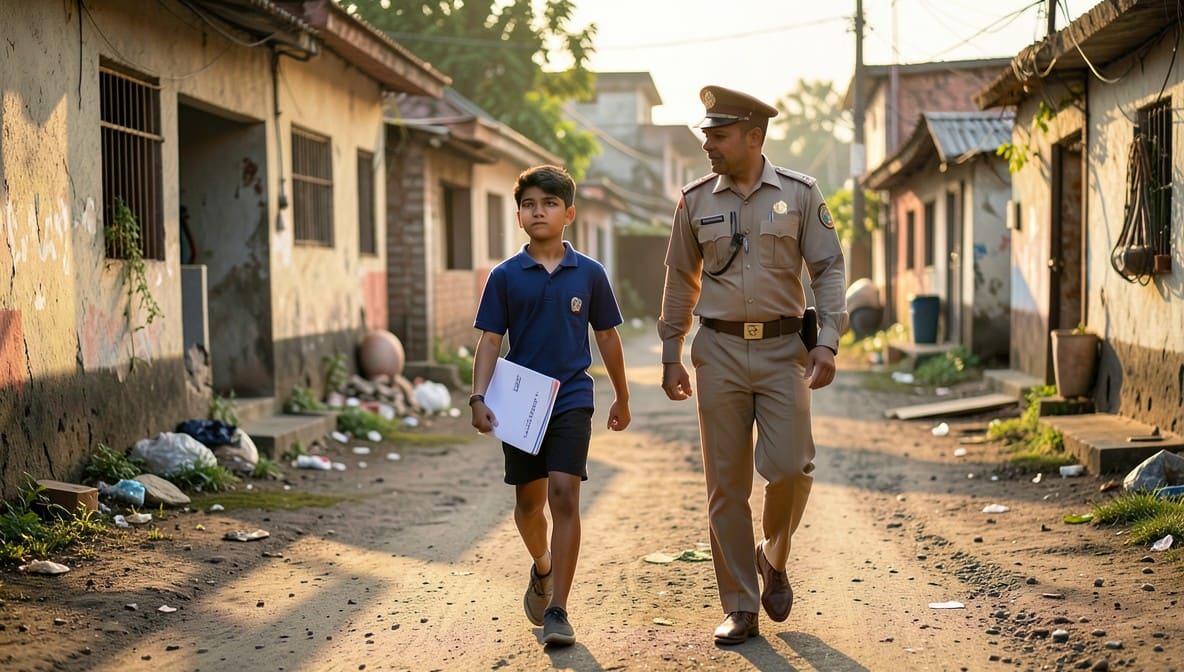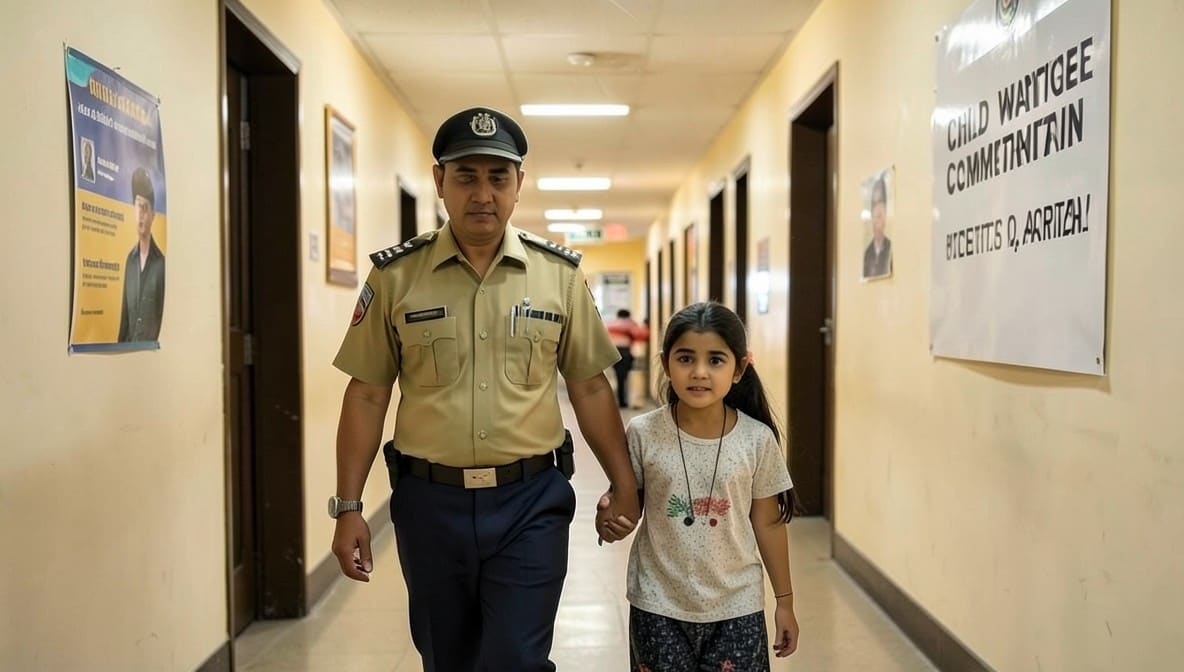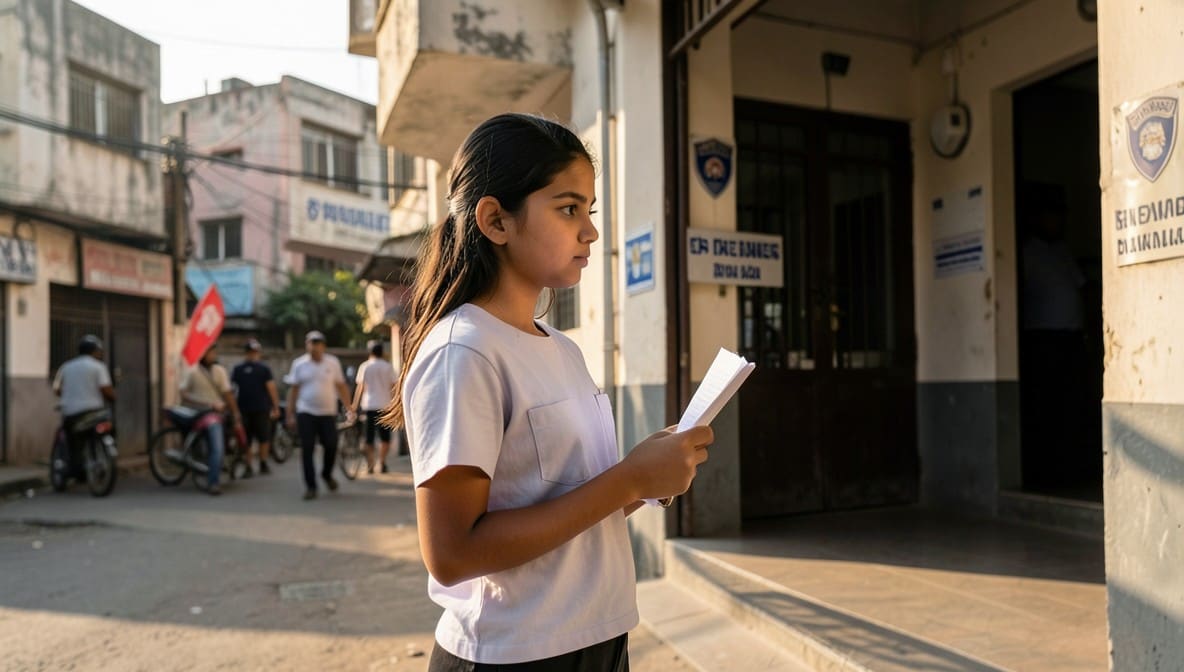
A 16-year-old minor facing imminent threat of forced marriage by her family has been granted constitutional protection by the Punjab and Haryana High Court, which invoked the Juvenile Justice (Care and Protection of Children) Act, 2015 to ensure her safety and autonomy. The judgment reaffirms the state’s affirmative duty to intervene when a minor’s liberty is jeopardized by familial coercion, even in the absence of formal criminal complaint.
Background & Facts
The Dispute
The petitioner, a 16-year-old minor girl, is being pressured by her family members - respondents - to enter into a marriage against her will. She has expressed a clear intention to marry Ramandeep Singh upon attaining majority, a decision her family opposes. Fearing physical harm and coercion, she fled her home and sought assistance through Gurmeet Singh, a relative of Ramandeep Singh, who filed this writ petition on her behalf as her next friend.
Key Facts
- The petitioner is 16 years and 5 months old as of the date of filing.
- She had developed a consensual relationship with Ramandeep Singh and planned to marry after turning 18.
- Her family became aware of the relationship and began exerting pressure to force her into an alternative marriage.
- On 12.03.2026, she submitted a written representation (Annexure P-2) to the Senior Superintendent of Police, Batala, seeking protection.
- She alleges that despite this representation, no meaningful action has been taken due to the alleged influence of her family members.
- She is currently in hiding and fears for her life and liberty.
Procedural History
- 12.03.2026: Petitioner submits representation to SSP, Batala.
- 18.03.2026: Writ Petition CRWP-3045-2026(O&M) filed under Article 226 of the Constitution.
- 18.03.2026: Court hears arguments and issues directions.
The Parties' Positions
Petitioner (through next friend): Argues that as a minor, she is vulnerable to coercion and that her right to life and personal liberty under Article 21 is under imminent threat. She seeks immediate protective intervention by the state.
Respondents (State of Punjab and family members): Did not file a written response. The Additional Advocate General accepted notice on behalf of the State but did not oppose the relief sought.
Relief Sought
The petitioner seeks:
- Immediate protection of her life and liberty from her family members.
- Direction to the police to ensure her safety.
- Intervention by the Child Welfare Committee under the Juvenile Justice Act, 2015.
- Action on her representation dated 12.03.2026.
The Legal Issue
Can a minor facing threat of forced marriage by family members be deemed a "child in need of care and protection" under Section 2(14)(vii) and (xii) of the Juvenile Justice (Care and Protection of Children) Act, 2015, thereby triggering mandatory state intervention through the Child Welfare Committee?
Arguments Presented
For the Petitioner
The petitioner’s counsel relied on the precedent set in P...... Minor Through Vikram v. State of Haryana (CRWP-2139-2022), where this Court had held that minors facing familial coercion for forced marriage fall within the definition of "child in need of care and protection." Counsel emphasized that the petitioner’s flight from home and fear of violence constitute clear indicators of vulnerability under Section 2(14)(vii) (child subjected to abuse) and Section 2(14)(xii) (child whose parents/guardians are unwilling or unable to provide care). The argument was that the state’s duty under Section 36 and Section 37 is triggered irrespective of criminal proceedings.
For the Respondent
The Additional Advocate General for Punjab accepted notice and did not contest the petitioner’s claims. The State acknowledged the petitioner’s vulnerability and the need for protective intervention under the JJ Act, 2015, aligning with the Court’s earlier jurisprudence.
The Court's Analysis
The Court examined the precedent in P...... Minor Through Vikram v. State of Haryana and found the factual matrix in the present case to be materially identical. The petitioner, being a minor, has expressed a clear desire to exercise autonomy over her personal relationships, which is being suppressed by familial pressure. The Court held that such coercion, even if not yet physical, constitutes a threat to her liberty and well-being.
"The minor in all these cases happen to fall within the definition of child in need of care and protection as provided under section 2(14)(vii) (xii) of Juvenile Justice (Care and Protection of Children) Act, 2015."
The Court emphasized that the Child Welfare Committee is not merely an advisory body but a statutory mechanism mandated to act as a safeguard for minors in distress. The Committee’s role under Section 36 to conduct an inquiry and under Section 37 to pass orders regarding custody, boarding, and safety is non-discretionary when a child’s welfare is at stake.
The Court further noted that the petitioner’s representation dated 12.03.2026 had been ignored, which amounted to a failure of the state’s duty under Section 11 of the JJ Act, 2015, to report and act upon situations of child in need of care. The Court rejected any notion that the petitioner’s intention to marry upon majority negates her status as a child in need of protection.
The Court clarified that while the state must protect her from familial coercion, this protection does not extend to shielding her from lawful criminal proceedings if she is found to have committed a cognizable offence.
The Verdict
The writ petition is allowed. The petitioner, through her next friend, is directed to appear before the Senior Superintendent of Police, Batala, within 10 days. Upon her appearance, the SSP is directed to depute a Child Welfare Police Officer to produce her before the Child Welfare Committee constituted under the Juvenile Justice (Care and Protection of Children) Act, 2015, within one week. The Committee shall conduct an inquiry under Section 36 and pass an order under Section 37, including interim custody arrangements. The SSP shall also act on the representation dated 12.03.2026 to assess threat perception and ensure the petitioner’s safety. The petitioner is not entitled to protection against arrest or criminal proceedings if found involved in any cognizable offence.
What This Means For Similar Cases
Forced Marriage Threats Trigger JJ Act Intervention
- Practitioners must now treat any credible threat of forced marriage against a minor as a statutory trigger for Child Welfare Committee intervention under Section 2(14)(vii) and (xii), regardless of whether physical violence has occurred.
- A minor’s expressed desire to marry a person of choice, even if premature, cannot be dismissed as mere rebellion - it is a protected aspect of personal autonomy under Article 21.
State Duty to Act on Representations Is Non-Discretionary
- Police and district authorities cannot ignore written representations from minors or their next friends alleging threats to liberty.
- Failure to act on such representations may constitute a violation of Section 11 of the JJ Act, 2015, and expose officials to judicial review under Article 226.
Protection Is Not Immunity from Criminal Liability
- While the state must protect minors from familial coercion, this does not grant immunity from criminal prosecution.
- Lawyers must advise minors that protection under the JJ Act does not preclude lawful arrest if they are involved in cognizable offences (e.g., elopement, abduction, etc.).
Procedural Compliance Is Mandatory
- The 10-day window for appearance and 7-day window for production before the Committee are binding timelines.
- Non-compliance by police or the Committee may result in contempt proceedings.
Documentation Is Critical
- Always secure and submit written representations to police as evidence of distress.
- Maintain copies of all communications with Child Welfare Police Officers and the Committee.
The Role of Next Friends
- Relatives of the minor’s partner may act as next friends if the minor’s parents are the source of threat.
- Courts will accept such representation if it is shown that the minor is genuinely fearful and has no other avenue for protection.