The Andhra Pradesh High Court has clarified that the absence of a succession certificate does not render a suit for recovery of a debt secured by mortgage void ab initio, and that the limitation period under Article 62 of the Limitation Act commences only when the debt becomes due, not from the date of mortgage execution. This judgment provides critical guidance on procedural compliance in debt recovery suits involving deceased mortgagees.
Background & Facts
The Dispute
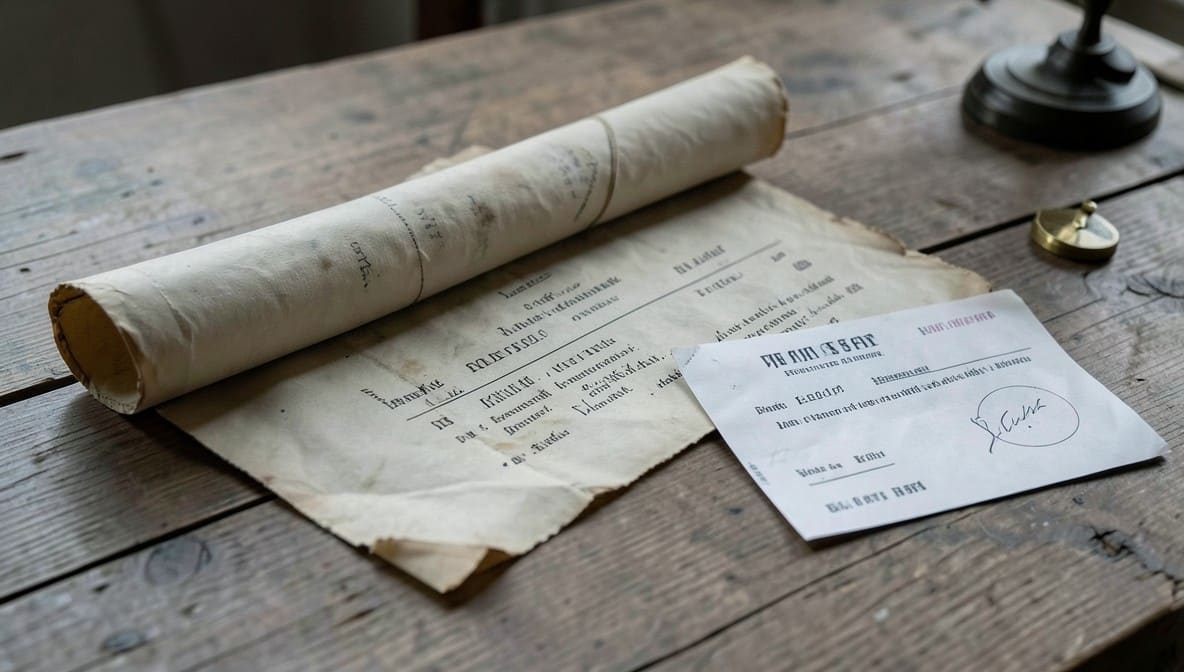
The dispute arose from a mortgage deed dated 26.02.2004, executed by the defendant in favor of Mutta Pydiraju, who died on 04.01.2014. The plaintiffs, being the legal heirs of Pydiraju - his widow (1st plaintiff) and his three children (2nd to 4th plaintiffs) - filed Original Suit No. 1225 of 2017 on 11.10.2017 seeking recovery of the principal and interest due under the mortgage, and in the event of default, a decree for sale of the mortgaged property. The defendant challenged the maintainability of the suit on two grounds: (1) the suit was barred under Section 214 of the Indian Succession Act, 1925 for failure to produce a succession certificate; and (2) the suit was time-barred under Article 62 of the Limitation Act, as it was filed more than 12 years after the mortgage deed.
Key Facts
- The mortgage deed (Document No. 445/2004) was executed on 26.02.2004.
- Clause 4 of the mortgage deed stipulated: "I will fully discharge all the liabilities... within two years from this date."
- The mortgagor, Mutta Pydiraju, died on 04.01.2014.
- The plaintiffs, as Class-I legal heirs, filed the suit on 11.10.2017 without obtaining a succession certificate.
- The defendant admitted in her written statement that the plaintiffs were the legal heirs of the deceased.
- No succession certificate was ever produced by the plaintiffs at any stage of the proceedings.
Procedural History
- 26.02.2004: Mortgage deed executed in favor of Mutta Pydiraju.
- 04.01.2014: Mutta Pydiraju died.
- 11.10.2017: Plaintiffs filed Original Suit No. 1225 of 2017 before the VI Additional Civil Judge (Senior Division), Visakhapatnam.
- 2022: Defendant filed I.A. No. 565 of 2022 under Order VII Rule 11(a) and (d) CPC seeking rejection of the plaint.
- 15.07.2025: Trial Court dismissed the application, holding the suit was neither barred by Section 214 nor by limitation.
- 28.03.2025: Civil Revision Petition No. 2425 of 2025 filed before the Andhra Pradesh High Court.
- 10.04.2026: Judgment pronounced by Justice Ravi Nath Tilhari.
The Parties' Positions
For the Petitioner (Defendant in Suit)
- Argued that Section 214 of the Indian Succession Act mandates a succession certificate as a precondition to filing any suit for recovery of debt from a debtor of a deceased person.
- Contended that the suit was filed beyond 12 years from the date of mortgage execution (26.02.2004), making it time-barred under Article 62 of the Limitation Act.
- Asserted that the plaint was defective on its face and liable to be rejected under Order VII Rule 11 CPC.
For the Respondents (Plaintiffs in Suit)
- Maintained that Section 214 does not prohibit institution of a suit, but only bars passing of a decree or execution without a succession certificate.
- Argued that the limitation period commenced only after the two-year repayment period ended on 25.02.2006, making the suit filed on 11.10.2017 well within the 12-year period.
- Relied on the defendant’s admission in the written statement that they were legal heirs, negating the need for a succession certificate.
Relief Sought
The petitioner sought dismissal of the suit on the grounds that the plaint was liable to be rejected under Order VII Rule 11 CPC for being barred by law under Section 214 of the Indian Succession Act and Article 62 of the Limitation Act.
The Legal Issue
The central questions were: (1) Whether the institution of a suit for recovery of a debt by legal heirs of a deceased mortgagee, without a succession certificate, is barred under Section 214 of the Indian Succession Act, 1925? (2) Whether the limitation period under Article 62 of the Limitation Act commences from the date of execution of the mortgage deed or from the date the debt becomes due as per its terms?
Arguments Presented
For the Appellant/Petitioner
The petitioner relied on the literal reading of Section 214 of the Indian Succession Act, arguing that the phrase "No Court shall pass a decree..." implicitly includes a bar on institution of the suit. She contended that the absence of a succession certificate rendered the plaint non-maintainable and defective on its face, attracting rejection under Order VII Rule 11(d) CPC. On limitation, she argued that since the mortgage deed was executed on 26.02.2004, and the suit was filed on 11.10.2017 - over 13 years later - it was clearly time-barred, regardless of any repayment clause.
For the Respondent/State
The respondents, though not appearing, were represented by the trial court’s reasoning, which was adopted by the High Court. They argued that Section 214 only prohibits the passing of a decree or execution of a decree, not the filing of a suit. They cited multiple precedents from Bombay, Gujarat, Allahabad, and Andhra Pradesh High Courts to establish that a succession certificate may be produced at any time before the decree is passed. On limitation, they emphasized that the mortgage deed itself fixed a two-year repayment period, and limitation commenced only after its expiry on 25.02.2006, making the suit timely.
The Court's Analysis
The Court undertook a detailed textual and precedential analysis of Section 214 of the Indian Succession Act and Article 62 of the Limitation Act. It emphasized that statutory language must be interpreted according to its plain meaning and judicial construction.
"Section 214 therefore does not bar filing or institution of a suit by the legal heirs or representatives of the deceased against the debtor. So, filing of the suit is not barred without succession certificate by Section 214 of the Indian Succession Act."
The Court observed that the provision explicitly prohibits only two actions: (a) passing a decree, and (b) executing a decree. It does not mention any prohibition on institution or trial of the suit. The Court relied on Virbhadrappa Shilvant Shop at Barsi v. Shekabai Kom Harun Sayad Ahmed Arab (AIR 1939 Bom 188), Murji Asu v. Shamji Mavji (AIR 1950 Kutch 96), and Bai Sarda v. Patel (AIR 1969 Guj 150), all of which held that the certificate may be produced before the decree is passed, and failure to do so at the pleading stage does not invalidate the suit.
The Court further noted that the defendant had admitted in her written statement that the plaintiffs were the legal heirs of the deceased. In such circumstances, requiring a succession certificate would be a formality without substance, and rejecting the plaint on this ground would be contrary to the spirit of justice.
On the issue of limitation, the Court held that Article 62 unambiguously states that the limitation period begins "when the money sued for becomes due." It rejected the petitioner’s argument that limitation commenced from the date of execution of the mortgage deed. The Court relied on the mortgage deed’s own terms - which fixed a two-year repayment period - and on the Full Bench decision in Mohammad Hussain v. Sanwal Das (1934 SCC OnLine All 37), which held that limitation begins only after the stipulated period for repayment expires. The Court also cited Prem Chand v. Mohammad Sayeed (1981 SCC OnLine All 332) to reinforce that the date of execution is irrelevant if the deed specifies a future due date.
The Court concluded that the suit was filed on 11.10.2017, within 12 years of 25.02.2006 - the date the debt became due - and therefore was not time-barred.
The Verdict
The civil revision petition was dismissed. The High Court upheld the trial court’s order dated 15.07.2025, holding that the plaint was not liable to be rejected under Order VII Rule 11 CPC. The Court confirmed that: (1) Section 214 of the Indian Succession Act does not bar the institution of a suit for recovery of debt by legal heirs without a succession certificate; and (2) the limitation period under Article 62 commences only when the debt becomes due as per the mortgage deed’s terms - here, 25.02.2006 - making the suit filed on 11.10.2017 well within the 12-year period. No costs were awarded.
What This Means For Similar Cases
Suit Institution Is Not Dependent on Succession Certificate
- Practitioners may now confidently file suits for debt recovery by legal heirs without a succession certificate, provided the defendant admits heirship or the claim is not contested on title.
- Applications under Order VII Rule 11 CPC seeking rejection on this ground are likely to fail unless the defendant denies heirship and the court requires proof.
- Courts must permit production of the succession certificate at any stage before decree, as held in Sreemanthula Kesavachari v. Yayyavuru Vallamma (2007 SCC OnLine AP 621).
Limitation Period Commences on Due Date, Not Execution Date
- In mortgage and secured debt suits, the starting point of limitation is not the date of execution of the instrument but the date the debt becomes payable under its terms.
- Where a deed specifies a repayment period (e.g., "within 2 years"), limitation begins after that period expires.
- Counsel must carefully analyze the terms of the mortgage, promissory note, or loan agreement to determine the correct limitation start date - not rely on the document’s execution date.
- This principle applies equally to other instruments with deferred payment terms, including bonds, debentures, and conditional sale agreements.