The Allahabad High Court has clarified a critical aspect of usufructuary mortgages: the limitation period for redemption begins only when the mortgagor tenders payment, not from the date of the mortgage deed. This judgment reconciles conflicting Supreme Court precedents and reaffirms the principle that a mortgage is always redeemable, providing essential guidance for property law practitioners.
Background & Facts
The Dispute
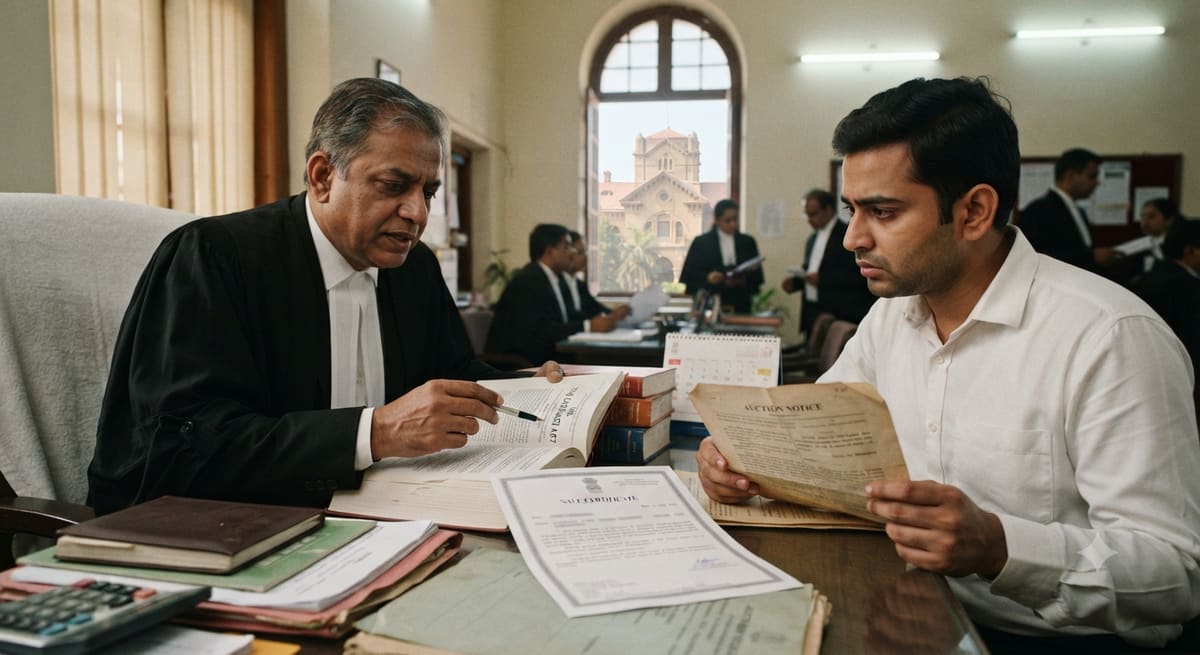
The case involves a usufructuary mortgage executed on 28.03.1978, where one Jagdish Prasad (predecessor of respondent no. 1) mortgaged house No. 333 in Mohalla Kunwapur, Bareilly, to secure a debt of Rs. 15,000. The mortgage deed provided that the petitioners (mortgagees) would remain in possession of the property, adjusting the rent towards interest on the loan. The mortgage was for a period of four years, but no specific date for redemption was fixed. After Jagdish Prasad’s death on 26.10.2015, his heirs (respondents) tendered Rs. 15,000 via bank pay order on 30.12.2015 and demanded redemption of the mortgage and possession of the property. The petitioners refused, contending that the limitation period for redemption had expired on 28.03.2012 (30 years from the mortgage date).
Key Facts
- Mortgage Deed: Executed on 28.03.1978 for Rs. 15,000, with possession delivered to mortgagees
- Terms: Rent to be adjusted towards interest; mortgage period of four years
- Notice for Redemption: Sent by respondents on 30.12.2015 with bank pay order for Rs. 15,000
- Reply by Petitioners: 12.01.2016, admitting the mortgage but refusing redemption on grounds of limitation
- Suit Filed: 03.03.2016 by respondents for redemption and possession
Procedural History
- 13.10.2017: Civil Judge (Junior Division), Bareilly, dismissed the petitioners’ application under Order VII Rule 11 C.P.C. seeking rejection of the plaint on limitation grounds
- 08.05.2019: Additional District Judge, Bareilly, dismissed the revision petition (Civil Revision No. 117 of 2017) filed by the petitioners
- 2019: Present writ petition (No. 5549 of 2019) filed under Article 227 challenging the lower courts’ orders
Relief Sought
The respondents sought:
- Direction to the petitioners to execute documents for redemption of the mortgage
- Delivery of physical possession of the mortgaged property
- Damages from the date of notice (30.12.2015)
The Legal Issue
The central question was whether the limitation period for redemption of a usufructuary mortgage under Article 61(a) of the Limitation Act, 1963 begins:
- From the date of execution of the mortgage deed, or
- From the date the mortgagor tenders payment or deposits the mortgage money in court.
Arguments Presented
For the Petitioners
- Limitation Period: Relied on Article 61(a) of the Limitation Act, arguing that the right to redeem accrues on the date of the mortgage deed unless a different time is agreed upon
- Expiry of Limitation: Contended that the 30-year limitation period expired on 28.03.2012, barring the suit
- Extinguishment of Right: Invoked Section 27 of the Limitation Act, arguing that expiry of limitation extinguishes the right to redeem
- Precedents Cited:
- Prabhakaran and others v. M. Azhagiripillai (2006) 3 SCC 484
- Sampuran Singh v. Niranjan Kaur (1999) 2 SCC 679
For the Respondents
- Nature of Mortgage: Emphasized that the mortgage was usufructuary, governed by Section 62 of the Transfer of Property Act, 1882
- Limitation Commencement: Argued that limitation begins only when the mortgagor tenders payment or deposits the mortgage money, as per Section 62
- No Fixed Redemption Date: Highlighted that the mortgage deed did not fix a date for redemption, and the mortgagee was entitled to retain possession until payment
- Precedents Cited:
- Singh Ram (D) Thr. L.Rs. v. Sheo Ram and others AIR 2014 SC 3447 (Larger Bench)
- Ram Kishan and others v. Sheo Ram AIR 2008 P&H 77 (Full Bench)
- Harminder Singh (D) through L.Rs. v. Surjit Kaur (D) through L.Rs. & others 2022 Legal Eagle SC 1365
The Court's Analysis
The Court undertook a detailed examination of the statutory provisions and judicial precedents governing usufructuary mortgages:
Statutory Provisions
- Section 58(d) of the Transfer of Property Act: Defines usufructuary mortgage as one where the mortgagor delivers possession to the mortgagee, who appropriates rents and profits towards interest or principal
- Section 60: Grants the mortgagor the right to redeem the mortgage upon payment of the mortgage money
- Section 62: Specifies that in a usufructuary mortgage, the mortgagor’s right to recover possession arises:
- When the mortgage money is paid from rents and profits, or
- When the mortgagor pays or tenders the mortgage money or deposits it in court
- Article 61(a) of the Limitation Act: Prescribes a 30-year limitation period for redemption, beginning when the right to redeem accrues
Judicial Precedents
-
Conflicting Views: The Court noted conflicting judgments on when the limitation period begins:
- Prabhakaran and Sampuran Singh: Held that limitation begins from the date of the mortgage deed
- Singh Ram v. Sheo Ram: Overruled the above judgments, holding that limitation begins only when the mortgagor tenders payment or deposits the mortgage money
-
Full Bench of Punjab & Haryana High Court (Ram Kishan v. Sheo Ram): Upheld the principle that a usufructuary mortgage is always redeemable, and limitation begins only upon tender of payment
-
Supreme Court in Singh Ram v. Sheo Ram: Affirmed the Full Bench’s view, holding that the right to redeem subsists until the mortgage money is paid from rents and profits or tendered by the mortgagor
Key Observations
-
Nature of Usufructuary Mortgage: The Court emphasized that in a usufructuary mortgage, the mortgagee has no right to sue for the debt or foreclose the mortgage. The mortgagor’s right to redeem subsists until the mortgage money is paid or tendered.
-
Limitation Period: The Court held that the limitation period under Article 61(a) begins only when the mortgagor tenders payment or deposits the mortgage money, not from the date of the mortgage deed.
-
Extinguishment of Right: Rejected the petitioners’ argument that the right to redeem is extinguished upon expiry of the limitation period, as Section 27 of the Limitation Act applies only when the right to redeem accrues, which in usufructuary mortgages is upon tender of payment.
-
Clog on Redemption: Reiterated the maxim “once a mortgage, always a mortgage”, holding that any condition restricting the mortgagor’s right to redeem is void.
"The limitation of 30 years under Article 61(a) begins to run 'when the right to redeem or the possession accrues'. The right to redemption or recover possession accrues to the mortgagor on payment of sum secured in case of usufructuary mortgage, where rents and profits are to be set off against interest on the mortgage debt, on payment or tender to the mortgagee, the mortgage money or balance thereof or deposit in the court."
The Verdict
The Court dismissed the writ petition, upholding the lower courts’ orders. The key holdings were:
- The limitation period for redemption of a usufructuary mortgage begins only when the mortgagor tenders payment or deposits the mortgage money in court, not from the date of the mortgage deed.
- The suit filed on 03.03.2016 was within the limitation period, as the tender of payment was made on 30.12.2015.
- The mortgage remains redeemable until the mortgage money is paid or tendered, and no condition can restrict this right.
No costs were awarded, and any interim orders were discharged.
What This Means For Similar Cases
Usufructuary Mortgages Are Always Redeemable
- No Extinguishment by Time: The right to redeem a usufructuary mortgage subsists until the mortgage money is paid or tendered, regardless of the passage of time. Practitioners must argue that Article 61(a) of the Limitation Act does not extinguish this right unless payment is tendered.
- Void Conditions: Any condition in the mortgage deed restricting the mortgagor’s right to redeem (e.g., fixing a time period for redemption) is void as a clog on redemption.
Limitation Period Commences on Tender of Payment
- Key Date: The limitation period for filing a suit for redemption begins only when the mortgagor tenders payment or deposits the mortgage money in court. This date, not the mortgage date, is crucial for calculating limitation.
- Practical Implications: Mortgagees cannot rely on the expiry of 30 years from the mortgage date to resist redemption. They must prove that the mortgagor tendered payment or that the mortgage money was paid from rents and profits.
Precedents to Rely On
- Binding Authority: The judgments in Singh Ram v. Sheo Ram (AIR 2014 SC 3447) and Ram Kishan v. Sheo Ram (AIR 2008 P&H 77) are now binding precedents. Practitioners should cite these to argue against limitation-based defenses in usufructuary mortgage redemption suits.
- Distinguishing Earlier Judgments: The judgments in Prabhakaran and Sampuran Singh are no longer good law and should be distinguished in pleadings and arguments.
Drafting and Litigation Strategy
- Pleadings: In suits for redemption, pleadings must explicitly state the date of tender of payment or deposit of mortgage money, as this is the trigger for limitation.
- Defenses: Mortgagees resisting redemption must prove that the mortgage money was paid from rents and profits or that the mortgagor tendered payment earlier. Mere reliance on the mortgage date will not suffice.
- Remedies: If a mortgagee refuses to accept tendered payment, the mortgagor may deposit the amount in court under Section 62 of the Transfer of Property Act to trigger the limitation period.",