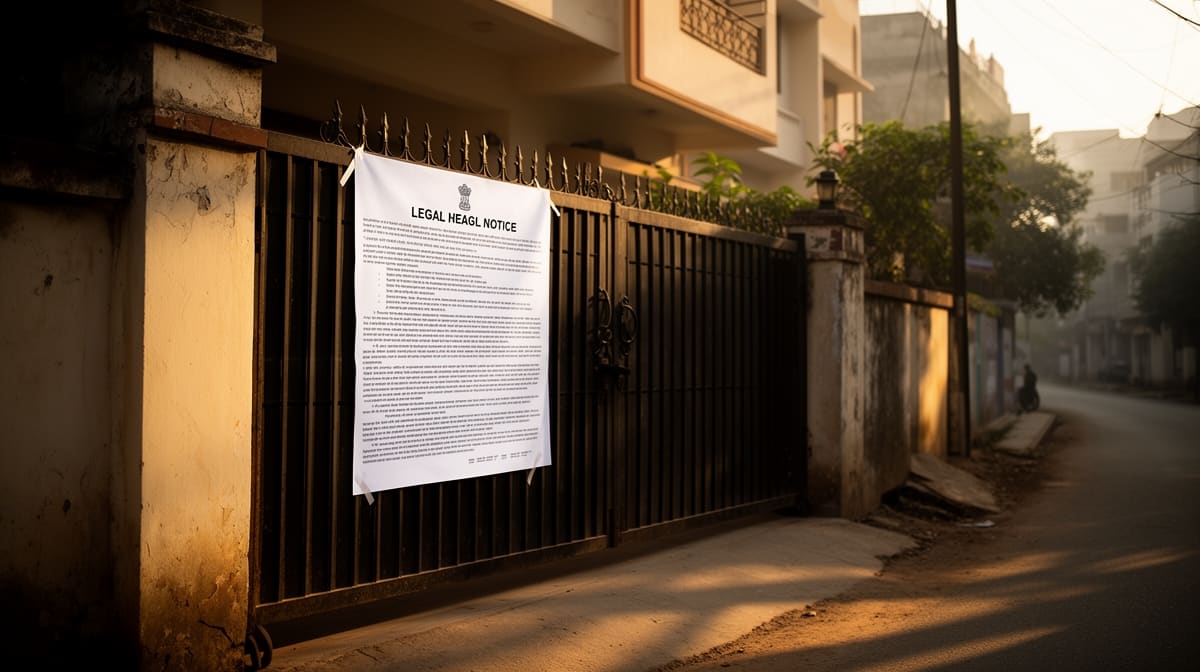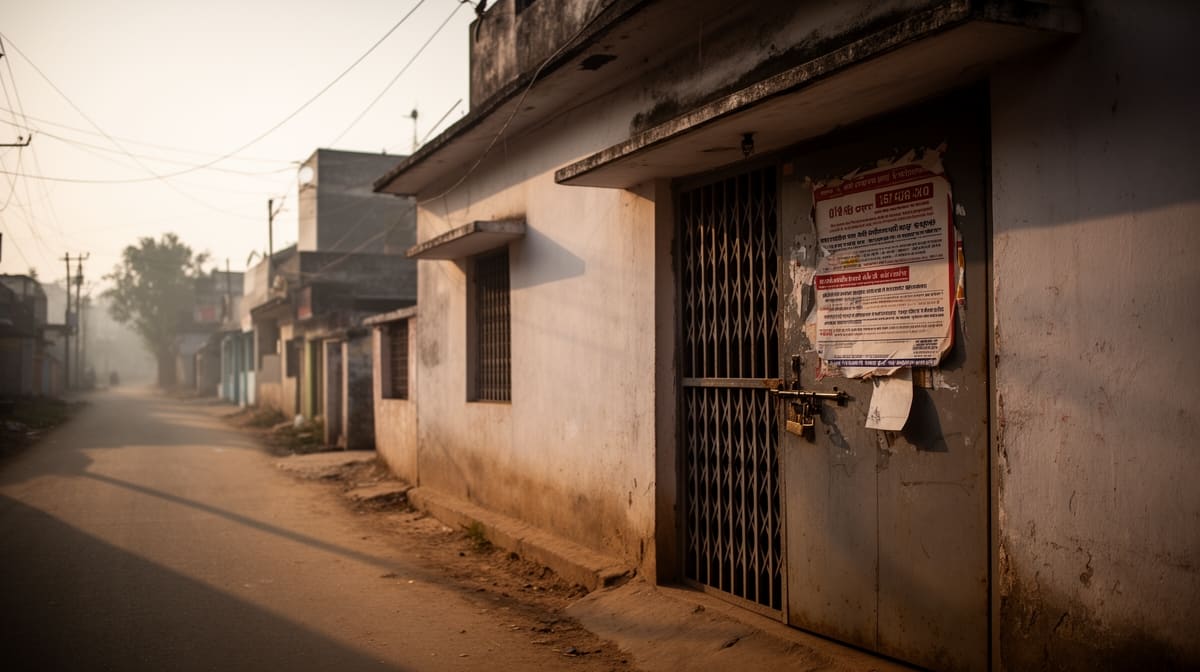
The Bombay High Court has issued an interim stay on the physical possession of a dwelling house under the SARFAESI Act, holding that banks cannot proceed against legal heirs without serving notice to all heirs and must act within the statutory limitation period. This order reinforces procedural safeguards for borrowers’ families and clarifies that procedural lapses invalidate enforcement actions, even where debt is undisputed.
Background & Facts
The Dispute
The petitioners, legal heirs of the deceased borrower Sudha Avdhut Patil, challenge the Central Bank of India’s initiation of recovery proceedings under the SARFAESI Act. The bank issued a notice dated 25.02.2026 seeking possession of the deceased’s residential property, with physical takeover scheduled for 10.03.2026. The property is the primary residence of the petitioners, including petitioner No.1, the deceased’s daughter, who was not served any notice.
Procedural History
- The borrower, Sudha Avdhut Patil, passed away in 2019.
- The bank initiated SARFAESI proceedings in February 2026, over six years after default.
- Only two of the three legal heirs were named in the notice; petitioner No.1, the daughter, was omitted entirely.
- The bank did not issue any notice under Section 13(1) of the SARFAESI Act to the petitioner No.1.
- The petitioners filed this writ petition on 10.03.2026, seeking urgent stay against physical possession.
Relief Sought
The petitioners sought an ad-interim stay on the bank’s attempt to take physical possession of the dwelling house, arguing that the proceedings were time-barred and violated natural justice by excluding a legal heir from notice.
The Legal Issue
The central question was whether a bank can initiate proceedings under the SARFAESI Act beyond the period of limitation prescribed under Section 36, and whether failure to serve notice on all legal heirs renders the possession notice void ab initio.
Arguments Presented
For the Petitioner
Learned counsel argued that the bank’s action was barred by limitation under Section 36 of the SARFAESI Act, which mandates that proceedings must be initiated within three years from the date of default. The default occurred in 2019, and proceedings were initiated in 2026 - well beyond the limitation period. Further, the bank failed to serve notice on petitioner No.1, a legal heir, violating Section 13(1) and the principles of natural justice. Reliance was placed on M/s. Muthoot Finance Ltd. v. P. Suresh Kumar to argue that omission of a legal heir invalidates the entire process.
For the Respondent
The bank did not file a written response prior to the hearing. Counsel appeared only on the day of hearing and did not contest the limitation period or the omission of notice, instead urging the court to consider the bank’s right to recover dues. No evidence was produced to show compliance with procedural mandates.
The Court's Analysis
The Court examined the statutory framework under the SARFAESI Act and found that Section 36 imposes a clear three-year limitation period for initiating proceedings. The bank’s delay of over six years, without any explanation or application for condonation, rendered the proceedings legally unsustainable. The Court further held that Section 13(1) requires notice to be served on the borrower and any other person claiming an interest in the secured asset. The omission of petitioner No.1, a legal heir with a vested interest in the property, was a fatal procedural defect.
"The SARFAESI Act, while empowering banks, does not permit them to bypass the rights of legal heirs or ignore statutory timelines. The right to notice is not a formality - it is a substantive safeguard."
The Court emphasized that the property in question is a dwelling house, and the petitioners have no alternative residence. The bank’s failure to comply with both limitation and notice requirements created a prima facie case of irreparable harm. The Court distinguished K. Srinivas v. Union of India, where procedural compliance was upheld, noting that here, both statutory and constitutional norms were breached.
The Verdict
The petitioners succeeded. The Court held that proceedings initiated beyond the limitation period under Section 36 and failure to serve notice on all legal heirs render the possession notice invalid. The bank was restrained from taking physical possession of the property until the next hearing.
What This Means For Similar Cases
Notice to All Legal Heirs Is Non-Negotiable
- Practitioners must verify that all legal heirs of a deceased borrower are named in SARFAESI notices.
- Omission of even one heir invalidates the entire process, regardless of the debt amount.
- Banks must maintain complete succession records and serve notices via registered post and email where possible.
Limitation Period Is Strictly Enforced
- Banks cannot rely on equitable principles to extend the three-year window under Section 36.
- Delay must be explained with documentary evidence; mere assertion of ‘good faith’ is insufficient.
- Petitioners in similar cases may now invoke Section 36 as a standalone ground for quashing notices.
Dwelling Houses Receive Heightened Protection
- Courts are increasingly sensitive to the impact of possession on residential properties.
- Even in cases of clear default, procedural compliance must precede enforcement.
- Advocates should routinely raise Section 13(1) and Section 36 together in SARFAESI writ petitions.