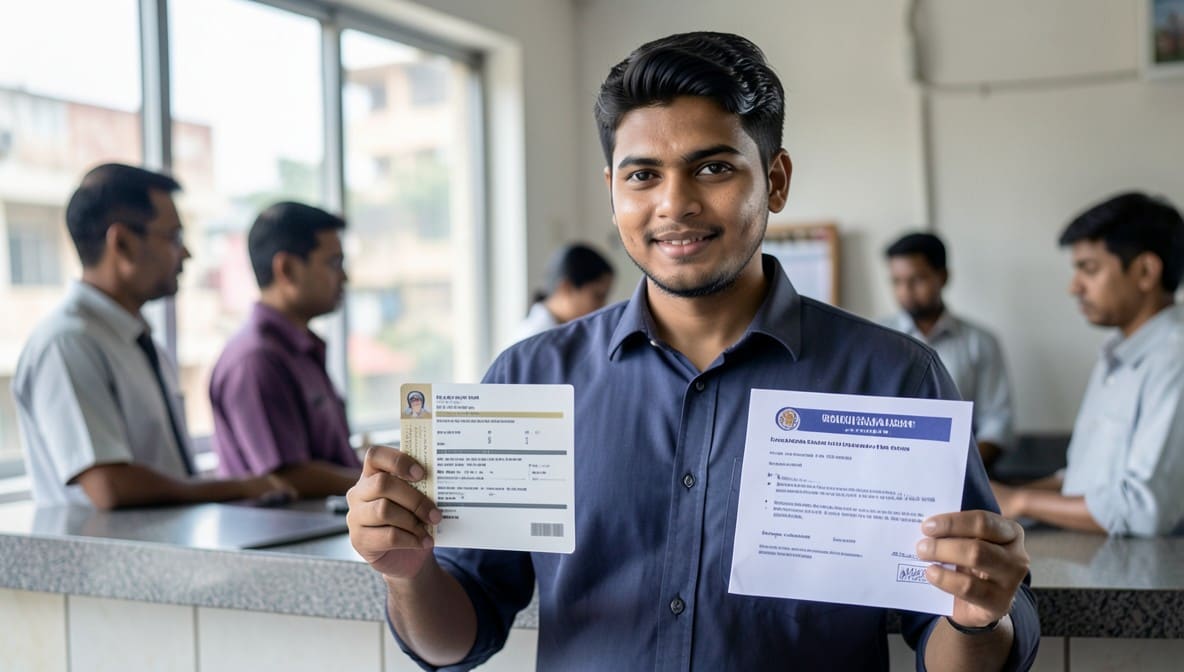
The Allahabad High Court has unequivocally held that a conviction recorded against a person during his minority under the Juvenile Justice Act, 2000 cannot serve as a legal impediment to the issuance of a passport. This judgment reinforces the statutory mandate of rehabilitation and the constitutional right to travel abroad, affirming that juvenile delinquency must not cast a lifelong shadow on an individual’s civil liberties.
Background & Facts
The Dispute
The petitioner, Mohd Yunus Ansari, applied for a passport on 29.01.2020. His application was rejected by the Regional Passport Officer, Gomti Nagar, Lucknow, via an order dated 19.03.2021, which cited two grounds: (i) failure to respond to a notice dated 31.12.2020 regarding pending criminal cases, and (ii) an adverse police report. The petitioner challenged this order before the High Court, seeking quashing of the refusal and a writ of mandamus directing issuance of the passport.
Key Facts
- The petitioner was born on 18.05.1993, making him 16 years and 10 months old at the time of the alleged offence on 01.03.2010.
- He was tried as a juvenile by the Juvenile Justice Board, Gorakhpur, in Case Crime No. 219 of 2010 under Sections 363, 366, and 376 IPC.
- On 13.08.2013, the Juvenile Justice Board convicted him and ordered probation for six months, subject to execution of a bond for good conduct.
- The petitioner successfully completed his probation period and was issued a Character Certificate by the District Probation Officer, Gorakhpur, on 20.03.2014, confirming his good conduct.
- The petitioner’s High School Certificate (Annexure No.1) and the conviction order (Annexure No.4) were placed on record.
- No criminal proceedings were pending against him at the time of his passport application.
- The petitioner had previously filed Civil Misc. Writ Petition No. 12922 of 2020, which was decided on 31.08.2020 directing the Passport Authority to decide his application expeditiously.
- A contempt application (No. 684 of 2021) was filed alleging non-compliance with the 31.08.2020 order, and the impugned refusal order was passed during the pendency of that contempt proceeding.
Procedural History
- 29.01.2020: Petitioner applied for passport.
- 31.08.2020: High Court directed Passport Authority to decide application expeditiously.
- 19.03.2021: Passport Authority issued impugned order refusing passport on grounds of pending criminal case and adverse police report.
- 07.04.2021: Contempt Application No. 684 of 2021 filed before High Court alleging non-compliance with 31.08.2020 order.
- 21.05.2021: Writ Petition No. 21876 of 2021 filed before Allahabad High Court challenging the 19.03.2021 order.
- 16.04.2026: Case reserved for judgment.
- 07.05.2026: Judgment delivered.
The Parties' Positions
Petitioner: Argued that the refusal order was cryptic, arbitrary, and motivated by annoyance over contempt proceedings. He emphasized that no criminal case was pending and that his juvenile conviction carried no legal disqualification under Section 19 of the Juvenile Justice Act, 2000. He relied on the Character Certificate and the statutory mandate for a fresh start.
Respondent (Union of India): Contended that the petitioner was a previous convict and that Section 6(2)(f) of the Passports Act, 1967 permitted refusal on grounds of pending proceedings. The counsel attempted to equate juvenile conviction with adult criminal record, ignoring statutory protections.
Relief Sought
The petitioner sought:
- Quashing of the impugned order dated 19.03.2021.
- A writ of mandamus directing the Regional Passport Officer to issue his passport.
- Costs of litigation.
The Legal Issue
The central question was whether a conviction recorded against a person as a juvenile under the Juvenile Justice Act, 2000, and for which no proceedings are pending, constitutes a legal impediment to the issuance of a passport under Section 6(2)(f) of the Passports Act, 1967.
Arguments Presented
For the Petitioner
Learned counsel relied on State of Rajasthan v. Rajendra Prasad Jain (2008) and Chandana Impex Pvt. Ltd. v. Commissioner of Customs (2011) to argue that administrative orders must be reasoned and transparent. He emphasized that the refusal order was cryptic and failed to demonstrate pendency of any criminal case. He invoked Section 19 of the Juvenile Justice Act, 2000, which explicitly removes disqualifications arising from juvenile conviction. He further cited Maneka Gandhi v. Union of India (1978) to assert that the right to travel abroad is a fundamental right under Article 21, and that any restriction must be fair, reasonable, and non-arbitrary. He highlighted the Supreme Court’s ruling in Union of India v. Ramesh Bishnoi (2019) that juvenile convictions cannot be used to stigmatize or disqualify individuals for employment or civil rights.
For the Respondent
The counsel for the Union of India argued that the petitioner’s conviction, even if juvenile, rendered him ineligible for a passport under Section 6(2)(f) of the Passports Act, 1967, which permits refusal if proceedings are pending. He contended that the conviction record itself was sufficient to justify refusal, disregarding the statutory protections under the Juvenile Justice Act. He did not dispute the absence of pending proceedings but sought to treat the conviction as a permanent disqualification.
The Court's Analysis
The Court undertook a comprehensive analysis of the statutory framework governing juveniles and passport issuance. It began by affirming that Section 6(2)(f) of the Passports Act permits refusal only if proceedings are pending - a condition that was demonstrably absent in the petitioner’s case. The Court noted that the respondents had falsely asserted pendency of proceedings, which amounted to non-application of mind and arbitrariness.
The Court then turned to the Juvenile Justice Act, 2000. It emphasized that Section 19(1) contains a non-obstante clause, which overrides any other law and explicitly states that a juvenile who has been dealt with under the Act shall not suffer any disqualification attaching to a conviction. The Court held that this provision was not merely procedural but substantive, designed to ensure rehabilitation and social reintegration.
"Section 19(1) of the Juvenile Justice Act, 2000, removes disqualification attaching to conviction, and this removal is absolute and not subject to any exception or qualification."
The Court further examined Section 24 of the Juvenile Justice Act, 2015, which mandates the erasure or destruction of juvenile records, reinforcing the principle of a fresh start. It cited Jorawer Singh Mundy v. Union of India (2021) and Union of India v. Ramesh Bishnoi (2019) to underscore that allowing juvenile records to persist defeats the legislative intent and violates the right to life and personal liberty under Article 21.
The Court rejected the respondent’s attempt to equate juvenile conviction with adult criminality, stating that such an approach would render the entire juvenile justice framework meaningless. It held that the right to travel abroad, recognized as fundamental in Maneka Gandhi, cannot be curtailed on the basis of a juvenile conviction that the law itself declares carries no stigma or disqualification.
The Court also noted that the refusal order appeared to be retaliatory, issued during the pendency of contempt proceedings, thereby violating the principles of natural justice and fairness.
The Verdict
The writ petition was allowed. The impugned order dated 19.03.2021 was quashed. The Regional Passport Officer was directed to process the petitioner’s passport application afresh and issue the passport within four weeks, provided no other lawful impediment exists. The Court awarded costs of Rs. 50,000 to the petitioner.
What This Means For Similar Cases
Juvenile Convictions Carry No Civil Disqualification
- Practitioners must now argue that any refusal of civil rights - including passports, government jobs, or educational admissions - based on juvenile conviction is legally unsustainable.
- Section 19 of the Juvenile Justice Act, 2000, operates as a complete shield against disqualification, regardless of the nature of the offence.
- Authorities cannot rely on criminal records of juveniles unless explicitly permitted by law - which they are not.
Right to Travel Is Absolute Unless Legally Restricted
- Passport refusal must be grounded in statutory grounds under Section 6 of the Passports Act, 1967 - not on moral prejudice or speculative risk.
- The presence of a past juvenile conviction does not satisfy any ground under Section 6(2).
- Courts will scrutinize refusals for arbitrariness, especially when they coincide with pending contempt or administrative retaliation.
Records Must Be Erased, Not Just Ignored
- The 2015 Act’s mandate to erase juvenile records is not merely aspirational - it is enforceable.
- Public agencies must proactively purge juvenile records from databases, police records, and background check systems.
- Failure to do so exposes the State to constitutional liability under Article 21 and violates the principle of fresh start.