The Punjab & Haryana High Court has clarified that anticipatory bail cannot be denied under the SC/ST Act merely on the basis of a general allegation of caste-based insult. The judgment underscores that a prima facie case must be established with specific allegations of intentional humiliation tied to the victim’s Scheduled Caste identity, failing which the stringent bar under Section 18 cannot be invoked.
Background & Facts
The Dispute
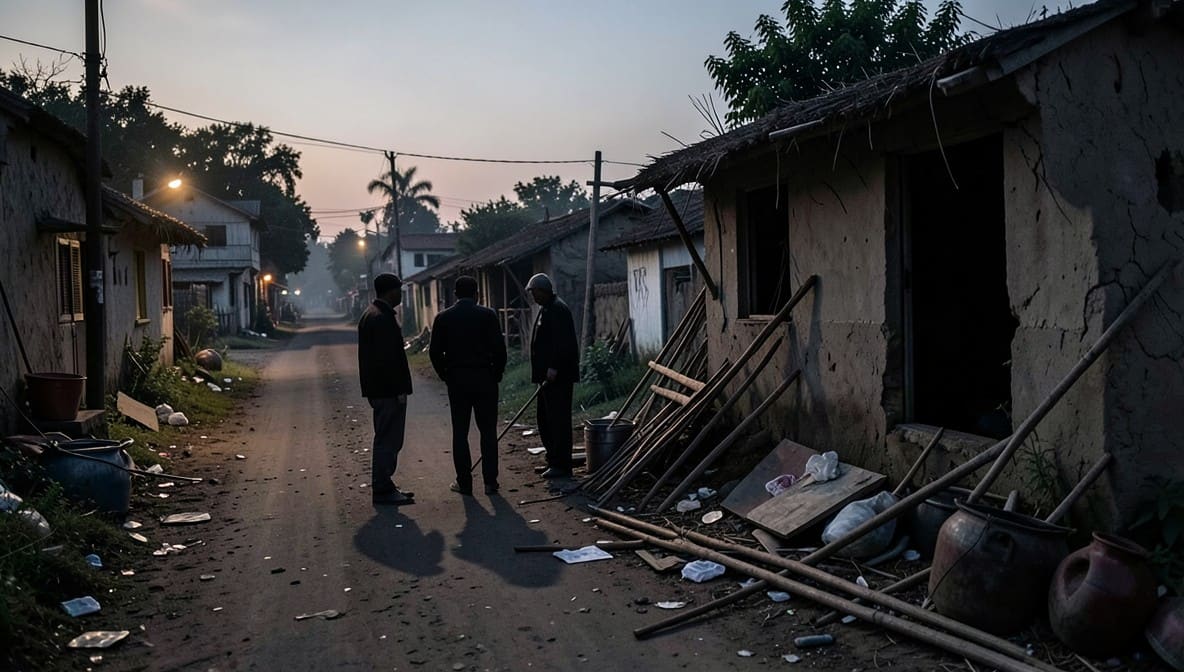
The appellant, Karan Sharma, sought anticipatory bail in connection with FIR No. 161 dated 28.10.2025, registered at Police Station Kulgarhi, District Ferozepur, under Sections 115(2), 351(2), 191(3), and 190 of the Bharatiya Nyaya Sanhita, 2023 (BNS), later supplemented with Sections 3(1)(r) and 3(1)(s) of the Scheduled Caste and the Scheduled Tribes (Prevention of Atrocities) Act, 1989 (SC/ST Act). The complaint alleged that on the evening of 26.10.2025, the appellant, accompanied by co-accused, arrived at the complainant’s residence in a Honda City car. After moving brickbats from the street, the group began hurling abuses. The complainant, who belongs to a Scheduled Caste, was allegedly assaulted with stones and fists, resulting in injuries to his abdomen and head. His neighbor, Harjinder Kaur, was also assaulted while attempting to intervene. The assailants fled after making caste-based remarks and threatening the complainant. The complainant was hospitalized.
Key Facts
- The incident occurred on 26.10.2025 at the complainant’s residence in Kulgarhi, Ferozepur
- FIR was registered on 28.10.2025 under BNS provisions and later amended to include Sections 3(1)(r) and 3(1)(s) of the SC/ST Act
- The appellant is accused of throwing a stone that caused a simple injury to the complainant’s abdomen
- No specific caste-based slurs or exact words used by the appellant are mentioned in the FIR
- The complainant’s caste identity is stated generally, without evidence that the appellant was aware of it
- No recovery of weapons or incriminating material is alleged against the appellant
- The appellant has no prior criminal record
Procedural History
- 26.10.2025: Alleged incident occurs
- 28.10.2025: FIR No. 161 registered at Police Station Kulgarhi
- 27.11.2025: Application for anticipatory bail dismissed by Additional Sessions Judge, Ferozepur
- 19.03.2026: Appeal heard and reserved by the High Court
- 20.03.2026: Judgment pronounced and uploaded on the court website
The Parties' Positions
For the Appellant
- Argued that the FIR does not establish the essential ingredients of Sections 3(1)(r) and 3(1)(s) of the SC/ST Act
- Contended that there is no evidence the appellant knew the complainant belonged to a Scheduled Caste
- Stated that the alleged abuse was generic and not targeted at the complainant’s caste identity
- Emphasized that the injury caused was simple and not severe
- Highlighted that the appellant is willing to cooperate fully with the investigation and has no need for custodial interrogation
- Asserted that Section 18 of the SC/ST Act, which bars anticipatory bail, is not attracted without prima facie proof of caste-based humiliation
For the Respondent
- Argued that the use of abusive language during the assault, coupled with the complainant’s caste identity, satisfies the requirements of Sections 3(1)(r) and 3(1)(s)
- Contended that the bar under Section 18 is automatically triggered once caste-based remarks are alleged
- Maintained that the allegations are serious and specific, and the appellant’s role in the assault warrants denial of bail
- Asserted that the court should not conduct a preliminary inquiry into the veracity of allegations at the bail stage
Relief Sought
The appellant sought quashing of the order dated 27.11.2025 dismissing his anticipatory bail application, and requested the grant of anticipatory bail subject to reasonable conditions.
The Legal Issue
The central question was whether the mere allegation of caste-based abuse in an FIR, without specificity or evidence that the accused was aware of the victim’s Scheduled Caste identity, is sufficient to attract the bar under Section 18 of the SC/ST Act and deny anticipatory bail.
Arguments Presented
For the Appellant
The appellant’s counsel relied on Dr. Subhash Kashinath Mahajan v. State of Maharashtra and Shajan Skaria v. State of Kerala to argue that courts must conduct a preliminary scrutiny of the FIR to determine whether the essential ingredients of the SC/ST Act are prima facie made out. It was submitted that Section 3(1)(r) requires intentional humiliation in public view with knowledge of the victim’s caste, and Section 3(1)(s) requires intimidation through caste-based threats. The absence of any specific language used by the appellant, and no indication that he knew the complainant’s caste, rendered the invocation of these provisions legally unsustainable. The counsel emphasized that the appellant’s role was limited to throwing a stone causing a simple injury, which is bailable under BNS and does not warrant the application of Section 18.
For the Respondent
The State contended that the use of abusive language during the assault, even if not detailed in the FIR, is sufficient to invoke the SC/ST Act. It was argued that the complainant’s caste identity was known to the accused by virtue of the context of the incident and the nature of the remarks. The State further submitted that the bar under Section 18 is a legislative safeguard and should not be diluted by judicial scrutiny at the bail stage. It was asserted that the court’s role is not to evaluate the truth of allegations at this stage, but to ensure that serious offences under the SC/ST Act are not undermined by premature bail.
The Court's Analysis
The Court undertook a detailed examination of the FIR and the legal framework under the SC/ST Act. It observed that while the complainant’s caste identity is mentioned, there is no specific allegation that the appellant knew of it or directed any abusive language at him because of it. The Court noted that the FIR contains only vague references to "caste-based remarks" without identifying the exact words used, the context in which they were spoken, or whether they were directed at the complainant’s identity.
"As such, it is a matter of trial as to whether, any case for commission of offence punishable under Sections 3(1)(r) and 3(1)(s) of SC/ST Act can be stated to have been made out thereby attracting the bar under Section 18 of the SC/ST Act."
The Court emphasized that the Supreme Court in Shajan Skaria had held that courts must not mechanically apply Section 18 merely because caste is mentioned in the FIR. A prima facie case must be established with specificity. The Court further held that the appellant’s role was limited to throwing a stone causing a simple injury, which is not inherently an atrocity under the Act. The absence of evidence of intent to humiliate or intimidate on caste grounds meant that the conditions for invoking Section 18 were not met.
The Court also noted the appellant’s willingness to cooperate with the investigation, the absence of any need for custodial interrogation, and the lack of any risk of evidence tampering or flight. These factors, combined with the lack of prima facie proof of the essential ingredients of the SC/ST offences, weighed in favor of granting anticipatory bail.
The Verdict
The appeal was allowed. The impugned order dated 27.11.2025 dismissing the anticipatory bail application was set aside. The appellant was granted anticipatory bail subject to the following conditions: (i) he shall appear before the Investigating Officer within 10 days from the date of judgment and cooperate fully with the investigation; (ii) he shall not intimidate, threaten, or induce any witness; and (iii) he shall not commit any similar offence while on bail. The Court clarified that this order does not constitute an opinion on the merits of the case. The jurisdictional court may cancel bail if any condition is violated.
What This Means For Similar Cases
Prima Facie Proof of Caste Intent Is Mandatory
- Practitioners must now demonstrate that the accused had knowledge of the victim’s Scheduled Caste identity and intended to humiliate or intimidate on that basis
- Vague references to "caste-based remarks" without specificity will not suffice to invoke Section 18
- Courts must conduct a preliminary review of the FIR to determine if the essential ingredients of Sections 3(1)(r) and 3(1)(s) are prima facie present
Anticipatory Bail Is Not Automatically Barred in SC/ST Cases
- The bar under Section 18 is not absolute; it is conditional on the existence of a prima facie case
- Where the accused’s role is minor and the injury is simple, and caste-based intent is unproven, bail may be granted
- Courts must balance the legislative intent of the SC/ST Act with the fundamental right to liberty under Article 21
Investigation Cooperation Can Influence Bail Decisions
- Willingness to cooperate with investigation, absence of custodial need, and no risk of evidence tampering are critical factors
- Courts may grant anticipatory bail even in serious cases if the allegations lack specificity and the accused is not a flight risk