The Bombay High Court has clarified that the bar on anticipatory bail under Section 18 of the Scheduled Castes and Scheduled Tribes (Prevention of Atrocities) Act, 1989, applies only when caste-based abuse occurs within public view. This ruling reinforces the statutory requirement that the offensive act must be committed in the presence of others to trigger the stringent bail restrictions, distinguishing mere private altercations from public humiliation.
Background & Facts
The Dispute
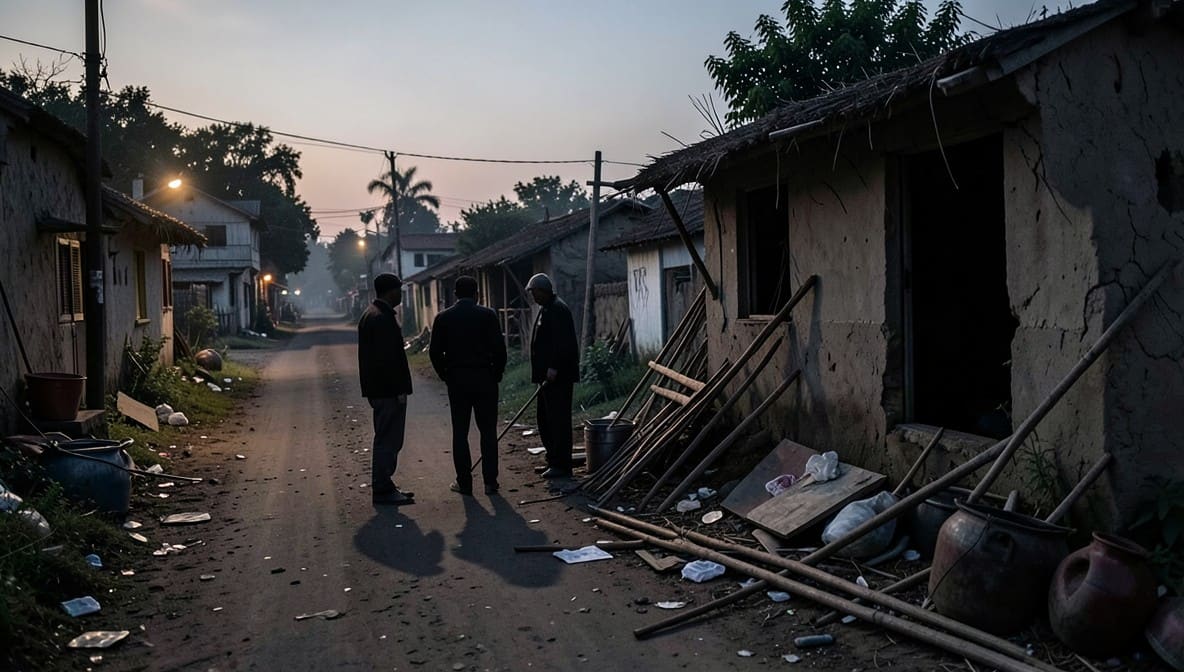
The appellant, Dinesh S/o Nilkanth Khandre, is accused alongside another individual in Crime No. 11/2026 for allegedly assaulting and verbally abusing the complainant, a member of the Scheduled Caste, on the basis of his caste. The incident occurred on the evening of 3 January 2026 near the complainant’s residence in Pipri village, Yavatmal, when the complainant stepped out to inspect a water pipeline. The appellant allegedly shouted a caste-based slur - 'Tu Madgi Asun Babasahebancha Nad Kashala Karit Aahe' - and handed an iron rod to the co-accused, who then assaulted the complainant, causing fractures to his hand and leg. The complainant’s relatives intervened, and the accused allegedly threatened them as well.
Procedural History
- 3 January 2026: Incident occurred at the edge of the complainant’s property, near a public pathway.
- 4 January 2026: First Information Report (F.I.R.) registered under Sections 3(1)(r), 3(1)(s), 3(2)(va) of the SCST Act and relevant sections of the Bhartiya Nyaya Sanhita.
- 13 January 2026: Additional Sessions Judge, Kelapur, rejected the appellant’s anticipatory bail application, holding that a prima facie case under the SCST Act existed.
- 27 February 2026: Criminal Appeal No. 31/2026 heard before the Nagpur Bench of the Bombay High Court.
Relief Sought
The appellant sought anticipatory bail, arguing that the alleged caste-based abuse did not occur in public view and that the assault was primarily committed by the co-accused. He contended that Section 18 of the SCST Act, which bars anticipatory bail, was inapplicable.
The Legal Issue
The central question was whether Section 18 of the SCST Act imposes a bar on anticipatory bail when a caste-based slur is uttered in a private or semi-private space, even if others are present as family members, or whether the abuse must occur within the public view as interpreted by precedent.
Arguments Presented
For the Appellant
The appellant’s counsel relied on Deepak Kumar Tala v. State of Andhra Pradesh, Salim Abdul Shaikh v. State of Maharashtra, and Vishal Shrikrushna Mahalle v. State of Maharashtra to argue that the alleged slur was not made in the presence of the general public. He emphasized that the incident occurred near the complainant’s home, with only family members present, and that the F.I.R. did not establish that the abuse was audible or visible to passersby or members of the community at large. He contended that the bar under Section 18 should not apply absent clear evidence of public humiliation.
For the Respondent/State
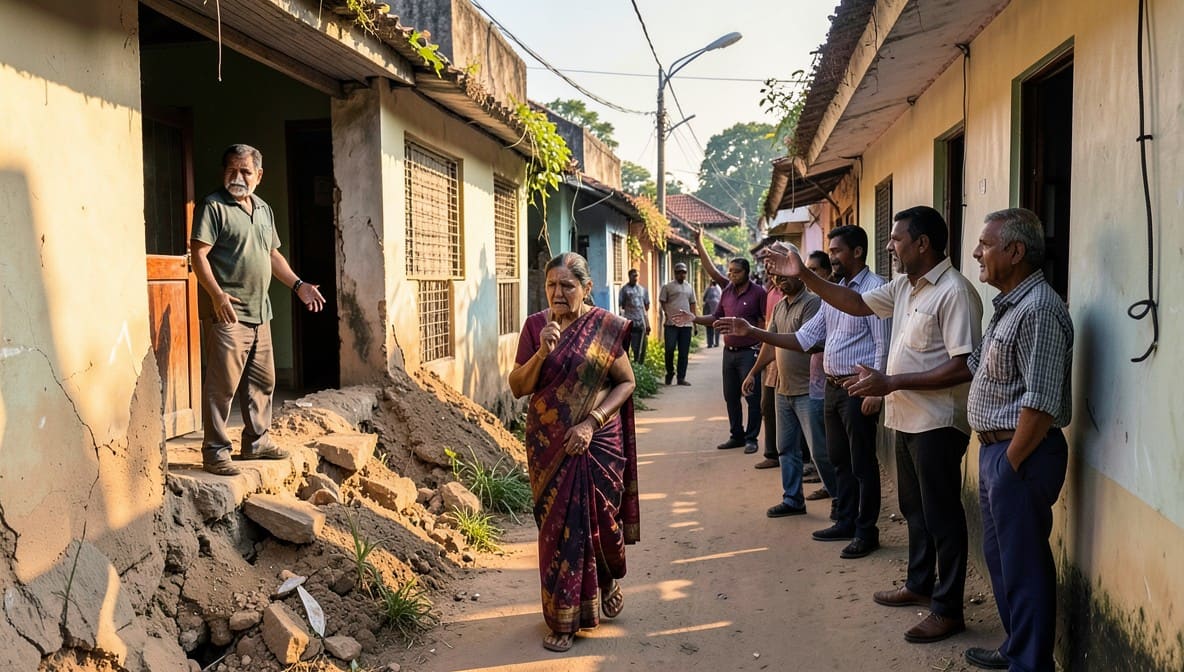
The State and the victim’s counsel relied on Kiran v. Rajkumar Jivraj Jain and Ramrao Kashinath Rathod v. State of Maharashtra, arguing that the presence of the complainant’s uncle, cousin, and sister-in-law constituted a public setting under the SCST Act. They submitted that the incident occurred on a pathway adjacent to the house, which is accessible to the public, and that the shouting and assault were loud enough to draw neighbors. They further noted that the Investigating Officer had recorded statements from eyewitnesses corroborating the caste-based abuse, and that the bar under Section 18 is triggered upon prima facie satisfaction of the offence, not exhaustive proof.
The Court's Analysis
The Court examined the legislative intent behind Section 18 of the SCST Act, which creates a non-obstante bar to anticipatory bail to deter caste-based atrocities. It reviewed the precedents cited by both parties and distinguished them based on factual context. In Deepak Kumar Tala, the Supreme Court held that a single caste slur in private, without public exposure, did not satisfy the requirement of "public view." Similarly, in Vishal Mahalle, this Court had held that abuse occurring within a closed compound, even if witnessed by relatives, did not constitute public view.
"The essential ingredient under Section 3(1)(r) and 3(1)(s) is that the act of insult or intimidation must be committed in the presence of members of the public, not merely in the presence of family or close associates."
The Court found that the F.I.R. described the incident as occurring "outside the house," on a pathway, and that the complainant’s relatives arrived only after hearing the commotion. The presence of these relatives, while significant for corroboration, does not equate to the "public view" contemplated by the Act. However, the Court noted that the Investigating Officer had recorded statements from multiple witnesses - including neighbors - who confirmed the abusive language was shouted aloud and that the assault occurred in an open area accessible to others. This, the Court held, satisfied the threshold of public exposure.
The Court further emphasized that under Ramrao Rathod, courts are not to conduct a detailed evidentiary analysis at the bail stage. The prima facie case, supported by witness statements and the nature of the location, was sufficient to invoke the bar under Section 18.
The Verdict
The appeal was dismissed. The Court held that Section 18 of the SCST Act bars anticipatory bail where caste-based abuse is shown to have occurred in public view, and that the facts of this case, including the location and witness statements, established a prima facie case meeting that threshold. The appellant was not entitled to anticipatory bail.
What This Means For Similar Cases
Public View Requires More Than Family Presence
- Practitioners must now distinguish between "presence of relatives" and "presence of the public" when arguing applicability of Section 18.
- F.I.R.s must clearly indicate whether the abuse occurred in a public space, such as a road, market, or common area, not merely near a residence.
- Witness statements should explicitly state whether bystanders or non-family members were present and could have heard or seen the abuse.
Prima Facie Standard Is Low, But Not Absent
- Courts will not dissect evidence at the bail stage, but they will examine whether the F.I.R. and initial investigation materials suggest public exposure.
- A bare allegation of caste abuse without any indication of public setting remains insufficient to trigger the bail bar.
- Defense counsel should challenge the sufficiency of public view in F.I.R.s where the incident is confined to private premises.
Investigative Rigor Is Critical for Prosecution
- Prosecutors must ensure that witness statements under Section 161 CrPC specifically record the public nature of the incident.
- Failure to record statements from neighbors or passersby may weaken the case for invoking Section 18.
- The Court’s reliance on the Investigating Officer’s affidavit signals that procedural diligence in recording public context is now a decisive factor.