The Gujarat High Court has held that brothers of a deceased victim qualify as legal representatives entitled to maintain a claim petition under Section 166(1)(c) of the Motor Vehicles Act, 1988, regardless of financial dependency or separate residence. The Tribunal's rejection of the claim solely on dependency grounds was set aside as contrary to settled Supreme Court precedent.
Background & Facts
The Dispute
The appellants - original claimants nos. 1, 2, and 3 - filed a claim petition before the Motor Accident Claims Tribunal (Auxiliary) and 2nd Additional District and Session Judge at Mirzapur, Ahmedabad (Rural) seeking compensation of Rs. 10,00,000 for the death of Chaganbhai Dudhabhai Parmar in a motor accident on 20.02.2015. Claimant no. 1 was the father of the deceased; claimants nos. 2 and 3 were his elder brothers. During the pendency of the claim petition, claimant no. 1 (the father) passed away and was deleted as a party.
Key Facts
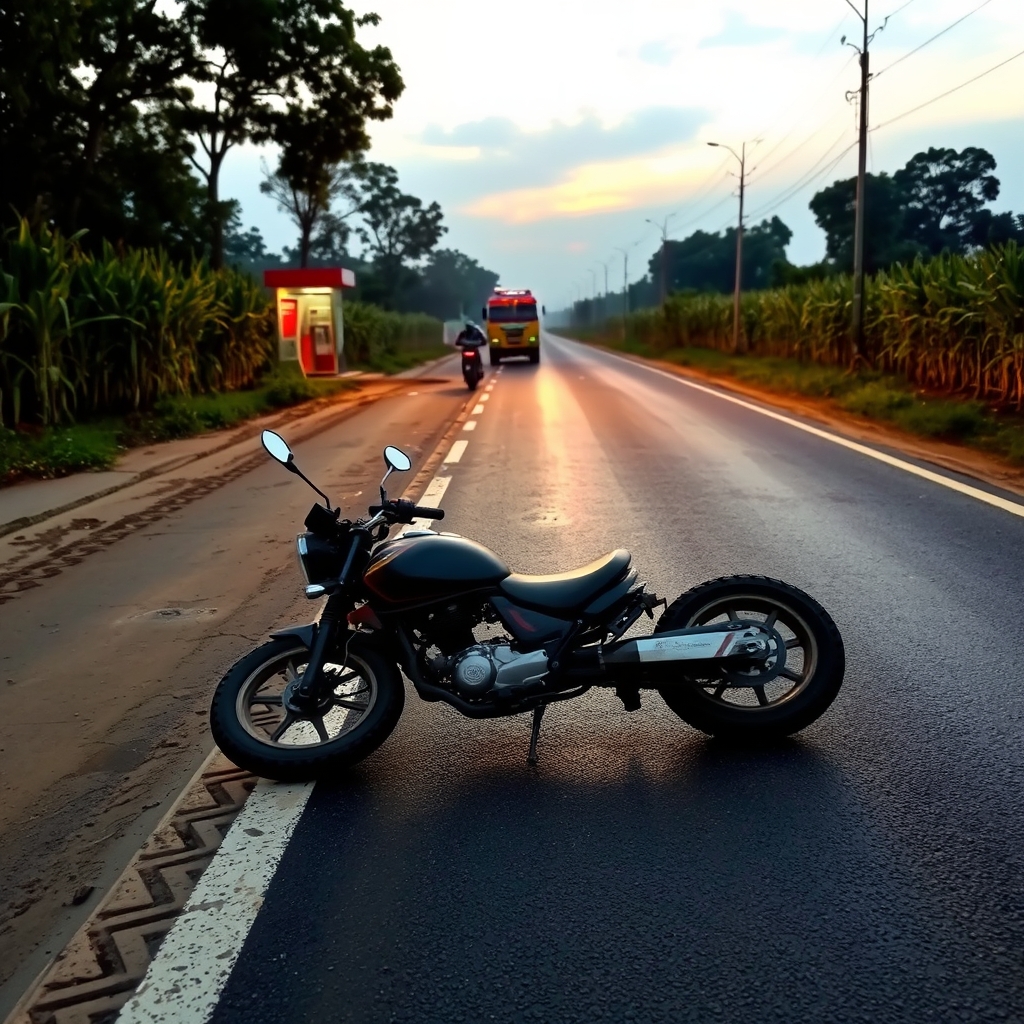
- On 20.02.2015 at approximately 8:20 pm, the deceased Chaganbhai Dudhabhai Parmar was riding motorcycle no. GJ-01-ST-8963 near village Lodariya, close to a petrol pump, when truck no. GJ-04-X-5996 driven by original opponent no. 1 collided with the motorcycle in a negligent manner at high speed.
- The deceased sustained grievous injuries and was taken to Sanand for treatment, where he passed away.
- The claim petition (MACP No. 421 of 2015) was filed by the father (claimant no. 1) and two brothers (claimants nos. 2 and 3) seeking Rs. 10,00,000 as compensation.
- During proceedings, the father (Dudhabhai Trikambhai Parmar) died and was deleted as a party.
- The Tribunal relied on the deposition of Pravinchandra Bhrambhatt (witness for opponent no. 3, the insurance company), who ran a fair price shop where the deceased's family was registered. A ration card (Exhibit 32) initially had six names; three were deleted, including claimants nos. 2 and 3, indicating they had moved elsewhere.
Procedural History
- 20.02.2015: Date of motor accident resulting in death of Chaganbhai Dudhabhai Parmar.
- Date not specified: Claim Petition (MACP No. 421 of 2015) filed before Motor Accident Claims Tribunal, Mirzapur.
- During pendency: Father of deceased (claimant no. 1) passed away and was deleted as party.
- 01.09.2023: Tribunal rejected the Claim Petition on the ground that claimants nos. 2 and 3 (brothers) were not financially dependent on the deceased and were living separately.
- 2024: First Appeal No. 1041 of 2024 filed before the High Court of Gujarat.
- 28.10.2026: High Court delivered judgment allowing the appeal.
The Parties' Positions
Appellants (Claimants nos. 2 and 3): Contended that as legal representatives of the deceased, they have a statutory right to claim compensation under Section 166(1)(c) of the Motor Vehicles Act, irrespective of financial dependency. Relied on National Insurance Company Ltd. v. Birender (2020) 11 SCC 356 and the co-ordinate Bench decision in Ahmedbhai Sharafatali Sai v. Keshubhai Mohanbhai Parmar (FA No. 3579/2014).
Respondents (Insurance Company/Opponents): Argued that the Tribunal correctly rejected the claim as the ration card showed claimants nos. 2 and 3 had moved out and were not financially dependent. Relied on United India Insurance Company Ltd. v. Diptiben Ureshbhai Vora (2017 ACJ 234).
Relief Sought
The appellants sought setting aside of the Tribunal's judgment and award dated 01.09.2023, and remand of the claim petition (MACP No. 421 of 2015) for fresh adjudication on merits.
The Legal Issue
Whether brothers of a deceased victim, who are legal representatives under law, can maintain a claim petition for motor accident compensation under Section 166(1)(c) of the Motor Vehicles Act, 1988, despite not being financially dependent on the deceased and residing separately.
Arguments Presented
For the Appellant
Ms. Chandani O. Vyas, appearing for the appellants, submitted that the impugned judgment was illegal and contrary to binding precedent. She relied on National Insurance Company Ltd. v. Birender (Civil Appeal Nos. 242-243 of 2020), where the Supreme Court held that legal representatives - including major, married, earning sons - have a right to apply for compensation irrespective of dependency. She further cited the co-ordinate Bench decision in Ahmedbhai Sharafatali Sai v. Keshubhai Mohanbhai Parmar (FA No. 3579/2014), which observed that brothers can claim compensation on account of a brother's death and the petition is maintainable under Section 166. She argued the Tribunal erred by rejecting the petition solely on dependency without considering other aspects.
For the Respondent
Ms. Esha S. Bhavsar, appearing for the respondents, supported the Tribunal's finding. She relied on United India Insurance Company Ltd. v. Diptiben Ureshbhai Vora (2017 ACJ 234), contending that the ration card evidence proved claimants nos. 2 and 3 had moved away and were not financially dependent, justifying rejection of the claim petition.
The Court's Analysis
The Court identified the sole question: whether the Tribunal was justified in rejecting the claim petition only on the ground that claimants nos. 2 and 3 were not financially dependent and lived separately.
The Court examined Section 166(1)(c) of the Motor Vehicles Act, 1988, which permits "all or any of the legal representatives of the deceased" to claim compensation where death results from an accident. The provision contains no dependency requirement for maintainability.
The Court relied extensively on the Supreme Court's decision in National Insurance Company Ltd. v. Birender (2020) 11 SCC 356, quoting paragraph 15:
"It is thus settled by now that the legal representatives of the deceased have a right to apply for compensation. Having said that, it must necessarily follow that even the major married and earning sons of the deceased being legal representatives have a right to apply for compensation and it would be the bounden duty of the Tribunal to consider the application irrespective of the fact whether the concerned legal representative was fully dependant on the deceased and not to limit the claim towards conventional heads only."
The Court also surveyed the co-ordinate Bench decision in Ahmedbhai Sharafatali Sai v. Keshubhai Mohanbhai Parmar (FA No. 3579/2014), which analysed a catena of Supreme Court authorities:
- Ramanbhai Prabhatbhai (para 13): Approved the view that a brother is entitled to maintain a petition under Section 110-A if he is a legal representative, recognising Indian family structures where brothers, sisters, and children depend on the breadwinner.
- Jitender Kumar (para 12): Held that legal representatives have a right to apply; non-dependency affects quantum (50% deduction), not maintainability.
- Manjuri Bera v. Oriental Insurance Co. Ltd. (2007) 10 SCC 643: Married daughter can claim compensation.
- N. Jayasree v. Cholamandalam MS General Insurance Co. Ltd. (AIR 2021 SC 923): Brother's sister and children can claim.
- Montford Brothers of St. Gabriel v. United India Insurance Co. Ltd. (2014) 3 SCC 394: Successor trustees as legal representatives.
The Court concluded that the Tribunal's findings were "against the settled principles of law" and required interference. Dependency is relevant to quantum of compensation, not to the maintainability of the petition by legal representatives.
The Verdict
The appeal was allowed. The High Court quashed and set aside the judgment and award dated 01.09.2023 passed by the Motor Accident Claims Tribunal (Auxiliary) and 2nd Additional District and Session Judge, Mirzapur, in MACP No. 421 of 2015. The matter was remanded to the Tribunal to decide the claim petition afresh in accordance with law, with a direction to dispose of it preferably within one year from receipt of the judgment copy. Direct service was permitted.
What This Means For Similar Cases
Legal Representatives Need Not Prove Dependency to Maintain Petition
The judgment reinforces that maintainability of a claim petition under Section 166(1)(c) turns solely on the status of the claimant as a legal representative. Financial dependency, separate residence, or independent earnings are irrelevant to the right to file. Practitioners should frame pleadings to establish legal representative status (succession certificate, legal heir certificate, or family records) and resist preliminary objections based on dependency.
- File claim petition by any legal representative without awaiting dependency proof.
- If Tribunal raises dependency at threshold, cite Birender and Ramanbhai Prabhatbhai to establish maintainability.
- Dependency evidence is relevant only at the quantum stage for apportionment.
Dependency Affects Quantum, Not Standing
The Supreme Court in Jitender Kumar explicitly held that non-dependency warrants a deduction (e.g., 50%) in compensation awarded, not dismissal of the petition. Tribunals must first adjudicate liability and then assess compensation, applying dependency-based deductions where proven.
- Argue for full compensation if dependency is established; if not, contest the deduction percentage.
- Present evidence of actual support (remittances, shared expenses) even if claimants lived separately.
- Ration card deletions are not conclusive proof of non-dependency; contextual evidence matters.
Remand with Time-Bound Direction Addresses Delay
The Court's direction to decide the 2015 claim petition within one year acknowledges the inordinate delay caused by erroneous dismissal. Practitioners facing similar remands should monitor compliance and seek extension of time only for cogent reasons, citing this precedent for expeditious disposal.
- Track Tribunal compliance with the one-year deadline.
- File status applications if Tribunal exceeds the timeline without justification.
- Use the remand order to press for early hearing dates.