The Chhattisgarh High Court has affirmed that elder brothers of an unmarried deceased person, though not financially dependent, qualify as legal representatives under the Motor Vehicles Act and are entitled to claim compensation for accidental death. This ruling clarifies the expansive scope of 'legal representative' beyond immediate dependents, reinforcing the remedial intent of the Act.
Background & Facts
The Dispute
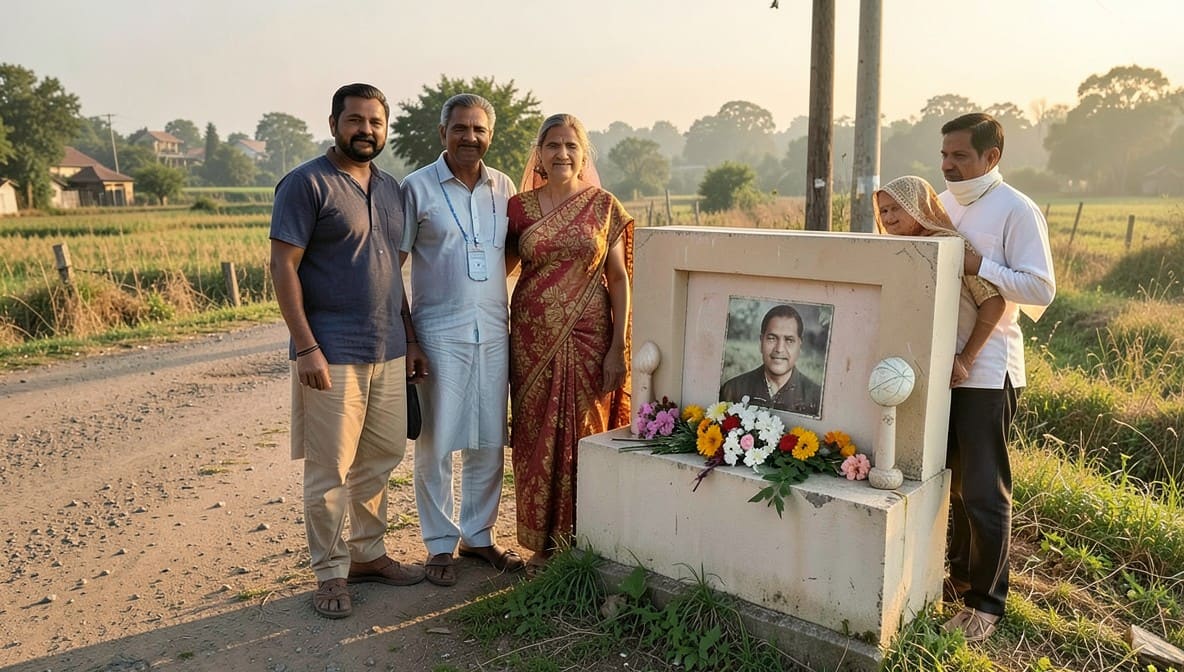
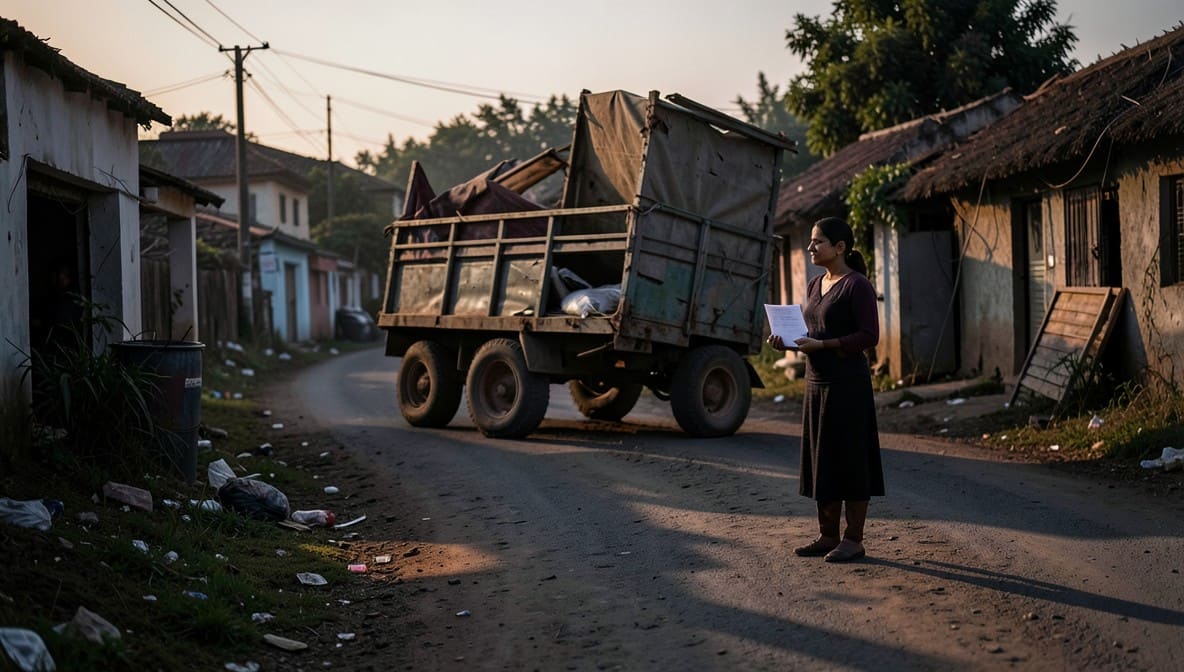
On the night of 01.01.2012, Baman, a 25-year-old unmarried labourer, was fatally injured when the rear wheel of a truck bearing registration No. CG-04-JA-2569 ran over his head while he was waiting for a bus at the verandah of Aftab Tyre Works in Dantewada, Chhattisgarh. The truck was owned by Sushain Roy (Respondent No. 4), driven by Nintu Kumar Vishwas (Respondent No. 3), and insured by Shriram General Insurance Company Limited (Appellant). Baman died on the spot.
Key Facts
- Baman was 25 years old at the time of death and had no spouse or children
- Both his parents had predeceased him
- He worked as a daily wage labourer under a contractor and earned approximately Rs. 3,000 per month
- His elder brothers, Lachcha Muchaki (Respondent No. 1) and Nand Kishor Muchaki (Respondent No. 2), filed a claim for compensation under Section 163-A of the Motor Vehicles Act, 1988
- Lachcha Muchaki is engaged in agricultural work and is married
- Nand Kishor Muchaki is an Assistant Constable in the Chhattisgarh Special Armed Force and is married
- Both claimants have independent sources of income and were not financially dependent on Baman
- Baman used to dine with his brothers but did not contribute financially to their households
Procedural History
- 01.01.2012: Fatal accident occurred
- 2014: Claim Case No. 409/2014 filed before the Second Additional Motor Accident Claims Tribunal, South Bastar, Dantewara
- 25.04.2016: Tribunal awarded compensation of Rs. 3,10,500/- with 6% interest per annum to the claimants
- 2016: Appeal filed under Section 173 of the Motor Vehicles Act before the Chhattisgarh High Court (MAC No. 1141 of 2016)
- 29.04.2026: Final hearing concluded before the High Court
Relief Sought
The Appellant (Insurer) sought to set aside the Tribunal’s award on two grounds: (1) the claimants are not legal representatives as they are not dependents of the deceased, and (2) the compensation amount is excessive. The claimants sought confirmation of the award.
The Legal Issue
The central question was whether elder brothers of an unmarried deceased person, who are not financially dependent on him, qualify as 'legal representatives' under Section 166 of the Motor Vehicles Act, 1988, and are thus entitled to claim compensation for his death.
Arguments Presented
For the Appellant
The Appellant contended that under the Fatal Accidents Act, 1855, only dependents could claim compensation. It argued that since Lachcha Muchaki and Nand Kishor Muchaki were married, employed, and not reliant on Baman’s income, they could not be considered legal representatives entitled to compensation. The insurer relied on the principle that compensation must reflect loss of dependency and asserted that the award was legally unsustainable.
For the Respondent
No counsel appeared for Respondents No. 1 and 2. Respondents No. 3 and 4 (driver and owner) denied liability but contended that the insurance company, as the insurer, was liable under the policy.
The Court's Analysis
The Court examined the definition of 'legal representative' under Section 2(11) of the Code of Civil Procedure, 1908, which includes any person who represents the estate of a deceased person, whether or not they are a legal heir. The Court emphasized that this definition is inclusive and not confined to dependents or immediate family.
"As observed by this Court in Custodian of Branches of BANCO National Ultramarino v. Nalini Bai Naique... the definition contained in Section 2(11) CPC is inclusive in character and its scope is wide, it is not confined to legal heirs only. Instead it stipulates that a person who may or may not be legal heir competent to inherit the property of the deceased can represent the estate of the deceased person."
The Court further relied on Gujarat State Road Transport Corporation v. Ramanbhai Prabhatbhai (1987) 3 SCC 234, where the Supreme Court held that brothers of a deceased are entitled to maintain a claim under Section 110-A of the Motor Vehicles Act if they are legal representatives, particularly in the context of joint Indian families where economic interdependence is common.
"We should remember that in an Indian family brothers, sisters and brothers' children and sometimes foster children live together and they are dependent upon the bread-winner of the family and if the bread-winner is killed on account of a motor vehicle accident, there is no justification to deny them compensation..."
The Court noted that Baman had no spouse, children, or surviving parents. His elder brothers, as his only surviving heirs, were his legal successors under the Hindu Succession Act, 1956. The Court held that the term 'legal representative' under Section 166(1)(c) of the Motor Vehicles Act encompasses such heirs, regardless of dependency. The Tribunal’s finding that they were entitled to compensation was therefore legally sound.
Regarding quantum, the Court found no error in the Tribunal’s calculation: Rs. 3,000 monthly income, 50% deduction for personal expenses, multiplier of 17, Rs. 2,000 for funeral expenses, and Rs. 2,000 for loss of estate, totaling Rs. 3,10,500. The Court held this was within the bounds of judicial discretion.
The Verdict
The appeal was dismissed. The Chhattisgarh High Court upheld the Tribunal’s award of Rs. 3,10,500/- with 6% interest per annum from the date of filing the claim until realization. The insurer, owner, and driver were held jointly and severally liable. The Court directed the Motor Accident Claims Tribunal to issue execution proceedings forthwith.
What This Means For Similar Cases
Legal Heirs Are Legal Representatives Even Without Dependency
- Practitioners must now argue that under Section 166 MV Act, eligibility for compensation is based on legal heirship, not financial dependency
- Claimants who are siblings, uncles, aunts, or cousins may qualify if they are legal successors under personal law
- The Fatal Accidents Act, 1855, is inapplicable to motor accident claims; the MV Act’s broader definition governs
Compensation Calculation Must Focus on Deceased’s Income, Not Claimant’s Status
- Tribunals must assess the deceased’s income, age, and multiplier, not the claimant’s financial condition
- Deductions for personal expenses remain valid, but dependency of claimants is irrelevant to entitlement
- Funeral and loss of estate amounts are fixed and non-negotiable under established precedent
Insurance Companies Cannot Avoid Liability on Grounds of Non-Dependency
- Insurers must process claims from legal representatives without demanding proof of dependency
- Denial of claims on this basis is legally untenable and invites litigation
- Policyholders should be advised that coverage extends to all legal heirs, not just dependents