The High Court of Himachal Pradesh has reaffirmed that compliance with Section 165 of the CrPC is mandatory for warrantless searches of vehicles, and that reliance on witnesses with a history of appearing for the police fatally undermines the prosecution’s case. The judgment underscores that procedural irregularities in search and seizure, coupled with the use of convenient witnesses, render convictions unsustainable even when contraband is recovered.
Background & Facts
The Dispute
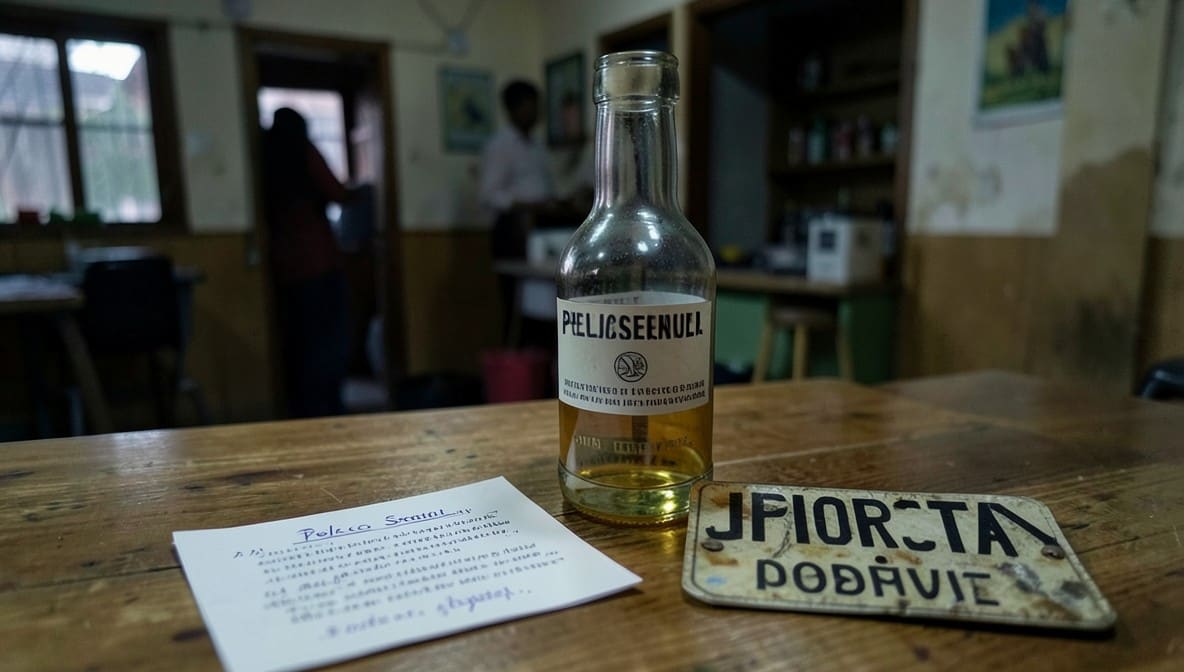
The State of Himachal Pradesh appealed against the acquittal of Raju, who was charged under Section 61(1)(a) of the Punjab Excise Act (as applicable to H.P.) for transporting 18 bottles of Indian Made Foreign Liquor (IMFL) without a permit. The prosecution alleged that on 13.01.2011, a raiding party led by Inspector Shakuntla Sharma (PW7) intercepted a vehicle bearing registration No. HP-15-9059 near Cart Road, Shimla, recovered the liquor, and seized it without a warrant.
Key Facts
- The vehicle was stopped at approximately 10:30 PM on 13.01.2011 near Cart Road, Shimla
- Inspector Shakuntla Sharma (PW7) claimed to have received secret information at Krishnanagar about the vehicle transporting liquor
- 09 bottles of Royal Stag IMFL and 09 bottles of Green Label IMFL, each 750 ML, were recovered
- All bottles bore the legend "for sale in Chandigarh only"
- The liquor was sealed in a carry bag with seal 'A'; seal impression (Ex.PW3/B) was taken on cloth and handed to Hemant Kumar (PW3)
- A seizure memo (Ex.PW3/A) was prepared by Inspector Shakuntla Sharma
- A rukka (Ex.PW7/B) was prepared and sent to the Police Station, where FIR (Ex.PW7/C) was registered on the same day
- Site plan (Ex.PW7/E) and photographs (Ex.PM1, Ex.PM2) were prepared
- The liquor was handed over to HC Mahidhar (PW4) for deposit in Malkhana
- HC Rajinder Singh (PW6) sent the sample to CTL, Kandaghat, via Constable Geeta Ram (PW9) under RC No. 18/11
- Chemical analysis (Ex.PY1 to Ex.PY18) confirmed alcohol content: Royal Stag at 75.1% proof, Green Label at 74.3% proof
- The accused, Raju, was the driver and could not produce any permit
Procedural History
- 13.01.2011: Recovery of liquor and registration of FIR
- 22.04.2013: Conviction and sentencing by Judicial Magistrate First Class-4, Shimla - 3 months simple imprisonment, ₹500 fine, 15 days in default
- 01.05.2013: Order of sentence passed
- 05.12.2014: Additional Sessions Judge-II, Shimla, allowed the appeal and acquitted the accused
- 28.04.2026: Appeal heard by Division Bench of HP High Court
- 01.06.2026: Judgment delivered
The Parties' Positions
For the State (Appellant): Argued that the Trial Court’s conviction was well-reasoned and that the Appellate Court erred in rejecting the testimony of official witnesses and Hemant Kumar (PW3). Contended that Section 165 CrPC does not apply to vehicle searches and that the recovery was lawful.
For the Accused (Respondent): Argued that the search was illegal due to non-compliance with Section 165 CrPC - no written record of reasons was made. Also argued that Hemant Kumar was a "stock witness" with prior appearances in police cases and a close relationship with the SHO, rendering his testimony unreliable.
Relief Sought
The State sought reversal of the acquittal order dated 05.12.2014 and restoration of the conviction and sentence passed by the Trial Court on 22.04.2013.
The Legal Issue
The central question was whether Section 165 of the CrPC applies to the search of a vehicle, and whether the prosecution’s case can sustain a conviction when the search was conducted without recording reasons in writing and when an independent witness is shown to be a habitual police associate.
Arguments Presented
For the Appellant
The Additional Advocate General contended that the Appellate Court erred in overturning the Trial Court’s findings. He argued that Section 165 CrPC applies only to searches of buildings or houses, not vehicles. He relied on the consistency of the recovery, the chemical analysis report, and the testimony of Hemant Kumar (PW3) as corroborative. He submitted that the Appellate Court had no basis to reject the prosecution’s version merely because of minor discrepancies.
For the Respondent
The defense counsel argued that Section 165 CrPC applies to any "place" as defined under Section 2(1)(p) CrPC, which explicitly includes vehicles. She emphasized that no written record of reasons for the search was made by Inspector Shakuntla Sharma, violating the mandatory requirement under Section 165(1). She further highlighted that Hemant Kumar (PW3) had appeared as a witness in multiple police cases, suppressed this fact before the Trial Court, and admitted to having a cordial relationship with the SHO. She cited State of Gujarat v. Kumudchandra Pranjivan Shah and Pradeep Narayan Madgaonkar v. State of Maharashtra to show that such witnesses cannot be treated as independent.
The Court's Analysis
The Court began by recalling the settled legal position on appeals against acquittal, citing Surendra Singh v. State of Uttarakhand, State of M.P. v. Ramveer Singh, and Tulasareddi v. State of Karnataka. It held that interference with an acquittal is permissible only if the judgment is patently perverse, based on misreading of evidence, or if no reasonable person could have acquitted the accused.
The Court then turned to the procedural compliance under Section 165 CrPC. It rejected the State’s contention that Section 165 applies only to buildings. Citing Section 2(1)(p) CrPC, which defines "place" to include "vehicle," the Court held that the search of the vehicle was unequivocally covered by Section 165. It quoted ITC Ltd. v. State of Karnataka to affirm that recording reasons in writing is mandatory, even in exigent circumstances, and cannot be substituted by mere assertion.
"The mandate of Section 100(4) must also be satisfied even in searches under Section 165. Xxx... The reasons necessitating the search must be relevant and must reflect application of mind based on some information... and cannot be based on mere presumption or extraneous considerations."
The Court found that Inspector Shakuntla Sharma (PW7) failed to record any written reasons for the search. Her claim that she received secret information during patrolling was contradicted by Hemant Kumar (PW3), who stated he joined the raiding party at the Police Station, not at Krishnanagar. This inconsistency undermined the entire narrative of the raid.
Further, the Court examined Hemant Kumar’s credibility. He admitted to having appeared as a witness in multiple police cases before other magistrates. He also failed to mention Constable Narinder Kumar (PW2) as part of the raiding party, despite his presence being attested by other witnesses. His testimony that Ravi Kumar’s signature on the seizure memo was not obtained in his presence directly contradicted the prosecution’s claim of on-the-spot documentation.
The Court relied on State of Gujarat v. Kumudchandra Pranjivan Shah and Pradeep Narayan Madgaonkar v. State of Maharashtra to hold that when the police rely on witnesses with a history of appearing in their cases, and suppress this fact, the prosecution’s case becomes inherently doubtful. The Court noted that the Trial Court had correctly appreciated these contradictions and had not acted unreasonably in acquitting the accused.
The Appellate Court’s view was not perverse - it was a reasonable conclusion based on the evidence. The High Court emphasized that where two views are possible, the appellate court must uphold the acquittal.
The Verdict
The appeal was dismissed. The acquittal of the respondent, Raju, was upheld. The Court directed the respondent to furnish bail bonds of ₹25,000 with one surety of like amount to the satisfaction of the Trial Court within four weeks. The bail bond shall remain effective for six months, with the stipulation that if a Special Leave Petition is filed against this judgment or leave is granted, the respondent shall appear before the Supreme Court upon notice. The records were directed to be sent back to the Trial Court forthwith.
What This Means For Similar Cases
Search of Vehicles Requires Strict Compliance with Section 165 CrPC
- Practitioners must now treat vehicle searches under the Excise Act or CrPC as subject to the same mandatory requirements as house searches
- Failure to record written reasons for the search - even if based on "secret information" - renders the entire recovery inadmissible
- Prosecution must demonstrate that the officer applied his mind to the information received, not merely asserted it
Stock Witnesses Cannot Substitute Independent Corroboration
- Witnesses who have appeared repeatedly in police cases, especially if their association is suppressed, are deemed unreliable
- The burden shifts to the prosecution to prove the witness’s independence; mere assertion of "independence" is insufficient
- Courts will scrutinize the witness’s prior appearances, relationship with police, and consistency of testimony
- Defense counsel should routinely seek disclosure of a witness’s prior testimony history under Section 161 CrPC
Acquittals Are Protected Unless Perverse
- Appellate courts must resist the temptation to substitute their own view for that of the Trial Court
- Minor inconsistencies in witness statements do not justify reversal of acquittal
- The threshold for interference remains high: only when the acquittal is "clearly unreasonable" or based on "omission of material evidence"
- This judgment reinforces the principle that the benefit of doubt must go to the accused when procedural safeguards are breached