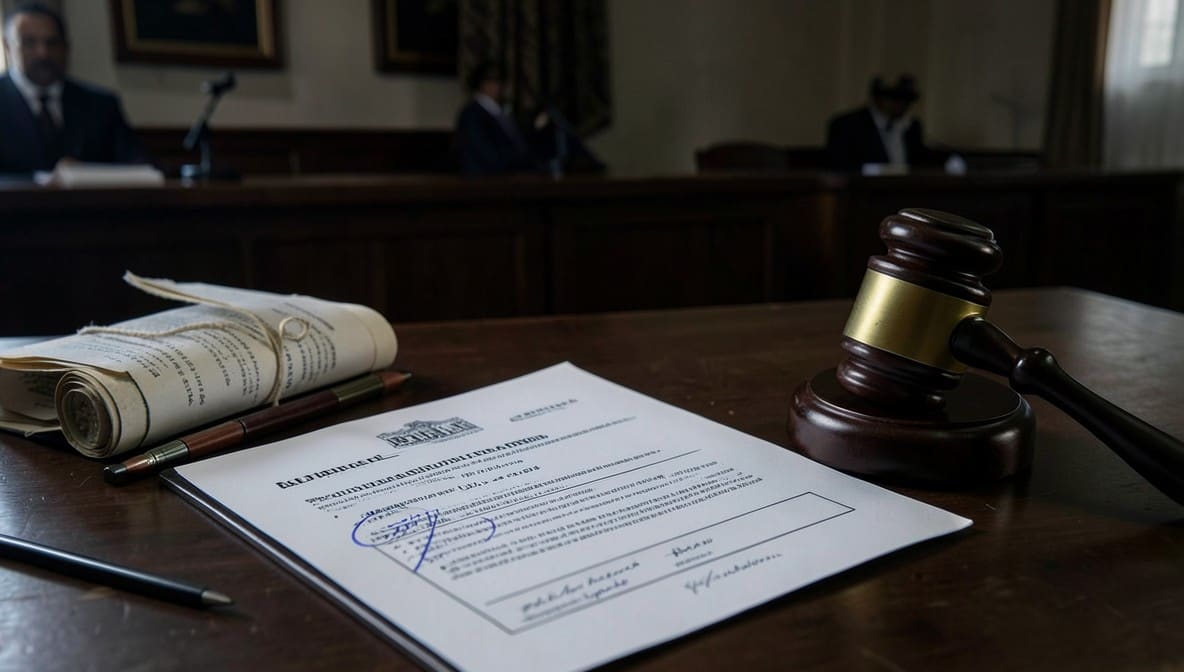
The Income Tax Appellate Tribunal's ruling in these consolidated appeals establishes a critical doctrinal boundary in income tax proceedings: approval under Section 153D cannot be granted in bulk across multiple assessment years. This decision reinforces procedural integrity in search and seizure cases, ensuring that each year’s assessment is independently scrutinized and sanctioned.
Background & Facts
The Dispute
The appellant, Harakere Srikanta, challenged assessment orders for six consecutive assessment years (2011-12 to 2016-17) initiated under Section 153A and Section 153D of the Income-tax Act, 1961, following a search operation. The Assessing Officer (AO) relied on incriminating material seized during the search to make additions to income. Crucially, the AO obtained a single approval letter dated 29.12.2019 under Section 153D, applying uniformly across all six assessment years.
Procedural History
- 2019: Search conducted under Section 132; documents and statements recorded under Section 132(4) were seized.
- 2019-2024: Assessment orders passed for each year under Section 153A, citing the same approval letter for all.
- 2024: First Appellate Authority (CIT(A)) upheld the assessments without addressing the validity of the consolidated approval.
- 2026: Appeals filed before the Income Tax Appellate Tribunal (ITAT), Delhi, with an additional ground raised under Rule 11 of the ITAT Rules, challenging the mechanical nature of the approval.
Relief Sought
The appellant sought quashing of the assessment orders on the ground that the approval under Section 153D was not granted separately for each assessment year, rendering the proceedings legally invalid.
The Legal Issue
The central question was whether Section 153D of the Income-tax Act permits a single, consolidated approval for multiple assessment years arising from a single search, or whether the law mandates independent, year-specific approval with individual application of mind.
Arguments Presented
For the Petitioner
The appellant’s counsel argued that Section 153D requires approval to be granted "for each assessment year" as explicitly stated in the statutory language. They relied on the Delhi High Court’s recent decision in PCIT v. Shiv Kumar Nayyar and the Allahabad High Court’s ruling in PCIT v. Sapna Gupta, both holding that a blanket approval violates the statutory mandate and amounts to a mechanical exercise of power. They emphasized that the AO’s reliance on distinct incriminating evidence for each year further necessitated separate scrutiny and sanction.
For the Respondent
The Department contended that the approval, though common in form, was not mechanical. It argued that senior authorities had continuously reviewed the material and that the uniformity of the approval letter was merely procedural convenience. They asserted that the ground challenging the approval had not been raised before the CIT(A), and therefore should be disallowed on procedural grounds.
The Court's Analysis
The Tribunal rejected the Department’s procedural objection, noting that the validity of the approval under Section 153D goes to the root of jurisdiction and can be raised at any stage. The Court examined the statutory language of Section 153D, which states: "the Principal Chief Commissioner or Chief Commissioner or Principal Commissioner or Commissioner shall, by order in writing, approve the making of assessment for each assessment year". The phrase "for each assessment year" was held to be unambiguous and mandatory.
"As we go through the assessment orders we find that there are different incriminating evidence considered by AO to make different additions. In such a situation... approval should be granted for 'each assessment year' the approval is not so granted."
The Tribunal distinguished the Department’s argument that "continuous indulgence" of senior officers implied due application of mind. It held that formal, identical approval letters across years, without individualized reasoning, cannot substitute for statutory compliance. The reliance on PCIT v. Shiv Kumar Nayyar and PCIT v. Sapna Gupta was affirmed as binding precedent. The Tribunal concluded that the approval was vitiated, and therefore the assessments, being founded on an invalid sanction, were legally unsustainable.
The Verdict
The appellant prevailed. The ITAT held that Section 153D requires separate, year-specific approval with individual application of mind. The consolidated approval was declared invalid, and all impugned assessment orders were quashed.
What This Means For Similar Cases
Approval Cannot Be Generic
- Practitioners must now scrutinize every Section 153D approval letter for specificity per assessment year.
- A single approval covering multiple years is no longer tenable; any such approval renders the assessment void ab initio.
Evidence Must Be Year-Specific
- Even if material is seized in a single search, the AO must demonstrate distinct application of mind to each year’s return.
- Additions based on evidence unique to one year cannot justify a blanket approval for others.
Procedural Defects Are Jurisdictional
- Challenges to the validity of Section 153D approval can be raised at any stage, even for the first time before the Tribunal.
- Failure to raise it before CIT(A) does not waive the right to challenge jurisdictional defects.