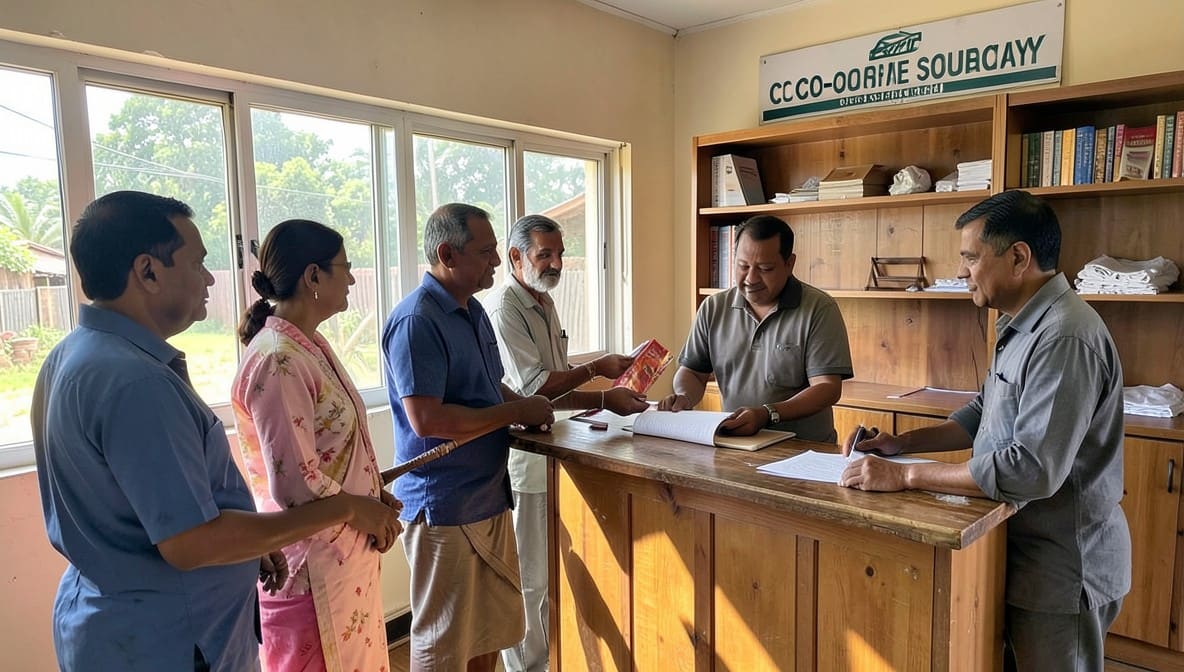
The ITAT Ahmedabad has clarified that the Centralized Processing Centre (CPC) cannot unilaterally alter an assessee’s legal status from an Association of Persons (AOP) to a Cooperative Society during processing under Section 143(1) of the Income Tax Act, absent any evidence or procedural basis. This ruling reinforces the limits of administrative adjustments and upholds the principle that substantive legal classifications require proper scrutiny.
Background & Facts
The Dispute
The appellant, Kailash Apartment Flat Owners Association, is a non-profit residents’ association managing common facilities for flat owners in Navrangpura, Ahmedabad. It has consistently filed income tax returns since its inception declaring its status as an Association of Persons (AOP) or Body of Individuals (BOI), claiming exemption under Section 11 or 13 of the Income Tax Act due to its non-trading, non-profit character. For Assessment Year 2022-23, the association declared income of Rs. 1,87,110, asserting no tax liability.
Key Facts
- The association was formed by flat owners for maintenance of common areas, security, and utilities
- It collects monthly maintenance charges from members, which are used exclusively for upkeep
- No profit distribution occurs among members
- The association has operated under AOP/BOI status since at least A.Y. 2018-19
- The association submitted a certificate of registration as a Non-Trading Corporation under the Gujarat Non-Trading Corporations Act, though not under the Cooperative Societies Act
- The association did not file its bye-laws or memorandum of association with the return for A.Y. 2022-23
Procedural History
- 16.03.2023: Return for A.Y. 2022-23 processed under Section 143(1) by CPC
- CPC suo moto reclassified the assessee as a Cooperative Society and raised demand of Rs. 97,690
- 12.05.2023: Assessee filed rectification application under Section 154; rejected by CPC
- 21.07.2025: First appellate authority (Addl. CIT(A)) dismissed appeal, upholding CPC’s classification
- 07.04.2026: Hearing before ITAT Ahmedabad
- 09.04.2026: Judgment pronounced
Relief Sought
The appellant sought: (1) quashing of CPC’s reclassification order dated 16.03.2023, (2) restoration of its AOP/BOI status, (3) cancellation of the demand of Rs. 97,690, and (4) confirmation that its past returns under AOP status remain valid.
The Legal Issue
The central question was whether the Centralized Processing Centre (CPC) has the authority under Section 143(1) of the Income Tax Act to sua sponte change the legal status of an assessee from an AOP/BOI to a Cooperative Society without any documentary evidence or prior indication of error.
Arguments Presented
For the Appellant
The learned Authorized Representative (AR) argued that the CPC’s action was ultra vires Section 143(1), which permits only arithmetical corrections, incorrect claims, or prima facie adjustments. The status of the assessee as an AOP/BOI had been consistently accepted by the Department for multiple years. The CPC had no jurisdiction to conduct a substantive reclassification without initiating proceedings under Section 148 or Section 147. The certificate of registration as a Non-Trading Corporation under Gujarat law was sufficient to establish its non-cooperative, non-profit character. The assessee had the right to amend grounds before final hearing, as per procedural fairness.
For the Respondent
The Senior Revenue Representative (SR-DR) contended that the assessee failed to submit statutory documents such as bye-laws, memorandum of association, or registration under the Cooperative Societies Act. In the absence of such proof, the CPC was justified in treating the association as a Cooperative Society, which is taxable as a body corporate. The revenue argued that the classification was based on the nature of the entity and that the burden of proof lay with the assessee.
The Court's Analysis
The ITAT examined the scope of Section 143(1) and held that it is a limited provision designed for mechanical and prima facie adjustments, not for reclassification of legal entities. The Tribunal noted that the assessee had consistently declared its status as AOP/BOI over several years, and the Department had accepted this without objection. The CPC’s decision to change the status without any inquiry, notice, or opportunity to explain was procedurally flawed.
"The adjustment as made by the CPC is thus found to be beyond the scope of provision of section 143(1) of the Act. The change in the status of assessee could have been subjected only after thorough examination of the issue, which was beyond the scope of adjustment u/s. 143(1) of the Act."
The Tribunal emphasized that reclassification from AOP to Cooperative Society involves a legal determination requiring evidence of incorporation, registration, and governance structure under the Cooperative Societies Act. The mere absence of documents submitted by the assessee does not justify the CPC to assume an alternative status. The burden of proof to establish a change in status lies with the revenue, not the assessee, particularly when the status has been historically accepted.
The Tribunal further held that the assessee’s right to amend grounds before final hearing was not infringed, as the issue of status was central to the appeal and had been fully argued.
The Verdict
The appeal of the assessee is allowed. The CPC’s order dated 16.03.2023 reclassifying the assessee as a Cooperative Society is quashed. The demand of Rs. 97,690 is cancelled. The assessee’s status as an AOP/BOI for A.Y. 2022-23 is restored. The Department is directed to process the return afresh in accordance with the AOP/BOI status, without prejudice to its right to initiate proceedings under Section 147 if it has new material.
What This Means For Similar Cases
CPC Cannot Substitute Judicial Determination
- Practitioners must challenge any CPC adjustment that reclassifies legal status under Section 143(1) as ultra vires
- The CPC’s role is limited to arithmetic and prima facie errors - not substantive legal classification
- Any change in entity status must be initiated through formal assessment proceedings under Section 147
Documentary Evidence Burden Rests on Revenue
- If an assessee has consistently declared a status accepted in prior years, the revenue must prove a change in facts before reclassification
- Mere non-submission of documents by the assessee does not justify assumption of a different legal status
- Associations operating as non-profit AOPs must retain records of registration under relevant state laws (e.g., Non-Trading Corporations Act)
Precedent for Resident Welfare Associations
- Resident welfare associations, flat owners’ associations, and similar non-trading entities can rely on this ruling to defend their AOP status
- Tax officers must distinguish between cooperative societies (registered under Cooperative Societies Act) and informal non-profit associations
- Future returns should include a brief note on the nature of the association to preempt misclassification