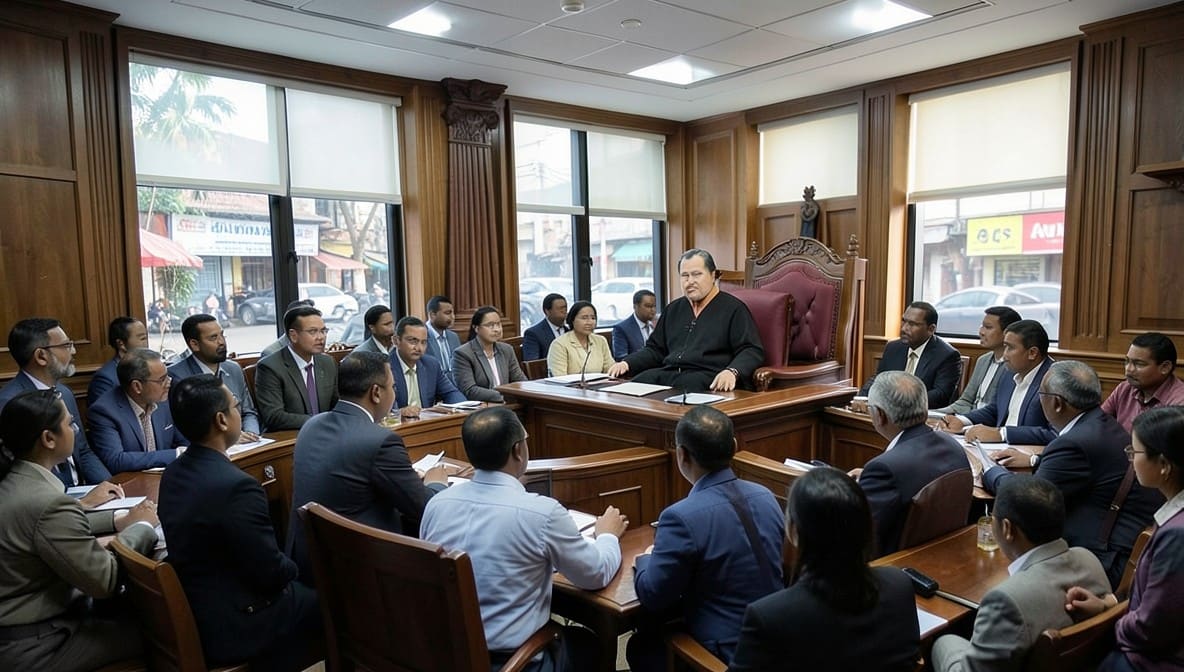
The Bombay High Court has reinforced the mandatory timeline for Magistrates to dispose of applications under Section 14 of the SARFAESI Act, clarifying that such proceedings are purely ministerial and must not be delayed by procedural or evidentiary inquiries. This judgment provides critical clarity for secured creditors navigating enforcement delays.
Background & Facts
The Dispute
Petitioner No. 1, ICICI Home Finance Company Limited, a registered secured creditor under the Securitisation and Reconstruction of Financial Assets and Enforcement of Security Interest Act, 2002 (SARFAESI Act), filed an application under Section 14 of the Act on 04.06.2025 before the concerned District Magistrate seeking assistance in taking possession of secured assets. The application was filed in compliance with the procedural requirements of the SARFAESI Act, including issuance of notice under Section 13(4) and declaration of the asset as non-performing. The respondent State, through the District Magistrate, has not yet disposed of the application as of the date of filing the writ petition.
Key Facts
- Petitioner No. 1 is a financial institution registered with the Reserve Bank of India and holds a valid security interest over immovable property pledged by a borrower
- The borrower defaulted on repayment obligations on or before 15.11.2024
- A demand notice under Section 13(2) was issued on 20.11.2024
- The borrower failed to repay or raise any valid objection within the 60-day period
- A possession notice under Section 13(4) was issued on 25.01.2025
- The borrower did not challenge the notice under Section 17 of the SARFAESI Act
- Petitioner filed the Section 14 application before the District Magistrate on 04.06.2025
- As of 16.03.2026, the application remained pending without any order
Procedural History
- 15.11.2024: Borrower defaulted on loan repayment
- 20.11.2024: Section 13(2) demand notice issued
- 25.01.2025: Section 13(4) possession notice issued
- 04.06.2025: Section 14 application filed before District Magistrate
- 16.03.2026: Writ Petition No. 13732 of 2025 filed before Bombay High Court seeking direction for disposal of Section 14 application
Relief Sought
The petitioners sought a direction to the District Magistrate to dispose of the Section 14 application filed on 04.06.2025 within a stipulated time, in accordance with binding precedents of this Court and the Supreme Court.
The Legal Issue
The central question was whether the District Magistrate, while dealing with an application under Section 14 of the SARFAESI Act, is bound by a mandatory timeline to dispose of the application, and whether such proceedings constitute a ministerial duty devoid of adjudicatory functions.
Arguments Presented
For the Petitioner
The petitioners relied on the Division Bench judgment in L & T Finance Limited v. State of Maharashtra and another, 2023 SCC OnLine Bom 931, which had laid down detailed guidelines for expeditious disposal of Section 14 applications. They argued that the Magistrate’s role under Section 14 is purely ministerial, as affirmed by the Supreme Court in Balkrishna Rama Tarle v. Phoenix ARC Private Limited (2023) 1 SCC 662 and NKGSB Co-operative Bank Limited v. Subir Chakravarty (2022) 10 SCC 286. The delay of over nine months in disposing of the application violated the statutory intent of the SARFAESI Act to ensure swift enforcement of security interests.
For the Respondent
The State, through the Additional Government Pleader, did not contest the legal position but acknowledged the pendency. No substantive counter-argument was advanced regarding the applicability of the guidelines or the nature of the Magistrate’s duty under Section 14.
The Court's Analysis
The Court observed that the role of the District Magistrate under Section 14 of the SARFAESI Act is not to adjudicate disputes or examine the validity of the secured creditor’s claim, but to facilitate the enforcement of the creditor’s rights as already established under Sections 13(2) and 13(4). The Supreme Court has consistently held that the Magistrate’s function is ministerial and not judicial.
"The Magistrate is not required to go into the merits of the claim of the secured creditor or to determine whether the debt is due or whether the security interest is valid. The Magistrate’s duty is limited to ensuring that the secured creditor has complied with the procedural requirements under the Act."
The Court reaffirmed the binding guidelines issued in L & T Finance Limited, particularly paragraph 23(a), which mandates that applications under Section 14 must be disposed of within 30 days of filing. The Court noted that the petitioner’s application had remained pending for over nine months, which is in clear violation of this directive. The Court emphasized that any delay undermines the legislative purpose of the SARFAESI Act, which is to provide a time-bound mechanism for recovery by financial institutions.
The Court further noted that the State’s failure to implement the earlier guidelines constitutes a systemic lapse, and reiterated the need for compliance with the timelines prescribed in the judgment. The Court rejected any notion that administrative burden or lack of resources could justify non-compliance with statutory timelines.
The Verdict
The writ petition is allowed. The District Magistrate is directed to dispose of the Section 14 application filed by Petitioner No. 1 on 04.06.2025 within 30 days from today, i.e., by 15.04.2026. The Magistrate shall strictly adhere to the guidelines laid down in L & T Finance Limited and the Supreme Court judgments cited herein. All pending applications in this petition are disposed of.
What This Means For Similar Cases
Timelines Are Mandatory, Not Directory
- Practitioners must now treat the 30-day deadline under Section 14 as a mandatory statutory obligation, not a recommendatory guideline
- Any delay beyond 30 days without justification renders the Magistrate’s inaction liable to writ intervention
- Applications filed after 04.06.2025 must be tracked for compliance with the 30-day window
Enforcement Requires Proactive Monitoring
- Secured creditors should file monthly compliance reports with the Divisional Commissioner if the 30-day deadline is breached
- Representation under paragraph 23(e) must be made within 60 days of filing if no order is passed
- Advocates must prepare and serve notices under Section 14 with precise dates to establish clear timelines for court intervention
Systemic Accountability Is Now Enforceable
- District Magistrates are required to submit monthly reports on pending Section 14 applications to the Divisional Commissioner
- The State must implement the online tracking system within 16 weeks as directed
- Failure to maintain records or submit statistics may now form the basis for contempt proceedings