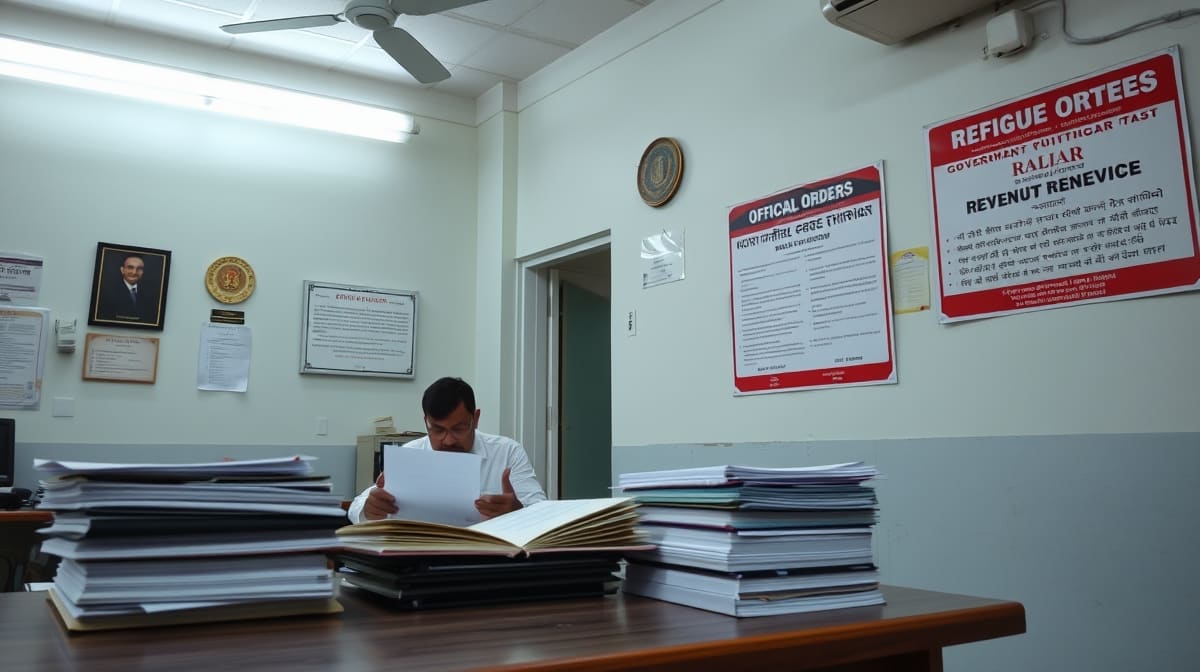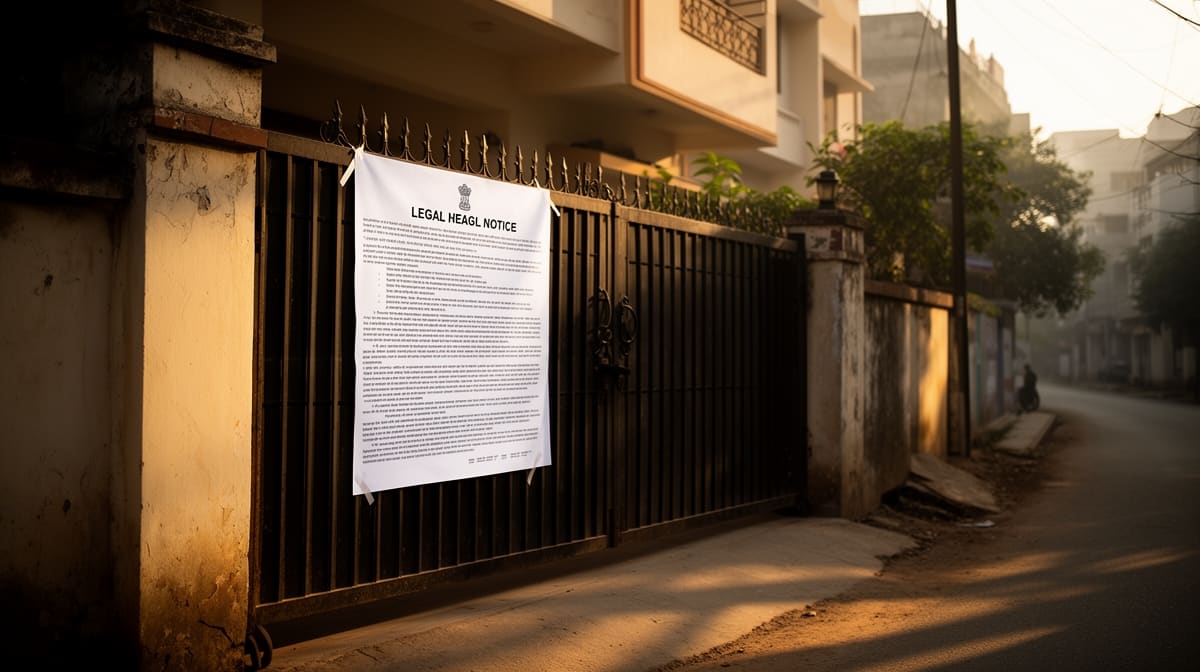
The High Court of Sikkim has clarified that an order issued by a District Magistrate under Section 14 of the SARFAESI Act attains legal effect upon compliance with statutory formalities, irrespective of a subsequent stay order by the Debt Recovery Tribunal. This ruling reinforces the procedural autonomy of enforcement authorities under the Act and underscores that interim stays do not retroactively invalidate lawful orders.
Background & Facts
The Dispute
The State Bank of India, as a secured creditor, filed an application under Section 14 of the Securitisation and Reconstruction of Financial Assets and Enforcement of Security Interest Act, 2002 seeking assistance from the District Magistrate, Soreng, to take physical possession of secured assets from a defaulting borrower. The application was submitted on 29.08.2023.
Procedural History
- 13.05.2025: District Magistrate issued a notice under Section 14, authorizing the bank to take possession of the secured property on 03.06.2025, citing compliance with the proviso to Section 14(1), including submission of a duly affirmed affidavit by the Authorized Officer.
- 02.06.2025: District Magistrate postponed the takeover date to 17.06.2025 after the borrower sought extension, citing a concurrent DRT hearing.
- 03.06.2025: The Debt Recovery Tribunal (DRT), Siliguri, passed an interim order staying the District Magistrate’s possession order, directing the bank not to take physical possession.
- 13.06.2025: District Magistrate issued a further notice suspending enforcement pending further orders from the DRT.
Relief Sought
The petitioner sought a writ directing the District Magistrate to implement the 13.05.2025 order and proceed with possession, arguing that the DRT’s stay order did not nullify the validity of the Magistrate’s lawful action.
The Legal Issue
The central question was whether a District Magistrate’s order under Section 14 SARFAESI Act loses its legal effect upon the issuance of a subsequent stay order by the DRT, or whether the Magistrate’s order remains valid and enforceable until formally set aside.
Arguments Presented
For the Petitioner
The petitioner contended that the District Magistrate had fully complied with the procedural requirements of Section 14, including submission of the mandatory affidavit under the proviso to subsection (1). The order dated 13.05.2025 was therefore a valid, final administrative order. The DRT’s stay, being an interim measure, could not annul the legal consequences of a lawfully passed order. Reliance was placed on M/s. Kesoram Industries Ltd. v. Union of India to argue that interim stays do not render prior lawful acts void ab initio.
For the Respondent
The Respondent District Magistrate, through the Assistant Government Advocate, argued that the DRT’s stay order under Section 17 of the SARFAESI Act had overriding effect, and that the Magistrate was bound to suspend enforcement pending adjudication. The Magistrate’s subsequent notices reflected compliance with the DRT’s directive, not any defect in the original order.
The Court's Analysis
The Court examined the statutory scheme of the SARFAESI Act, particularly the distinct roles of the District Magistrate under Section 14 and the DRT under Section 17. It held that Section 14 empowers the District Magistrate to assist in enforcement upon satisfaction of procedural conditions, and that such assistance, once rendered, constitutes a valid administrative order. The Court emphasized that the DRT’s jurisdiction under Section 17 is appellate and supervisory, not executive. The stay order issued by the DRT on 03.06.2025 was an interim measure, not a determination of the merits of the Section 14 application.
"The order passed by the District Magistrate under Section 14 is not a mere administrative formality; it is a statutory order with legal consequences, which cannot be rendered nugatory by an interim stay from a tribunal exercising appellate jurisdiction."
The Court further noted that the petitioner did not challenge the DRT’s jurisdiction or the validity of its stay order. Therefore, the writ petition was not maintainable as a vehicle to circumvent the DRT’s interim direction. The Magistrate’s actions were consistent with the law, and the petitioner’s remedy, if any, lay in approaching the DRT for vacating the stay, not in seeking a writ against the Magistrate.
The Verdict
The writ petition was dismissed. The Court held that a District Magistrate’s order under Section 14 SARFAESI Act remains legally effective upon compliance with statutory requirements, and that a subsequent DRT stay order does not nullify its validity. The petitioner was directed to seek appropriate relief before the DRT.
What This Means For Similar Cases
District Magistrate Orders Are Not Suspended by Default
- Practitioners must treat a Section 14 order as legally operative the moment procedural compliance is certified, even if a DRT stay follows.
- Banks and financial institutions should document and preserve all affidavits and notices issued under Section 14 as evidence of lawful enforcement.
DRT Stays Are Interim, Not Absolutist
- A DRT stay under Section 17 does not erase prior lawful actions; it only suspends future enforcement.
- Petitioners seeking to enforce possession should not delay filing applications to vacate DRT stays, as the Magistrate’s order remains valid pending such relief.
Procedural Compliance Is the Key Trigger
- The proviso to Section 14(1) requiring an affidavit from the Authorized Officer is not a formality - it is the threshold for the Magistrate’s jurisdiction.
- Any challenge to the validity of a Section 14 order must target the Magistrate’s compliance, not the existence of a DRT stay.