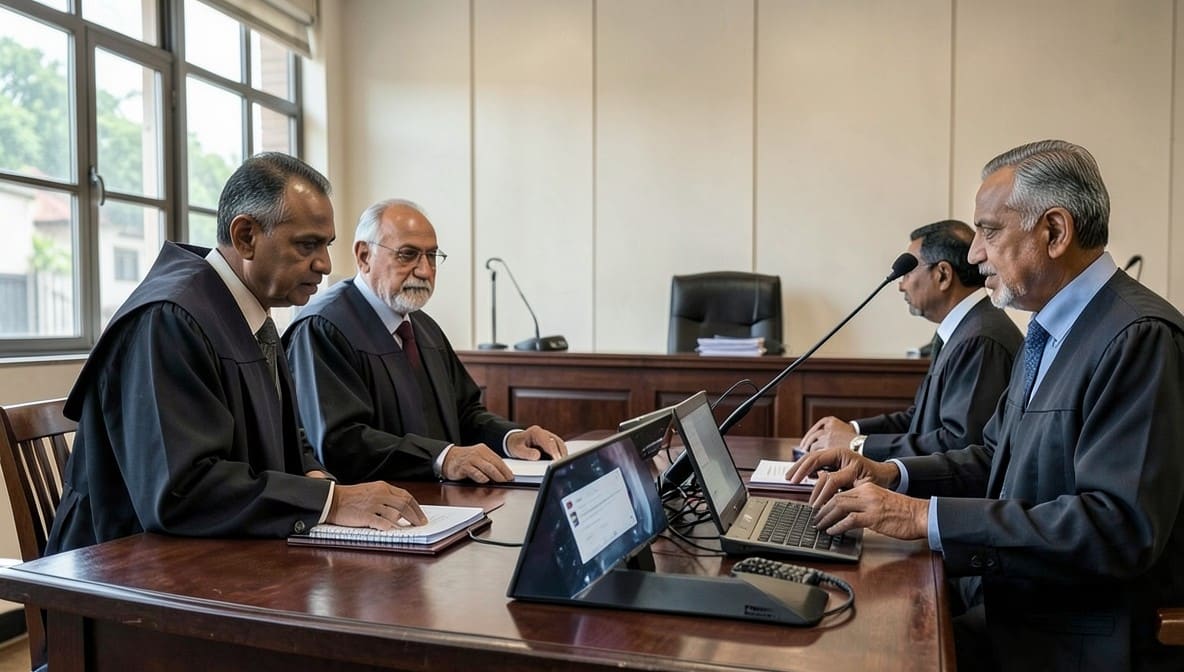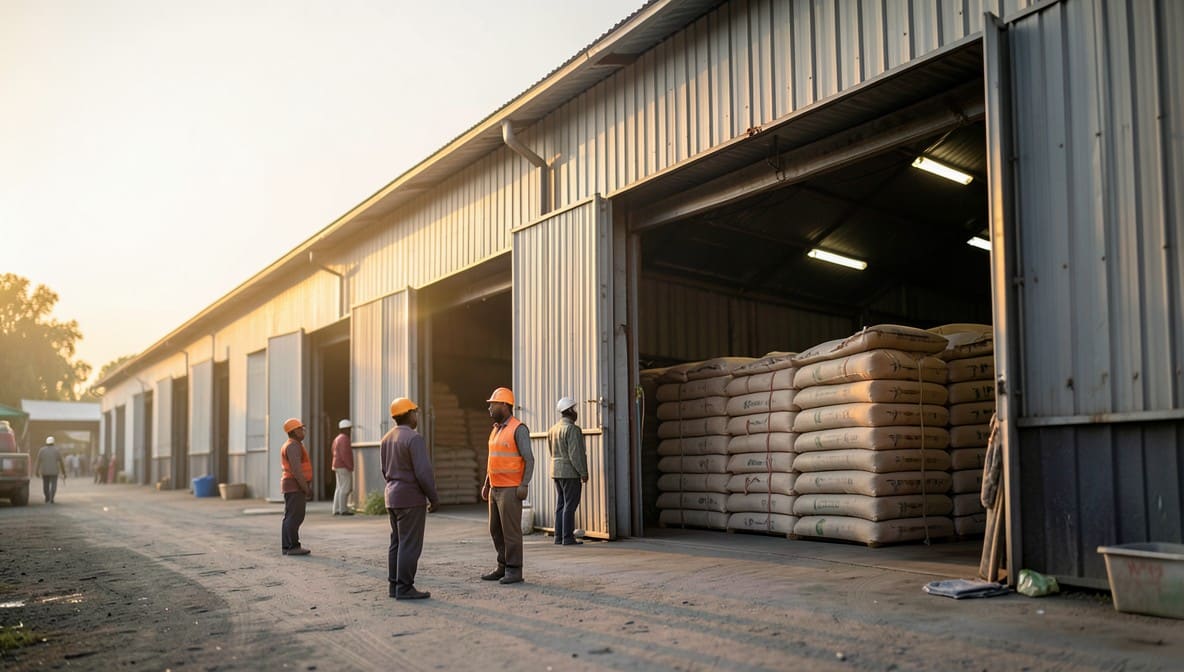
The Allahabad High Court has reaffirmed the absolute protective scope of the moratorium under Section 14 of the Insolvency and Bankruptcy Code, 2016, quashing a coercive order issued against a corporate debtor during the corporate insolvency resolution process. The judgment underscores that no state authority may enforce recovery, attachment, or restriction on assets once insolvency proceedings are admitted, regardless of the nature of the underlying claim or public interest asserted.
Background & Facts
The Dispute
The petitioner, M/s J.H.V. Sugar Limited, is a corporate debtor engaged in sugar production and processing. On 07.04.2025, the National Company Law Tribunal, Special Bench, Kolkata, admitted an application filed under Section 7 of the Insolvency and Bankruptcy Code, 2016 (IBC), thereby initiating the Corporate Insolvency Resolution Process (CIRP). This triggered an automatic moratorium under Section 14 of the IBC, prohibiting all coercive actions against the corporate debtor’s assets.
Key Facts
- The petitioner was admitted into CIRP on 07.04.2025 by NCLT Kolkata (Annexure No.2)
- On 16.03.2026, the District Cane Officer, Maharajganj (Respondent No.3), issued an order freezing the petitioner’s bank account and restricting movement of sugar stock
- The order was based on alleged non-compliance with a Supreme Court directive dated 09.12.2025 in Writ Petition No. 39089 of 2025
- The petitioner had deposited Rs. 71.45 Crores and an additional Rs. 13.58 Crores from its own funds during the CIRP
- The petitioner produced 2.15 Lakhs Quintal of sugar for the 2025-26 crushing season but only 1.13 Lakhs Quintal was released for sale
- On 23.05.2026, Respondent No.3 issued a further order directing the petitioner to deposit Rs. 17 Crores and Rs. 2.49 Crores from sugar sales, and to comply with the Supreme Court’s order
- The order was served via email on 25.05.2026 (Annexure No.1)
- The petitioner’s bank account remained frozen, preventing compliance with the Supreme Court’s order dated 24.02.2026 (Annexure No.4)
- A contempt petition was pending before the Supreme Court with a tentative hearing date of 13.07.2026
- The petitioner’s ability to pay workers’ dues for March 2026 was also blocked due to the freeze
Procedural History
- 07.04.2025: NCLT Kolkata admitted insolvency application under Section 7 IBC, triggering moratorium
- 16.03.2026: District Cane Officer issued order freezing bank account and restricting sugar stock movement
- 23.05.2026: Further coercive order issued by District Cane Officer, served via email on 25.05.2026
- 24.02.2026: Supreme Court passed order in SLP(C) No. 36904 of 2025, directing compliance
- 12.06.2026: Writ Petition No. 23722 of 2026 filed before Allahabad High Court
- 12.06.2026: Court permitted impleadment of Sub-Divisional Magistrate, Nichlaul Maharajganj as Respondent No.5
Relief Sought
The petitioner sought:
- Quashing of the order dated 23.05.2026 issued by Respondent No.3
- A writ of mandamus directing removal of all hindrances to ingress and egress of sugar stock
- Permission to operate its bank account to comply with the Supreme Court’s order and pay worker dues
The Legal Issue
The central question was whether Section 14 of the Insolvency and Bankruptcy Code, 2016 prohibits state authorities from issuing coercive orders for recovery or asset attachment against a corporate debtor during the moratorium period, even when such orders are purportedly issued to enforce a Supreme Court directive.
Arguments Presented
For the Petitioner
Learned Senior Counsel Shakti Swaroop Nigam relied on Alchemist Asset Reconstruction Company Ltd. v. M/s. Hotel Gaudavan Pvt. Ltd. and P. Mohanraj v. Shah Brothers Ispat Pvt. Ltd. to argue that Section 14(1)(a) creates an absolute bar on any proceeding against the corporate debtor, including those initiated by state authorities. He contended that the moratorium under Section 14 overrides all other laws under Section 238 IBC, rendering the impugned order void ab initio. He further cited Sundresh Bhatt v. CBIC to show that even tax recovery proceedings are stayed during moratorium. The petitioner’s inability to access funds or move sugar stock directly undermined the purpose of CIRP and risked contempt of the Supreme Court.
For the Respondent
The Standing Counsel for the State did not contest the applicability of Section 14 IBC but argued that the order was issued to ensure compliance with the Supreme Court’s directive and to address public interest concerns arising from dharna by sugar cane farmers. The State contended that the restriction on sugar movement was temporary and necessary to prevent dissipation of assets.
The Court's Analysis
The Court examined the language and intent of Section 14(1), which explicitly prohibits:
"the institution of suits or continuation of pending suits or proceedings against the corporate debtor including execution of any judgment, decree or order in any court of law, tribunal, arbitration panel or other authority;"
It noted that the Supreme Court in Alchemist Asset Reconstruction Company had held that any arbitration proceeding initiated post-moratorium is "non est in law." Similarly, in P. Mohanraj, the Apex Court quashed criminal proceedings under the NI Act during moratorium, emphasizing that Section 14 is a comprehensive shield.
The Court rejected the State’s argument that public interest or compliance with a Supreme Court order could override the statutory moratorium. It held that Section 238 IBC explicitly provides that the Code overrides any inconsistent law, including state revenue or excise enactments. The District Cane Officer, as a state authority, was bound by the IBC’s statutory framework.
The Court further observed that the petitioner had already deposited over Rs. 85 Crores and had not defaulted on its obligations. The restriction on sugar movement and bank account operation was not merely an administrative inconvenience - it was a direct violation of the moratorium’s core purpose: to preserve the corporate debtor’s assets for resolution.
"The moratorium under Section 14 is not a procedural delay; it is a statutory injunction designed to protect the corporate debtor from piecemeal enforcement actions that defeat the collective resolution process."
The Court concluded that the impugned order dated 23.05.2026 was issued in clear violation of the IBC and could not be sustained.
The Verdict
The writ petition is partly allowed. The order dated 23.05.2026 issued by Respondent No.3 is quashed. The District Cane Officer and Sub-Divisional Magistrate are directed to immediately remove all hindrances to the ingress and egress of sugar stock in the petitioner’s godown. The petitioner is permitted to operate its bank account to comply with the Supreme Court’s order dated 24.02.2026 and to pay workers’ dues for March 2026. Compliance is to be effected within 72 hours of this order.
What This Means For Similar Cases
Moratorium Overrides All State Enforcement Actions
- Practitioners must immediately challenge any attachment, freeze, or recovery order issued by state authorities against a corporate debtor during CIRP
- Even orders issued to enforce Supreme Court directions are void if they violate Section 14 IBC
- State agencies cannot invoke public interest or administrative necessity to bypass the moratorium
Bank Account Access Is Integral to CIRP
- Freezing a corporate debtor’s bank account during CIRP constitutes a breach of Section 14(1)(a)
- The debtor must be permitted to operate accounts to meet essential obligations, including employee wages and court-mandated payments
- Failure to allow access may constitute contempt of the NCLT or Supreme Court
Section 238 IBC Is Absolute
- The IBC’s overriding effect applies to all state laws, including excise, sugar control, and revenue statutes
- No departmental order, circular, or notification can negate the statutory moratorium
- Legal challenges must be framed as violations of Section 14, not as administrative appeals