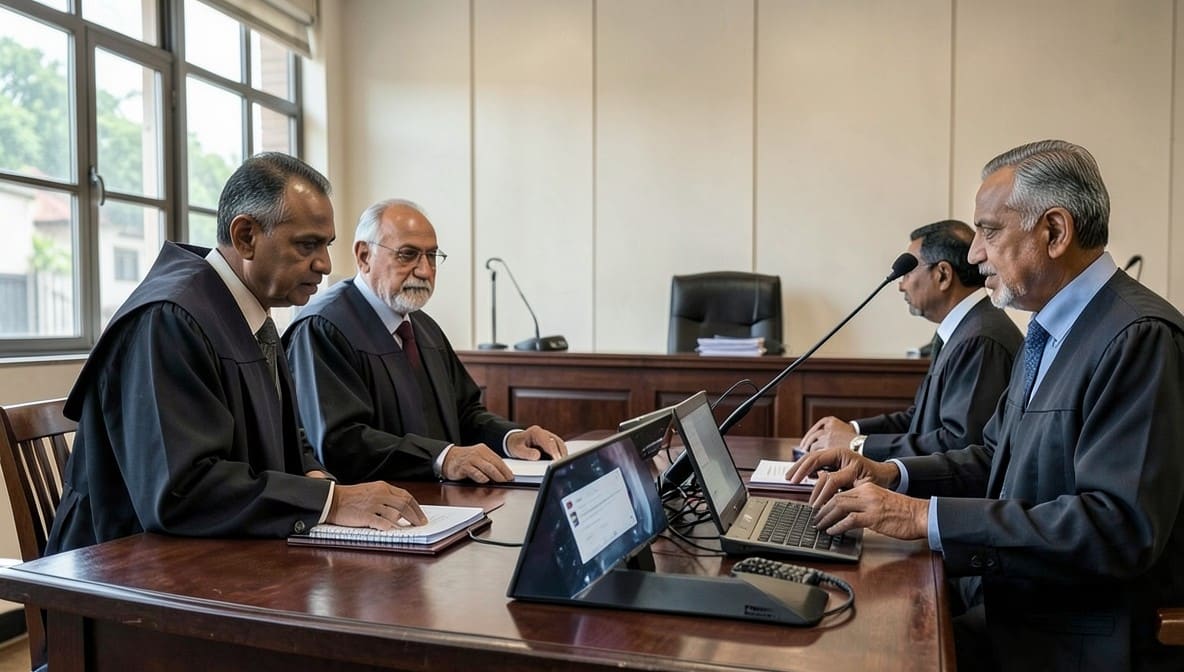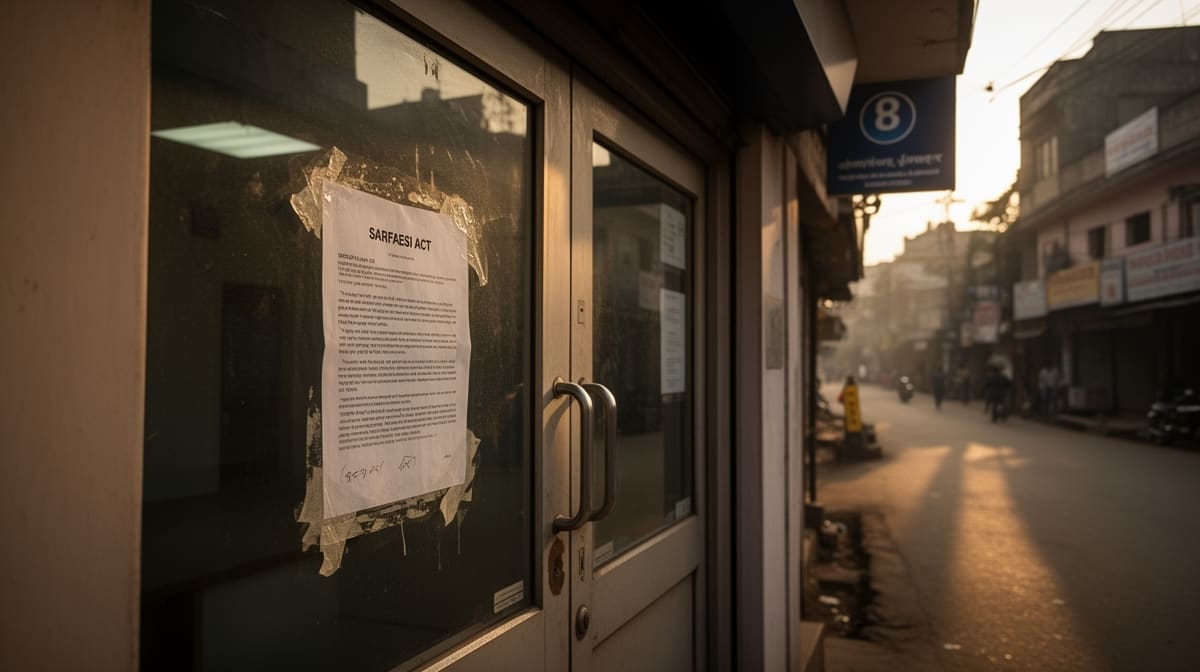
The Bombay High Court has delivered a critical clarification on the interaction between the Insolvency and Bankruptcy Code and the Securitisation and Reconstruction of Financial Assets and Enforcement of Security Interest Act, 2002. The judgment underscores that mere pendency of a corporate insolvency resolution process before the National Company Law Tribunal does not, by itself, operate as a stay on secured creditors’ enforcement actions under SARFAESI. This ruling reinforces the procedural boundaries between two key insolvency frameworks and provides much-needed certainty to financial institutions.
Background & Facts
The Dispute
The petitioner, Suryoday Small Finance Bank Limited, a secured creditor, took possession of a property under the Securitisation and Reconstruction of Financial Assets and Enforcement of Security Interest Act, 2002 (SARFAESI Act) after the borrower defaulted on loan repayments. The respondents, including the borrower and other interested parties, approached the Debts Recovery Tribunal (DRT) seeking restoration of possession, relying on the pendency of a petition before the National Company Law Tribunal (NCLT). The DRT granted the restoration order on the basis that a moratorium under the Insolvency and Bankruptcy Code, 2016 (IBC) was deemed to be in effect.
Procedural History
- 2025: Borrower filed an application under Section 7 of the IBC before the NCLT.
- 28.01.2026: DRT passed an order noting the pendency of the NCLT petition and inferred that a moratorium under Section 14 of the IBC was automatically operative.
- 04.02.2026: DRT ordered restoration of possession to the respondents, suspending the SARFAESI action.
- 12.02.2026: Petitioner filed this writ petition before the Bombay High Court challenging the DRT’s order.
Relief Sought
The petitioner sought quashing of the DRT’s orders dated 28.01.2026 and 04.02.2026, and a stay on their operation pending final disposal. The petitioner also sought confirmation that SARFAESI enforcement remains valid unless a formal moratorium order is issued by the NCLT.
The Legal Issue
The central question was whether the mere filing of an application under Section 7 of the IBC before the NCLT automatically triggers the moratorium under Section 14, thereby halting SARFAESI enforcement actions, or whether a formal order by the NCLT is a prerequisite.
Arguments Presented
For the Petitioner
The petitioner relied on the Division Bench judgment in Bank of Baroda v. Union of India, which held that a moratorium under Section 14 of the IBC only commences upon the admission of the insolvency application by the NCLT, not upon mere filing. It was submitted that the NCLT petition was still under e-filing and no admission order had been passed at the time possession was taken. The petitioner argued that allowing DRTs to infer moratorium from mere pendency undermines the statutory scheme of SARFAESI and erodes the rights of secured creditors.
For the Respondent
The respondents contended that the filing of an IBC application creates an immediate legal consequence under Section 14, and that the DRT’s inference was consistent with the protective intent of the IBC. They argued that the purpose of the moratorium is to preserve the corporate debtor’s assets from piecemeal enforcement, and that technicalities of filing status should not defeat this objective.
The Court's Analysis
The Court examined the statutory language of Section 14 of the IBC, which states that the moratorium shall come into effect "on the date of admission" of the application. The Court emphasized that the word "admission" is a defined legal event under the IBC, requiring judicial scrutiny and a formal order. The Court distinguished between the filing of an application and its admission, noting that the former is a procedural step, while the latter is a substantive determination.
"The moratorium under Section 14 of the IBC is not triggered by the mere filing of an application before the NCLT. It is contingent upon the NCLT’s formal admission of the application, which signifies the tribunal’s prima facie satisfaction that a default exists and the corporate debtor is eligible for insolvency proceedings."
The Court further held that the DRT erred in assuming the existence of a moratorium without any order from the NCLT. It noted that the SARFAESI Act grants secured creditors an independent statutory right to enforce security interests, which cannot be suspended by implication or inference. The Court also observed that the petitioner had acted in good faith, with no interim order from the DRT or NCLT restraining enforcement at the time of possession.
The Verdict
The petitioner succeeded. The Court held that a moratorium under Section 14 of the IBC does not come into effect merely upon filing of an application before the NCLT; it requires a formal admission order. The DRT’s orders restoring possession were set aside, and the stay on SARFAESI enforcement was lifted pending final disposal.
What This Means For Similar Cases
Moratorium Requires Formal Admission
- Practitioners must verify whether the NCLT has issued a formal admission order before asserting that a moratorium is operative.
- Secured creditors may proceed with SARFAESI enforcement if no admission order exists, even if an IBC application is pending.
- DRTs and courts must not infer moratorium status from mere pendency or e-filing status.
SARFAESI Enforcement Remains Valid Unless Stayed by Order
- The SARFAESI Act operates independently of the IBC unless explicitly stayed by a competent authority.
- Banks and financial institutions should maintain clear documentation of the timeline between default, notice issuance, possession, and any pending IBC applications.
- Any challenge to SARFAESI action must be grounded in a specific court or tribunal order, not speculative claims of moratorium.
Burden of Proof Lies on the Debtor to Establish Moratorium
- Respondents seeking to halt SARFAESI actions must produce the NCLT’s admission order as evidence.
- Mere assertion of an IBC application’s existence is insufficient to invoke protection under Section 14.
- Courts will not grant ad-interim relief based on unverified claims of pending insolvency proceedings.