The Bombay High Court has clarified that a criminal complaint under Section 138 of the Negotiable Instruments Act cannot proceed when a part payment of the cheque amount is made prior to presentation, but not endorsed on the instrument. This ruling reinforces that the legally enforceable debt at the time of encashment must match the face value of the cheque, and failure to endorse partial payment renders the complaint legally unsustainable.
Background & Facts
The Dispute
The dispute arose from a financial settlement between Nair Coal Services Private Limited and its former executive, Vijay Mani Menon. After Menon’s termination and subsequent resignation, the company agreed to repay Rs.6.13 crore advanced by him, with monthly installments of Rs.10 lakh until full realization. To secure payment of 15% interest, the company issued three blank cheques dated 14.12.2019, 14.01.2020, and 14.02.2020, each for amounts exceeding Rs.2 crore. The company also made two monthly payments of Rs.10 lakh each, totaling Rs.20 lakh, before the cheques were presented.
Procedural History
- 17.12.2018: Settlement agreement executed between company and Menon
- 14.12.2018: Acknowledgment signed confirming liability and payment schedule
- 14.12.2019: Company paid Rs.20 lakh via cheques; Menon received payment
- 14.12.2019: Menon presented all three cheques for encashment, despite two being dated for future months
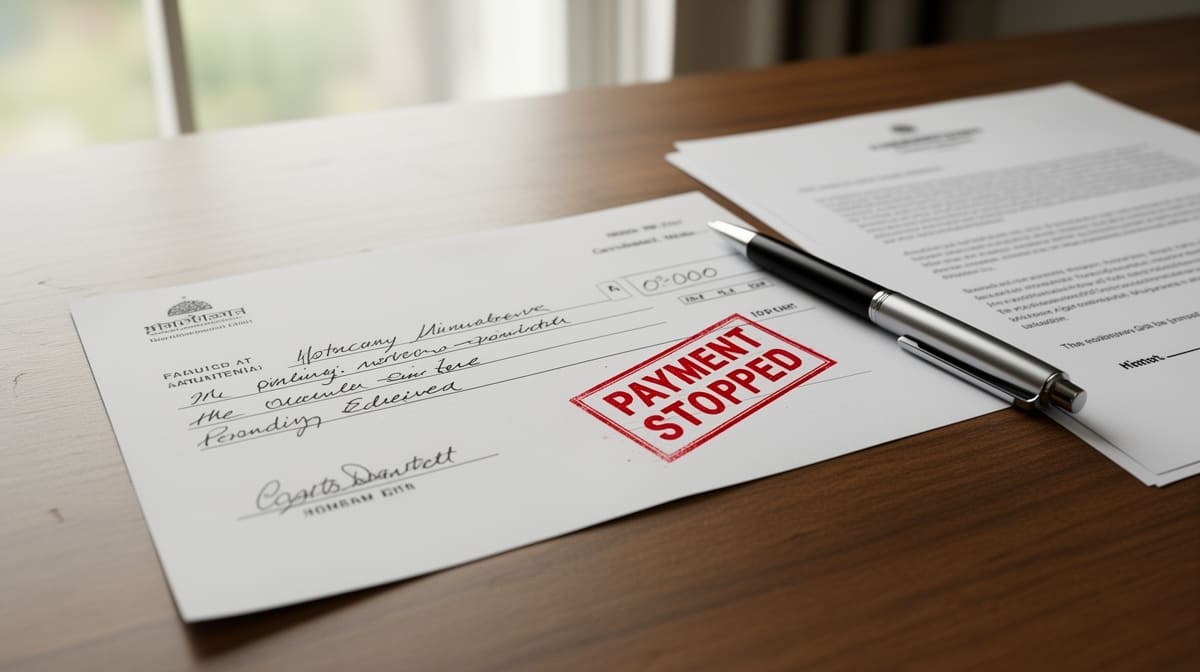
- 14.12.2019: Cheques returned unpaid with 'payment stopped' endorsement
- 24.12.2019: Menon issued legal notice demanding full cheque amounts without acknowledging receipt of Rs.20 lakh
- 09.01.2020: Company replied denying liability
- 20.02.2020: Judicial Magistrate issued process under Section 138 NI Act
- 2020: Criminal Application (APL) No.325/2020 filed before Bombay HC for quashing
Relief Sought
The applicants sought quashing of the criminal complaint and issuance of process under Section 138 NI Act, arguing that the complaint was legally defective due to non-endorsement of part payment and misrepresentation of the outstanding debt.
The Legal Issue
The central question was whether a complaint under Section 138 of the Negotiable Instruments Act remains maintainable when a part payment of the cheque amount is made before presentation, but not endorsed on the instrument as required by Section 56, thereby altering the legally enforceable debt at the time of encashment.
Arguments Presented
For the Appellant/Petitioner
The applicants contended that the non-applicant received Rs.20 lakh prior to presenting the cheques, reducing the legally enforceable debt. Under Section 56 of the NI Act, any part payment must be endorsed on the instrument to reflect the adjusted liability. Failure to do so meant the cheques continued to represent an inflated debt, violating the statutory requirement that the cheque must reflect a debt due at the time of presentation. They relied on Dashrathbhai Trikambhai Patel v. Hitesh Mahendrabhai Patel to argue that the notice and complaint were vitiated by demanding the full amount despite partial payment.
For the Respondent/State
The non-applicant argued that a legally enforceable debt existed at the time of issuance, and the mere fact of partial payment before presentation did not invalidate the complaint. He contended that the High Court should not interfere at the quashing stage by delving into disputed facts, citing settled principles under Section 482 CrPC. He maintained that the cheques were issued for a valid debt, were dishonoured, and the notice was properly issued - satisfying all prerequisites under Section 138.
The Court's Analysis
The Court examined Section 15 and Section 56 of the NI Act to determine the legal effect of partial payment without endorsement. It held that Section 56 is not merely procedural but substantive: it mandates that when a part of the sum due is paid, the payee must endorse the instrument to reflect the reduction. Without such endorsement, the cheque continues to represent the original amount, which no longer corresponds to the actual debt.
"34.2 If the drawer of the cheque pays a part or whole of the sum between the period when the cheque is drawn and when it is encashed upon maturity, then the legally enforceable debt on the date of maturity would not be the sum represented on the cheque."
The Court emphasized that Section 138 requires the cheque to represent a legally enforceable debt at the time of presentation. Since Rs.20 lakh was paid before presentation and not endorsed, the debt at presentation was reduced to Rs.6.13 crore minus Rs.20 lakh, not the full cheque amounts. The notice demanding the entire sum without acknowledging the payment was therefore invalid under Section 138(b).
The Court distinguished this from cases where no payment was made, or where endorsement was made. It cited Joseph Sartho v. G. Gopinathan to reinforce that the payee’s option is either to obtain a new cheque or endorse the existing one - there is no third option to demand the full amount while withholding acknowledgment of payment.
The Court further held that the notice’s failure to specify the adjusted amount rendered it non-compliant with statutory intent, which is to give the drawer a fair opportunity to rectify default. Demanding an inflated sum defeats this purpose and amounts to an abuse of process.
The Verdict
The applicants succeeded. The Court held that Section 138 NI Act cannot be invoked when a part payment is made before presentation and not endorsed under Section 56, as the cheque no longer represents a legally enforceable debt at the time of encashment. The complaint and issuance of process were quashed.
What This Means For Similar Cases
Endorsement Is Mandatory for Partial Payments
- Practitioners must verify whether any part payment was made before cheque presentation
- If yes, the absence of endorsement under Section 56 is a fatal defect in the complaint
- A notice demanding the full amount without adjusting for prior payment is legally invalid
Notice Must Reflect Actual Liability
- The notice under Section 138(b) must specify the actual outstanding amount, not the face value of the cheque
- Failure to do so renders the notice defective, even if the cheque was issued for a valid debt
- Courts will not permit complainants to exploit technicalities to recover more than is due
Quashing Is Available at Pre-Trial Stage
- High Courts may quash complaints under Section 482 CrPC where statutory compliance is fundamentally lacking
- This is not an interference with facts but a correction of legal non-compliance
- Practitioners should raise this as a preliminary objection in all Section 138 cases involving prior payments