The Bombay High Court has clarified that a technical defect in the authorization of a complainant bank’s representative cannot override the statutory presumptions under the Negotiable Instruments Act when the core elements of cheque dishonour are proven. This ruling reinforces that procedural irregularities must not defeat substantive justice in commercial disputes.
Background & Facts
The Dispute
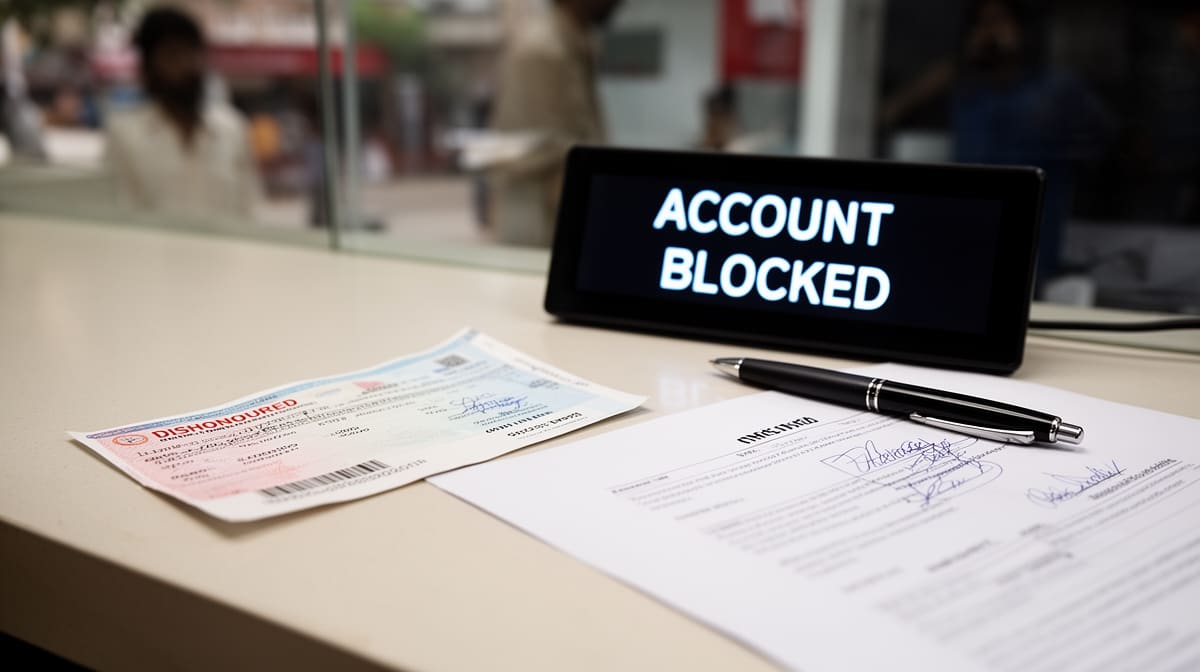
The appellant, Dwarkadas Mantri Nagari Sahakari Bank Ltd., filed a complaint under Section 138 of the Negotiable Instruments Act against the respondent, Sakharam Gunaji Mane, alleging that a cheque of Rs. 2,86,000 issued to settle a loan liability was dishonoured due to insufficient funds. The bank claimed the cheque was issued as part of a repayment arrangement after repeated defaults on instalments. The respondent contended the cheque was given as security and had been rendered invalid due to repayment or misuse.
Procedural History
- 2006: Summary Criminal Case No. 1443 of 2006 filed by the bank under Section 138 NI Act.
- 2011: Trial Court permitted Raosaheb Bade, a bank manager, to depose as witness despite submission of only a true copy of the resolution authorizing him.
- 2016: Trial Court acquitted the accused solely on the ground that the original resolution authorizing the complainant’s witness was not produced on record.
- 2017: Bank filed Criminal Appeal No. 307 of 2017 before the Bombay High Court.
Relief Sought
The appellant sought reversal of the acquittal and conviction of the respondent under Section 138 NI Act, arguing that the trial court erred in treating a technical omission as fatal to the prosecution’s case.
The Legal Issue
The central question was whether the failure to produce the original resolution authorizing a bank representative to file a complaint under Section 138 NI Act invalidates the prosecution, even when all other ingredients of the offence are established and presumptions under Sections 118 and 139 are attracted.
Arguments Presented
For the Appellant
Counsel relied on Bhupesh Rathod v. Dayashankar Prasad Chaurasiya (2021 SCC Online SC 1031) and Samrat Shipping Co. Pvt. Ltd. v. Dolly George (2002) 9 SCC 455 to argue that technical defects in authorization cannot defeat a prosecution under Section 138 if the underlying transaction and dishonour are proven. The true copy of the resolution was on record, and the witness was duly authorized in practice. The trial court had already applied presumptions under Sections 118 and 139, confirming the validity of the transaction.
For the Respondent
The respondent’s counsel defended the acquittal, asserting that the absence of the original resolution rendered the complainant’s standing legally defective. Citing procedural rigour, they argued that without the original document, the witness lacked lawful authority to initiate proceedings, making the entire complaint void ab initio.
The Court's Analysis
The Court conducted a comprehensive re-appreciation of evidence and found that the trial court had correctly accepted the bank’s case on all substantive grounds: the loan was granted, the cheque was issued for discharge of liability, it was dishonoured, and statutory notice was duly sent. Crucially, the trial court had explicitly held that the presumptions under Sections 118 and 139 NI Act were attracted and that the accused had failed to rebut them.
"Even when accused failed to rebut the presumption... the only ground for acquittal was the absence of the original resolution. This cannot be the basis to negate the entire prosecution."
The Court emphasized that Section 138 is a socio-economic provision designed to uphold the credibility of negotiable instruments. Denying conviction on a technicality - especially when the true copy was on record and the witness was acting within his official capacity - would defeat the legislative intent. The Court distinguished this from cases where no authorization existed at all; here, the bank’s internal procedure did not invalidate the witness’s authority.
The Court further noted the extraordinary delay of nearly two decades in adjudication, which rendered incarceration inappropriate. It invoked Rohitbhai Jivanlal Patel v. State of Gujarat (2019) 18 SCC 106 to justify compensatory justice through a fine equivalent to twice the cheque amount.
The Verdict
The appellant won. The Bombay High Court set aside the acquittal and convicted the respondent under Section 138 NI Act, sentencing him to pay a fine of Rs. 5,72,000 (twice the cheque amount) or three months’ simple imprisonment in default. The Court held that technical non-production of original authorization documents cannot override established presumptions and proven facts.
What This Means For Similar Cases
Authorization Copies Are Sufficient
- Practitioners may rely on true copies of resolutions authorizing bank officials to file complaints under Section 138, provided the copy is verified and the witness is a duly appointed officer.
- Courts must not treat absence of original as fatal unless there is credible evidence of fraud or fabrication.
Presumptions Under Sections 118 and 139 Are Powerful
- Once the cheque and dishonour are proven, the burden shifts to the accused to rebut the presumption of liability.
- A conviction cannot be overturned merely because the complainant failed to produce the original internal authorization document.
Delay Demands Compensatory, Not Punitive, Remedies
- In cases of prolonged litigation (over 10 - 15 years), courts may opt for monetary compensation over imprisonment to avoid injustice.
- Practitioners should argue for compensatory fines under Rohitbhai Patel when delay is evident and the accused is not a habitual offender.