The Delhi High Court has set aside a divorce decree granted on grounds of cruelty, emphasizing that allegations must be substantiated by credible, corroborated evidence and that procedural fairness under the Indian Evidence Act cannot be bypassed. The judgment reinforces that marital discord, absent grave and sustained cruelty, cannot justify dissolution of marriage.
Background & Facts
The Dispute
The appellant, Urvasi Aggarwal, and the respondent, Inder Paul Aggarwal, were married on 11.11.1997. Two children were born to them: a son on 14.08.2000 and a daughter on 14.08.2002. A prior child born on 10.11.1998 died on the same day. The couple began living separately from 11.04.2004. The respondent filed a divorce petition under Section 13(1)(ia) of the Hindu Marriage Act, 1955 on 19.01.2006, alleging physical and mental cruelty. The appellant filed a petition under Section 9 for restitution of conjugal rights on 08.08.2008.
Key Facts
- The respondent alleged three incidents of cruelty: (i) 11.05.2003 - appellant attempted to set the house on fire with gas; (ii) 11.04.2004 - appellant left a handwritten slip with demands; (iii) 05.07.2005 - appellant and her family assaulted the respondent.
- The respondent claimed injuries on his right hand during the 11.05.2003 incident but produced no medical records or witness testimony.
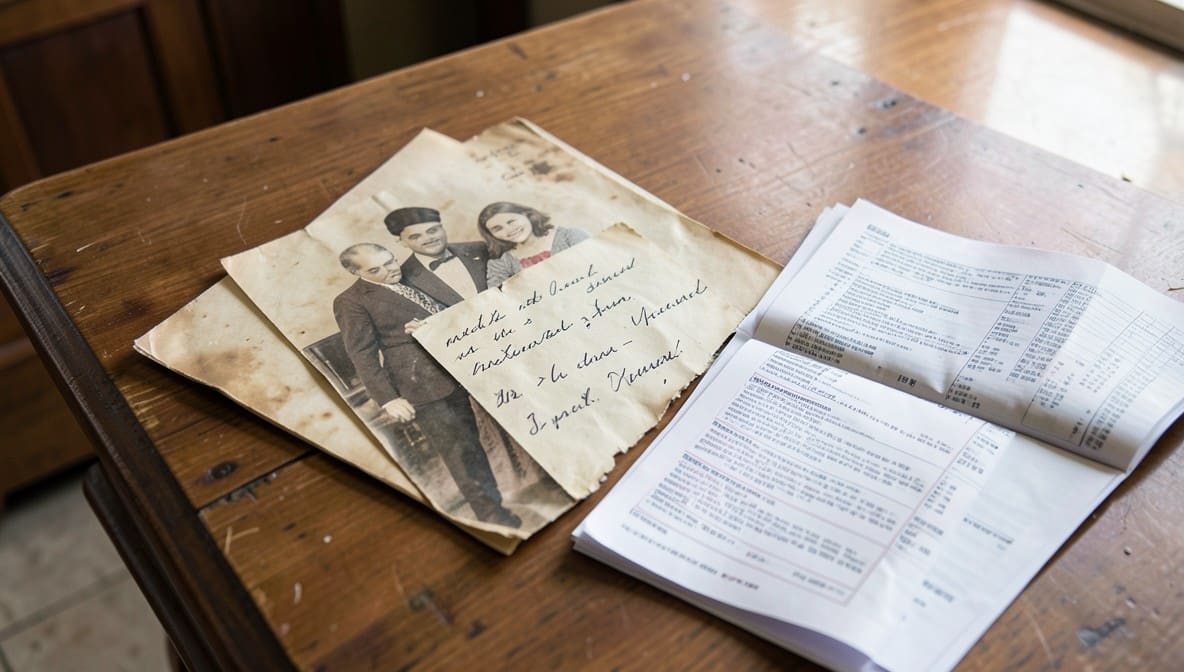
- The handwritten slip (Ex. RW1/1) was central to the case. The Family Court directed the appellant to write samples for handwriting comparison under Section 73 of the Indian Evidence Act, 1872, without informing her of the purpose.
- The appellant denied authoring the slip and refused to provide handwriting samples without legal advice.
- The respondent produced an MLC (Ex. RW1/4) from AIIMS dated 05.07.2005, recording chest pain and a history of assault, but no police report, witness, or forensic analysis corroborated the claim.
- The respondent alleged the appellant avoided sexual relations and used anti-pregnancy pills, but could not name the pills or produce medical evidence.
- The parties had two children born after marriage, undermining the claim of sexual avoidance.
Procedural History
- 11.11.1997: Marriage solemnized
- 10.11.1998: First child born and died same day
- 14.08.2000: Birth of son
- 14.08.2002: Birth of daughter
- 11.04.2004: Parties began living separately
- 19.01.2006: Respondent filed divorce petition (HMA No. 147/2010)
- 08.08.2008: Appellant filed restitution petition (HMA No. 390/2010)
- 28.11.2011: Family Court granted divorce to respondent and dismissed restitution petition
- 13.01.2026: Appeal heard and reserved
- 13.04.2026: Judgment pronounced
- 22.01.2012: Respondent remarried
- 13.11.2013: Child born from second marriage
The Parties' Positions
For the Appellant
- The alleged incidents of cruelty were uncorroborated, speculative, and self-serving.
- The MLC and ECG did not prove assault by the appellant or her family.
- The handwriting comparison under Section 73 was conducted without notice or opportunity to obtain expert assistance, violating natural justice.
- The burden of proof was improperly shifted to the appellant.
- The allegation of sexual avoidance was baseless given two subsequent births.
For the Respondent
- The Family Court correctly appreciated the evidence, including the MLC and handwriting comparison.
- One instance of cruelty is sufficient to dissolve marriage.
- The appellant’s reluctance to provide handwriting samples indicated guilt.
- The appellant’s failure to produce medical records of her family members suggested concealment.
- The divorce decree had attained finality as the statutory appeal period had lapsed.
Relief Sought
The appellant sought setting aside of the divorce decree dated 28.11.2011, dismissal of the respondent’s petition for divorce, and costs. No relief was sought against the dismissal of the Section 9 petition.
The Legal Issue
The central question was whether the Family Court’s grant of divorce under Section 13(1)(ia) of the Hindu Marriage Act was legally sustainable where the alleged cruelty was based on uncorroborated testimony, an improper handwriting comparison under Section 73 of the Indian Evidence Act, and an unlawful shifting of the burden of proof to the respondent.
Arguments Presented
For the Appellant
The appellant’s counsel argued that the Family Court erred in relying on the MLC without police reports or witness testimony to establish assault. The handwriting comparison under Section 73 was conducted without informing the appellant of its purpose, violating procedural fairness. The Court’s adverse inference against her for refusing to write samples was legally unsustainable without expert analysis. The allegation of sexual avoidance was contradicted by the birth of two children. The burden of proving cruelty lay squarely on the respondent, which he failed to discharge. The Court’s reliance on isolated, uncorroborated incidents ignored the Supreme Court’s mandate in A. Jayachandra v. Aneel Kaur that cruelty must be grave, continuous, and make cohabitation intolerable.
For the Respondent
The respondent’s counsel contended that the Family Court had meticulously evaluated the evidence, including the MLC and the handwritten slip, and rightly inferred guilt from the appellant’s evasive conduct. The Supreme Court in Gurbax Singh v. Harminder Kaur held that sustained ill conduct over time suffices for cruelty. The respondent’s remarriage and subsequent child birth demonstrated finality of the decree. The appellant’s failure to produce medical records of her family members indicated suppression of evidence.
The Court's Analysis
The Delhi High Court undertook a rigorous review of the Family Court’s reasoning and found it legally flawed on multiple grounds. The Court emphasized that cruelty under Section 13(1)(ia) must be grave, persistent, and render cohabitation impossible - not mere marital discord. The Court cited A. Jayachandra v. Aneel Kaur to affirm that cruelty must be of a nature that no reasonable person would tolerate.
"The conduct complained of should be ‘grave and weighty’ so as to come to the conclusion that the petitioner spouse cannot be reasonably expected to live with the other spouse. It must be something more serious than ‘ordinary wear and tear of married life’.
The Court found the incident of 11.05.2003 - alleged arson - unsupported by any medical evidence, police report, or witness testimony. The respondent’s own testimony alone could not sustain such a serious allegation.
Regarding the handwritten slip (Ex. RW1/1), the Court held that the Family Court’s exercise of power under Section 73 of the Indian Evidence Act was procedurally defective. The Court noted:
"The comparison under Section 73 requires awareness of the parties as a pre-requisite for procedural fairness... Raising an adverse inference against a party on account of her resistance for giving her handwriting, without informing her that the same will be used by the Court for comparison purposes, is against the principles of natural and fair justice."
The Court held that the appellant’s hesitation was natural, especially without notice of the Court’s intent to use the samples for comparison. No expert opinion was sought, and the Court’s self-reliance on visual comparison was inadequate for a document of such consequence.
The MLC from AIIMS dated 05.07.2005 recorded chest pain and a history of assault but did not identify the assailant, the nature of the assault, or link it to the appellant. The Court observed:
"The medical records at best, show that the respondent had suffered injuries due to an assault at a preceding period, but they fail to elaborate on who assaulted him and why."
The Court further held that the burden of proof lay on the respondent, as established in Roopa Soni v. Kamalnarayan Soni and Deepti Khatana v. Rahul Khatana. The Family Court erred in drawing adverse inferences against the appellant for failing to produce neighbors or medical records of her family - a clear misapplication of the burden of proof.
The allegation of sexual avoidance was dismissed as baseless, given the birth of two children after the alleged avoidance began. The Court concluded:
"We do not find any other grave allegations which led the Family Court to come to the conclusion that the appellant treated the respondent with such a cruelty that it becomes impossible for him to live with the appellant."
The Verdict
The appeal was allowed. The divorce decree dated 28.11.2011 passed by the Family Court, Rohini, Delhi, is set aside. The petition for divorce filed by the respondent under Section 13(1)(ia) of the Hindu Marriage Act is dismissed. The dismissal of the appellant’s petition under Section 9 for restitution of conjugal rights remains undisturbed, as no challenge was made to it. All pending applications are disposed of. The fact that the respondent remarried on 22.01.2012 and had a child on 13.11.2013 does not affect the outcome, as the decree was granted on legally unsustainable grounds.
What This Means For Similar Cases
Adverse Inference Cannot Be Drawn Without Proper Section 73 Notice
- Practitioners must object when courts conduct handwriting comparisons under Section 73 without prior notice or opportunity to obtain expert assistance.
- Courts must explicitly inform parties that handwriting samples will be used for comparison and allow them to seek forensic experts.
- Relying solely on judicial comparison without expert opinion is legally untenable in high-stakes matrimonial cases.
Burden of Proof in Cruelty Cases Rests Solely on the Petitioner
- In divorce petitions under Section 13(1)(ia), the burden of proving cruelty lies exclusively on the petitioner.
- Courts must not shift the burden to the respondent to disprove allegations.
- Failure to produce witnesses or documents by the respondent does not constitute proof of cruelty by the petitioner.
Isolated Incidents Do Not Constitute Cruelty Without Cumulative, Corroborated Evidence
-
A single uncorroborated incident - even if serious - is insufficient to grant divorce.
-
Courts must assess conduct over the entire duration of the marriage, considering social context, emotional impact, and pattern of behavior.
-
Medical reports without police records or witness testimony are inadequate to prove assault in matrimonial cruelty cases.
-
Always demand corroboration for allegations of physical violence.
-
Challenge adverse inferences drawn from silence or non-production of evidence where burden has been improperly shifted.
-
Argue that the birth of children negates claims of sexual avoidance unless supported by contemporaneous medical or testimonial evidence.