The Gauhati High Court has reaffirmed that a wife’s entitlement to maintenance under Section 125 CrPC is not negated merely because she earns a modest income or has not filed a criminal complaint under Section 498-A IPC. The judgment underscores the social purpose of maintenance law as a shield against destitution, not a reward for perfect conduct.
Background & Facts
The Dispute
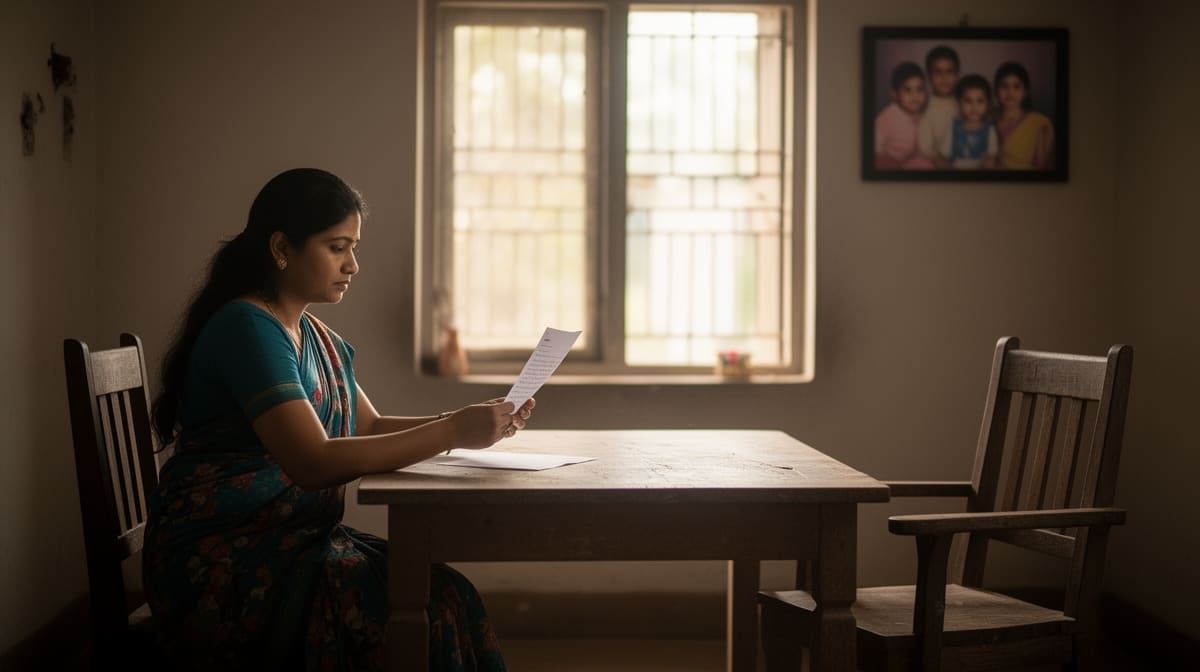
The petitioner, Golap Hussain, a practicing advocate and part-time teacher, was challenged by his wife, Roushanara Begum, in a proceeding under Section 125 CrPC (now Section 144 BNSS, 2023) for failure to maintain her and their minor daughter. The wife alleged that she was forcibly evicted from the matrimonial home on 23.03.2022 after enduring sustained mental torture and unlawful demands for land. She claimed she had no means to support herself or her daughter, who was studying in Class 9.
Key Facts
- The petitioner is an advocate enrolled since 2008 and teaches at Ratnadeep Junior College, Kahibari, though his post is unsanctioned.
- The respondent-wife is employed as a volunteer Tally Educator earning Rs. 2,000 per month.
- The wife filed a complaint on 23.03.2022, alleging torture and eviction.
- She submitted an affidavit of assets and liabilities, but omitted disclosure of her Tally income.
- The petitioner admitted to a second marriage in 2014.
- The daughter is enrolled at Jururam Pathak Girls High School, Barpeta.
- The wife’s brother (PW2) corroborated allegations of torture and repeated expulsions from the matrimonial home.
- The petitioner denied allegations of cruelty, claiming the wife left voluntarily.
- No FIR under Section 498-A IPC was filed.
Procedural History
- 23.03.2022: Wife allegedly forced to leave matrimonial home.
- 2022: Complaint filed before Family Court, Barpeta as F.C. (Crl.) Case No. 509/2022.
- 30.05.2025: Family Court ordered maintenance of Rs. 7,000 per month each to wife and daughter.
- 23.03.2026: Revision petition filed before Gauhati High Court.
- 23.03.2026: Judgment delivered by Justices Sanjay Kumar Medhi and Pranjal Das.
The Parties' Positions
For the Petitioner (Golap Hussain):
- Argued wife left matrimonial home voluntarily without cause.
- Contended her undisclosed income of Rs. 2,000/month disqualifies her from maintenance.
- Relied on Deb Narayan Halder v. Anushree Halder to assert that leaving without reason bars maintenance.
- Asserted absence of Section 498-A FIR undermines credibility of torture allegations.
- Did not contest maintenance for daughter.
For the Respondent (Roushanara Begum):
- Maintained she was driven out due to cruelty and unlawful demands.
- Highlighted meagre income of Rs. 2,000/month as insufficient for subsistence.
- Cited evidence of repeated expulsions and threats.
- Emphasized petitioner’s dual income as advocate and teacher.
- Pointed to his second marriage as evidence of marital breakdown.
- Relied on Chaturbhuj v. Sita Bai to affirm social justice objective of Section 125 CrPC.
Relief Sought
The petitioner sought quashing of the Family Court’s order dated 30.05.2025 granting Rs. 7,000/month maintenance to wife and daughter. The respondent sought enforcement of the order and payment of arrears.
The Legal Issue
Can a wife be denied maintenance under Section 125 CrPC solely because she earns a small income, has not filed a criminal complaint under Section 498-A IPC, or left the matrimonial home without a documented police complaint?
Arguments Presented
For the Appellant/Petitioner
The petitioner’s counsel relied on Deb Narayan Halder v. Anushree Halder to argue that voluntary departure from the matrimonial home without cause extinguishes the right to maintenance. He contended that the wife’s failure to disclose her Rs. 2,000/month income in her asset declaration rendered her claim unclean. He further argued that the absence of a Section 498-A FIR indicated the allegations of torture were fabricated, as genuine victims of cruelty typically approach police.
For the Respondent/State
The respondent’s counsel, relying on Chaturbhuj v. Sita Bai, emphasized that Section 125 CrPC is a social welfare provision designed to prevent vagrancy and destitution. He argued that the wife’s income of Rs. 2,000/month is insufficient to meet basic needs, especially with a school-going child. He highlighted that the Family Court had already discounted the wife’s income and still awarded a modest Rs. 7,000/month. He also noted the petitioner’s admission of a second marriage, which contradicted his claim of being unsupported.
The Court's Analysis
The Court began by affirming that proceedings under Section 125 CrPC are summary in nature and must be interpreted liberally to achieve their social purpose. The Court observed that the statute is not a tool for punishing marital misconduct but a mechanism to ensure basic sustenance for those unable to support themselves.
"The object of the maintenance proceedings is not to punish a person for his past neglect, but to prevent vagrancy by compelling those who can provide support to those who are unable to support themselves and who have a moral claim to support."
The Court rejected the petitioner’s reliance on Deb Narayan Halder, distinguishing it on facts. It noted that the wife’s departure was not voluntary but the result of alleged cruelty, corroborated by her brother’s testimony and the pattern of prior expulsions. The Court held that the absence of a police complaint under Section 498-A IPC does not invalidate a civil maintenance claim, as the two remedies serve distinct purposes.
The Court further held that partial income does not disqualify a claimant under Section 125 CrPC. The wife’s earnings of Rs. 2,000/month were deemed insufficient to meet the cost of living, particularly with a child in school. The Family Court’s award of Rs. 7,000/month each was found to be reasonable, conservative, and aligned with the petitioner’s known income streams.
The Court also noted the petitioner’s failure to pay maintenance since the order was passed, calling his conduct “questionable.” It emphasized that the purpose of Section 125 is not merely declaratory but remedial, requiring immediate compliance.
The Verdict
The revision petition was dismissed. The Court upheld the Family Court’s order dated 30.05.2025 granting maintenance of Rs. 7,000 per month each to the wife and daughter. The petitioner was directed to pay all arrears within 45 days from the date of judgment (23.03.2026) and to continue monthly payments thereafter. Costs were not awarded, but the Legal Aid Counsel was commended and entitled to statutory fees.
What This Means For Similar Cases
Partial Income Does Not Bar Maintenance
- Practitioners must argue that any income claimed by the wife must be assessed in context - Rs. 2,000/month is not a barrier to maintenance if it fails to meet basic needs.
- Courts must compare income against cost of living, education, and medical expenses, not apply rigid thresholds.
No FIR Under Section 498-A Is Not Fatal to a Section 125 Claim
- The absence of a criminal complaint cannot be used to discredit civil maintenance claims.
- Section 125 CrPC operates independently of criminal proceedings; its standard is prima facie need and means, not criminal proof beyond reasonable doubt.
Social Purpose Trumps Technical Deficiencies
-
Failure to disclose income in asset declarations may attract adverse inference but does not extinguish the right to maintenance.
-
Courts must prioritize the statute’s constitutional mandate under Article 15(3) and Article 39 over procedural technicalities.
-
Always argue that maintenance under Section 125 is a moral and constitutional obligation, not a privilege.
-
When opposing maintenance, focus on actual financial capacity, not moral blame.
-
Document the cost of living for children and spouses to justify higher maintenance claims.