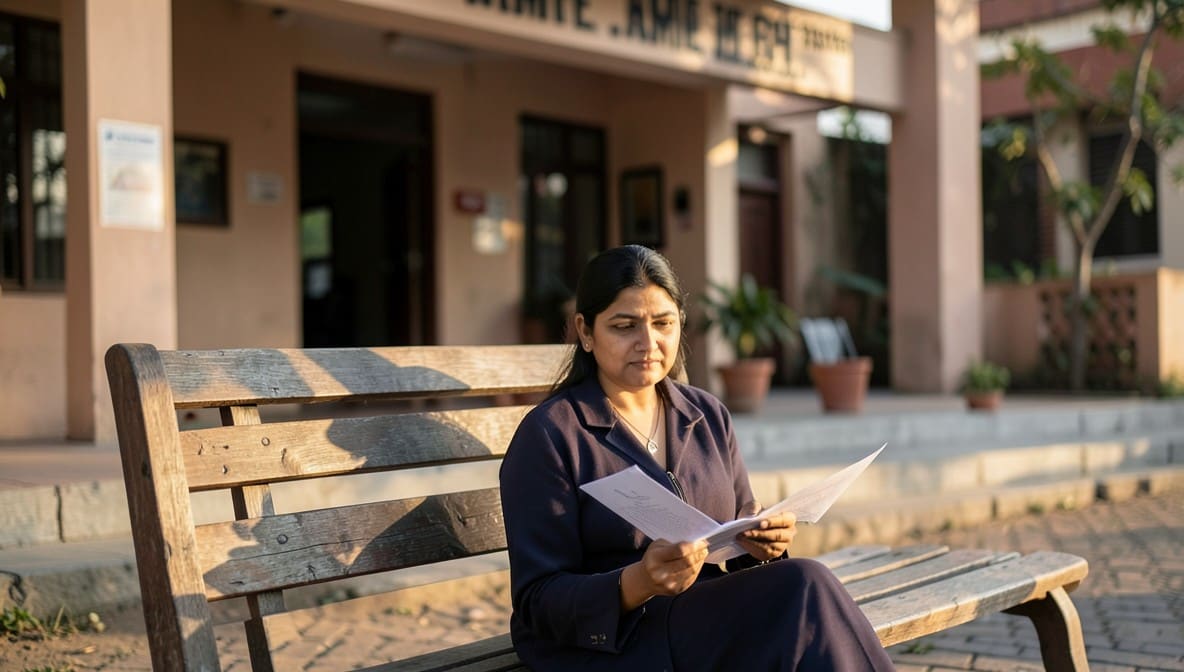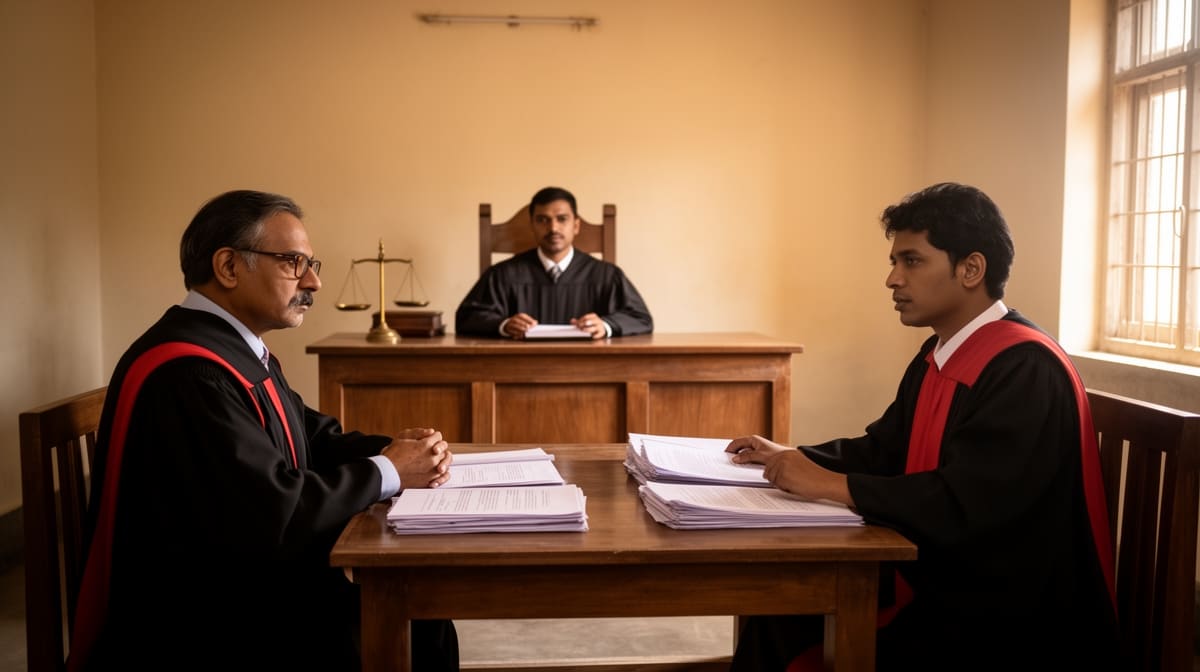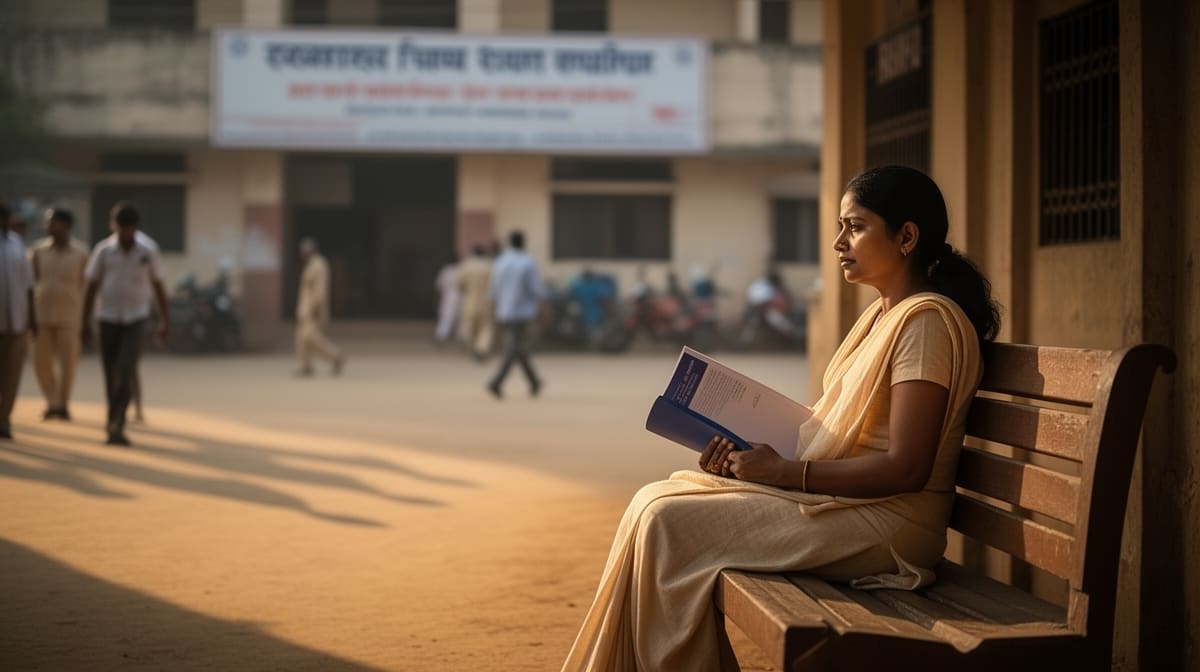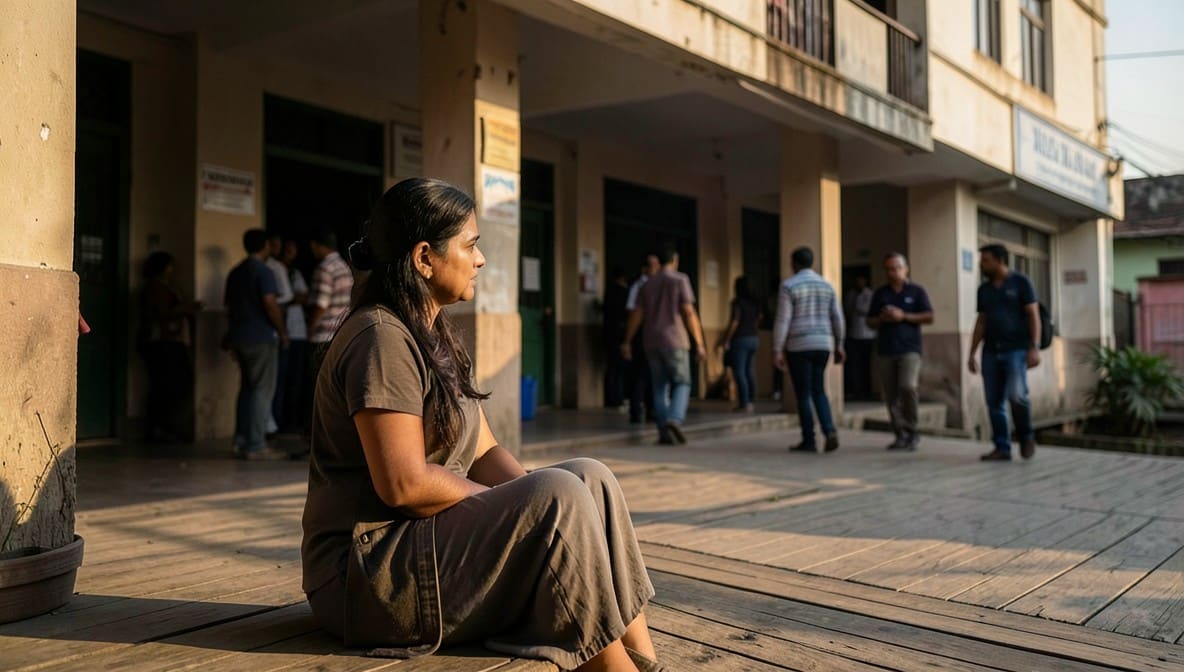
The Madhya Pradesh High Court has clarified that a wife’s separation from her husband cannot be deemed without sufficient cause merely because he filed a restitution of conjugal rights petition. This ruling reinforces the principle that maintenance under Section 125 CrPC is a statutory right, not contingent on moral judgment of marital conduct.
Background & Facts
The Dispute
The petitioners - Smt. Vijay Laxmi Sahu (wife), her minor son, and minor daughter - sought maintenance under Section 125 of the Code of Criminal Procedure, 1973, against the respondent, Omprakash Sahu (husband). The Family Court, Betul, granted maintenance of Rs. 1,500 per month each to the two minor children but denied maintenance to the wife on the ground that she was residing separately without sufficient cause.
Key Facts
- The petitioner-wife and respondent-husband were married under the Hindu Marriage Act, 1955
- The wife and children left the matrimonial home in 2013 due to alleged cruelty and neglect
- The husband filed an application under Section 9 of the Hindu Marriage Act for restitution of conjugal rights on 15.01.2014
- The wife appeared in response to the Section 9 petition on 05.03.2014
- The husband withdrew the Section 9 application on 10.03.2014, with the court recording the withdrawal
- The wife continued to reside separately with her children after the withdrawal
- The wife suffers from chronic illness requiring medical care
- Her daughter also has health complications requiring ongoing treatment
- The husband is employed and has a steady income
- No evidence was adduced by the husband to prove that the wife left without cause or that reconciliation was refused by her
Procedural History
- 15.01.2014: Husband files application under Section 9 of the Hindu Marriage Act for restitution of conjugal rights
- 05.03.2014: Wife appears in response to the Section 9 petition
- 10.03.2014: Husband withdraws the Section 9 application; court records withdrawal
- 20.04.2014: Petitioners file application under Section 125 CrPC before Family Court, Betul (MJC No. 03/2014)
- 22.04.2015: Family Court passes impugned order - grants maintenance to children, denies to wife on ground of separation without sufficient cause
- 28.07.2015: Criminal Revision No. 1721 of 2015 filed before High Court, Jabalpur
- 20.04.2026: Judgment delivered by Justice Dwarka Dhish Bansal
Relief Sought
The petitioners sought:
- Maintenance of Rs. 5,000 per month for the wife
- Maintenance of Rs. 2,000 per month for each minor child
- Interest at 9% per annum from the date of filing the application
- Costs of litigation
The Legal Issue
The central question was whether the mere filing of a restitution of conjugal rights petition under Section 9 of the Hindu Marriage Act, 1955, by the husband, without more, constitutes sufficient ground to deny maintenance to the wife under Section 125 CrPC on the ground that she is residing separately without sufficient cause.
Arguments Presented
For the Petitioner
Learned counsel for the petitioners submitted that the withdrawal of the Section 9 petition by the husband demonstrated that the marital discord was not attributable to the wife’s conduct. She argued that the Family Court erred in ignoring the factual outcome of the Section 9 proceeding and failed to consider the wife’s chronic illness and the medical needs of her daughter. Reliance was placed on Rajnesh v. Neha (2021) to emphasize that the wife’s right to maintenance is not contingent on moral rectitude or marital fidelity, but on economic vulnerability and inability to maintain herself. The withdrawal of the Section 9 petition, she contended, was a clear indication that the husband had abandoned his claim of marital reconciliation, thereby negating any inference that the wife’s separation was unjustified.
For the Respondent
The State’s counsel supported the Family Court’s order, arguing that the wife’s decision to leave the matrimonial home without attempting reconciliation, even after the husband initiated proceedings under Section 9, indicated her unwillingness to cohabit. He submitted that the wife’s prolonged separation without justification rendered her ineligible for maintenance under Section 125 CrPC, citing Smt. Sushila Devi v. Smt. Rameshwar (2008) to argue that the wife must prove sufficient cause for separation.
The Court's Analysis
The Court observed that the Family Court’s reasoning was legally flawed. While the Family Court acknowledged the filing of the Section 9 petition, it failed to record or consider its outcome - namely, the husband’s voluntary withdrawal. The Court held that the filing of a Section 9 petition is a procedural step, not conclusive evidence of the wife’s fault. The withdrawal of the petition, particularly after the wife appeared, indicates that the husband no longer sought restitution, and thus cannot be used to impute blame on the wife.
"Merely because of the fact that the respondent/husband filed an application under Section 9 of the Hindu Marriage Act, it cannot be said that the wife was residing separately without there being any sufficient cause."
The Court emphasized that Section 125 CrPC is a social welfare provision designed to prevent destitution. The burden to prove that the wife is residing separately without sufficient cause lies on the husband, and mere allegation without evidence is insufficient. The Court noted that the wife’s illness and the medical needs of her daughter were material circumstances that the Family Court overlooked. The Court further held that the wife’s right to maintenance is not forfeited merely because she chose not to return to a home where she faced neglect and possible cruelty.
The Court also distinguished Smt. Sushila Devi v. Smt. Rameshwar on the ground that in that case, the wife had abandoned the matrimonial home without any justification or medical condition, whereas here, the wife’s separation was accompanied by documented health issues and the husband’s own withdrawal of the restitution petition.
The Verdict
The criminal revision succeeded in part. The High Court set aside the Family Court’s order dated 22.04.2015 to the extent it denied maintenance to the petitioner-wife. The matter was remanded to the Family Court for fresh adjudication on the wife’s maintenance application, to be decided on its merits without being influenced by the withdrawn Section 9 petition. The Family Court was directed to consider the wife’s medical condition, the needs of the minor children, and the husband’s income while determining a reasonable monthly maintenance amount. Pending applications stood disposed of.
What This Means For Similar Cases
Filing Section 9 Does Not Automatically Deny Maintenance
- Practitioners must argue that the withdrawal of a Section 9 petition negates any presumption of wife’s fault
- Courts cannot treat the mere initiation of restitution proceedings as proof of wife’s unreasonable conduct
- The burden remains on the husband to prove sufficient cause for separation - not on the wife to justify it
Medical Condition and Child Welfare Are Material Factors
- Chronic illness of the wife or dependent children must be recorded as material circumstances under Section 125
- Denial of maintenance on moral grounds, without evidence of misconduct, violates the welfare-oriented spirit of the provision
- Maintenance orders must be calibrated to actual need, not marital conduct
Procedural Oversight by Family Courts Will Be Corrected
- Appellate courts will remand cases where lower courts ignore key procedural outcomes (e.g., withdrawal of petitions)
- Judges must explicitly address all pleaded facts, not selectively rely on partial records
- Failure to consider medical evidence in maintenance cases invites reversal on appeal