In a significant ruling on maintenance enforcement, the Kerala High Court has held that proceedings under Section 125 CrPC can be terminated when adult children voluntarily file affidavits stating they do not wish to pursue maintenance claims against their father. The judgment underscores the importance of respecting the autonomy of adult children in maintenance disputes and preventing abuse of court processes.
Background & Facts
The Dispute
The petitioner, Anil Kumar N.B., was directed by the Family Court, Thrissur, in M.C. No. 274/2018 to pay maintenance of Rs. 5,000 each to his two minor children. The dispute arose when the petitioner sought to enforce this order after his children attained majority.
Key Facts
- The Family Court, Thrissur, passed a maintenance order in M.C. No. 274/2018 directing the petitioner to pay Rs. 5,000 each to his two minor children
- The children, Navami Anil Kumar (aged 24) and Nakul N.A. (aged 22), attained majority during the pendency of the proceedings
- The petitioner filed C.M.P. No. 137/2024 for enforcement of the maintenance order
- The petitioner contended that his children were earning income and had voluntarily relinquished their claim to maintenance
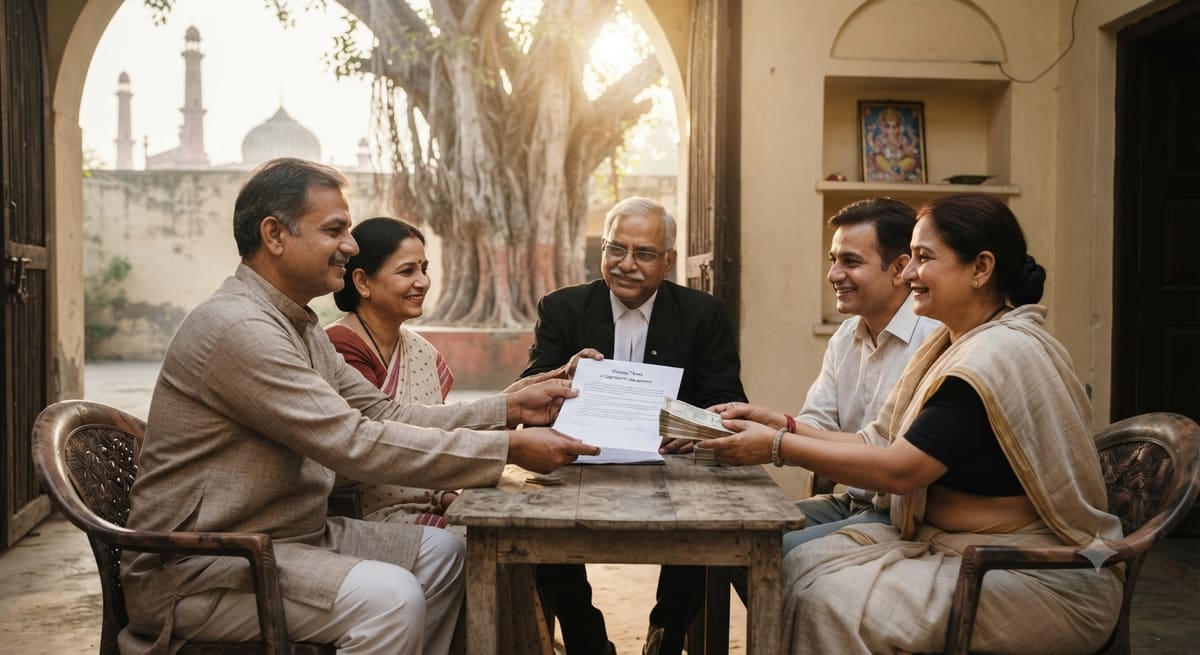
- A notarised affidavit (Exhibit P2) was filed by the children stating they were not interested in proceeding against their father
Procedural History
- M.C. No. 274/2018: Family Court, Thrissur, orders maintenance of Rs. 5,000 each to the petitioner's minor children
- C.M.P. No. 137/2024: Petitioner files application for enforcement of maintenance order
- Family Court Proceedings: Court suspects genuineness of the affidavit and proceeds with enforcement by issuing warrant against the petitioner
- 09.06.2026: Kerala High Court directs District Legal Services Authority (DLSA), Thrissur, to verify the voluntariness of the affidavit
- 22.06.2026: DLSA submits report confirming the children voluntarily swore the affidavit and do not wish to pursue the claim
- 01.07.2026: Present Original Petition (Crl.) No. 795/2025 filed under Article 227 of the Constitution of India seeking quashing of enforcement proceedings
Relief Sought
The petitioner sought quashing of the proceedings in C.M.P. No. 137/2024 before the Family Court, Thrissur, on the ground that the continuation of the proceedings would amount to an abuse of process, as the children had voluntarily relinquished their claim.
The Legal Issue
The central question before the Court was whether enforcement proceedings for maintenance under Section 125 CrPC can be terminated when the beneficiaries - having attained majority - voluntarily file affidavits stating they do not wish to proceed against the obligor.
Arguments Presented
For the Petitioner
The petitioner contended that:
- His children had attained majority and were earning income, rendering the maintenance order inapplicable
- The children had voluntarily sworn an affidavit stating they were not interested in pursuing the claim, which should be respected
- Continuation of the proceedings would amount to an abuse of the court's process, as the beneficiaries themselves had relinquished their right
For the Respondents
The respondents (children) did not appear or file a counter-affidavit despite service of notice. The State, represented by the Public Prosecutor, did not contest the petition.
The Court's Analysis
The Court examined the report submitted by the Secretary of the District Legal Services Authority, Thrissur, which confirmed that the children had voluntarily sworn the affidavit and expressed their resolve not to proceed against their father. The Court observed:
"It is clear from the aforesaid report of the Secretary of the District Legal Services Authority, Thrissur, and the accompanying statements of respondents 1 and 2 recorded by her, that the above respondents are not at all interested in proceeding with CMP No.137/2024 filed before the Family Court, Thrissur, towards the enforcement of the maintenance order in M.C.No.274/2018 on the files of the said Court. That being so, the continuation of the proceedings in the aforesaid CMP would amount to an abuse of process of the court."
The Court relied on the principle that judicial proceedings cannot be permitted to continue when the beneficiaries themselves have voluntarily relinquished their claim. It held that enforcing maintenance in such circumstances would serve no legitimate purpose and would constitute an abuse of the court's process.
The Verdict
The Kerala High Court allowed the original petition and quashed all proceedings pending before the Family Court, Thrissur, in C.M.P. No. 137/2024 in M.C. No. 274/2018. The Court held that the continuation of the enforcement proceedings would amount to an abuse of process, as the adult children had voluntarily relinquished their claim to maintenance.
What This Means For Similar Cases
Voluntary Relinquishment Terminates Enforcement
The judgment establishes that enforcement proceedings under Section 125 CrPC can be terminated if the beneficiaries - having attained majority - voluntarily file affidavits relinquishing their claim. Practitioners should note:
- Courts will respect the autonomy of adult children in maintenance disputes
- A notarised affidavit from the beneficiaries can be sufficient to terminate proceedings, provided its voluntariness is verified
- Continuation of proceedings in such cases may be viewed as an abuse of process
Verification of Voluntariness Is Critical
- The Court directed the DLSA to personally verify the voluntariness of the affidavit, underscoring the need for due diligence
- Practitioners must ensure that affidavits relinquishing claims are sworn voluntarily and without coercion
- Courts may intervene to verify the genuineness of such affidavits before terminating proceedings
Limits of Maintenance Orders for Adult Children
- The judgment reaffirms that maintenance orders under Section 125 CrPC are primarily intended for minor children or dependents unable to support themselves
- Once children attain majority and are capable of earning, their voluntary relinquishment of the claim can terminate enforcement proceedings
- Courts may not enforce maintenance orders against the express wishes of adult beneficiaries, provided their autonomy is respected