The Allahabad High Court has underscored the binding nature of compromise agreements in matrimonial disputes, quashing proceedings under Section 125(3) of the Code of Criminal Procedure (CrPC) after the husband fulfilled payment obligations. The judgment reinforces that once parties settle financial terms and agree to withdraw litigation, continuation of legal proceedings constitutes an abuse of process.
Background & Facts
The Dispute
The applicant, Rajdeep Srivastava, was embroiled in multiple legal proceedings initiated by his wife, Smt. Charul Srivastava, including:
Case No. 338 of 2013 under Section 12 of the Protection of Women from Domestic Violence Act, 2005
Case No. 288 of 2006 under Section 125(3) CrPC for maintenance
The dispute centered on financial obligations arising from matrimonial discord, with the wife alleging non-compliance with maintenance orders.
Key Facts
25.11.2016: The parties entered into a compromise before the Additional Principal Judge, Family Court, Kanpur Nagar, wherein the wife agreed to withdraw all cases against the husband
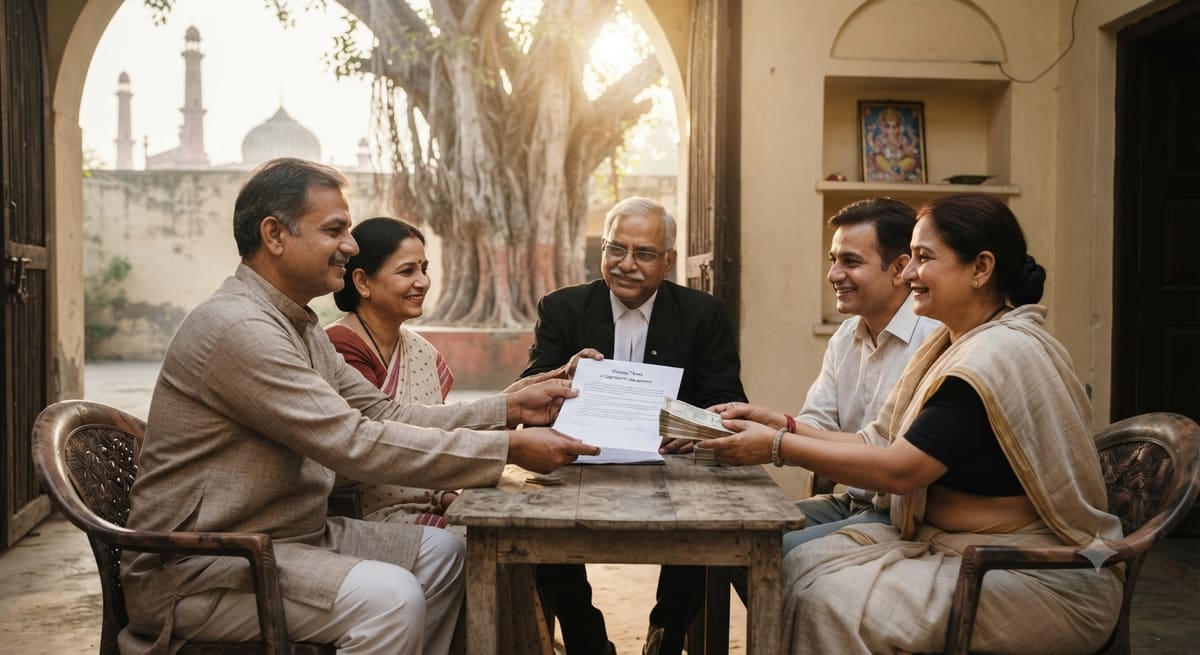
The compromise stipulated payment of Rs. 20,00,000 by the husband to the wife
The applicant claimed full payment of the agreed amount, as stated in paragraph 8 of the application
Despite payment, the wife failed to withdraw Case No. 288 of 2006 under Section 125(3) CrPC
Procedural History
2006: Case No. 288 of 2006 filed under Section 125(3) CrPC before the Additional Principal Judge-V, Family Court, Lucknow
2013: Case No. 338 of 2013 filed under Section 12 of the Domestic Violence Act, 2005 before the Additional Chief Judicial Magistrate-II, Lucknow
2024: Application under Section 482 CrPC (Application No. 3975 of 2024) filed before the Allahabad High Court seeking quashing of proceedings
14.07.2026: Judgment delivered by Justice Brij Raj Singh
The Parties' Positions
For the Applicant (Husband):
Argued that the compromise deed dated 25.11.2016 was binding and required withdrawal of all cases
Contended that the entire amount of Rs. 20,00,000 was paid as per the compromise terms
Submitted that continuation of proceedings despite payment was mala fide and an abuse of legal process
For the Opposite Party (Wife):
No counter affidavit was filed despite the matter pending since 2024
No representation was made during the hearing, even after revised calls
Relief Sought
The applicant sought quashing of the entire proceedings in Case No. 288 of 2006 under Section 125(3) CrPC pending before the Family Court, Lucknow.
The Legal Issue
The central question was whether proceedings under Section 125(3) CrPC can continue after the parties have entered into a binding compromise, wherein the wife agreed to withdraw all cases upon receipt of a specified payment, and the husband has complied with the payment terms.
Arguments Presented
For the Applicant
Relied on the compromise deed dated 25.11.2016, which explicitly stated that the wife would withdraw all cases upon payment of Rs. 20,00,000
Argued that the wife's failure to withdraw the case despite payment constituted a breach of the compromise agreement
Contended that continuation of proceedings was an abuse of the legal process and contrary to the principles of natural justice
For the Respondent
No formal arguments were presented as no counter affidavit was filed, and the wife was absent during the hearing
The Court's Analysis
The Court observed that the compromise deed was a legally binding agreement between the parties. It noted that the wife had explicitly agreed to withdraw all cases against the husband upon receipt of Rs. 20,00,000. The Court emphasized that the husband had fulfilled his part of the bargain by making the full payment, as evidenced by the application and the lack of denial from the wife.
"Since the compromise has been entered into between the parties and opposite party no.2 agreed to withdraw all the cases filed by her against the applicant and in lieu thereof, applicant has paid the entire amount of Rs.20,00,000/- to opposite party no.2, therefore, she cannot be allowed to continue the present proceedings and the present application deserves to be allowed."
The Court held that allowing the wife to continue the proceedings despite compliance with the compromise terms would amount to permitting an abuse of the legal process. It reiterated that Section 125 CrPC is intended to provide financial support to dependents, but once the parties have settled their disputes through a binding agreement, the continuation of litigation serves no legitimate purpose.
The Verdict
The Allahabad High Court allowed the application under Section 482 CrPC and quashed the entire proceedings of Case No. 288 of 2006 under Section 125(3) CrPC. The Court held that the wife could not continue the litigation after receiving the agreed payment under the compromise deed.
What This Means For Similar Cases
Compromise Agreements Are Binding
Courts will enforce compromise agreements in matrimonial disputes where parties have mutually agreed to withdraw litigation upon fulfillment of financial terms
Practitioners should ensure that compromise deeds explicitly state the conditions for withdrawal of cases to avoid ambiguity
Abuse of Process Will Not Be Tolerated
Continuation of proceedings after compliance with compromise terms may lead to quashing under Section 482 CrPC
Parties must adhere to the terms of settlement, and failure to do so may result in adverse orders
Importance of Procedural Compliance
The judgment highlights the necessity of filing counter affidavits and appearing before the court when required
Non-compliance with procedural requirements may lead to unfavorable outcomes, as seen in this case where the wife's absence resulted in the proceedings being quashed