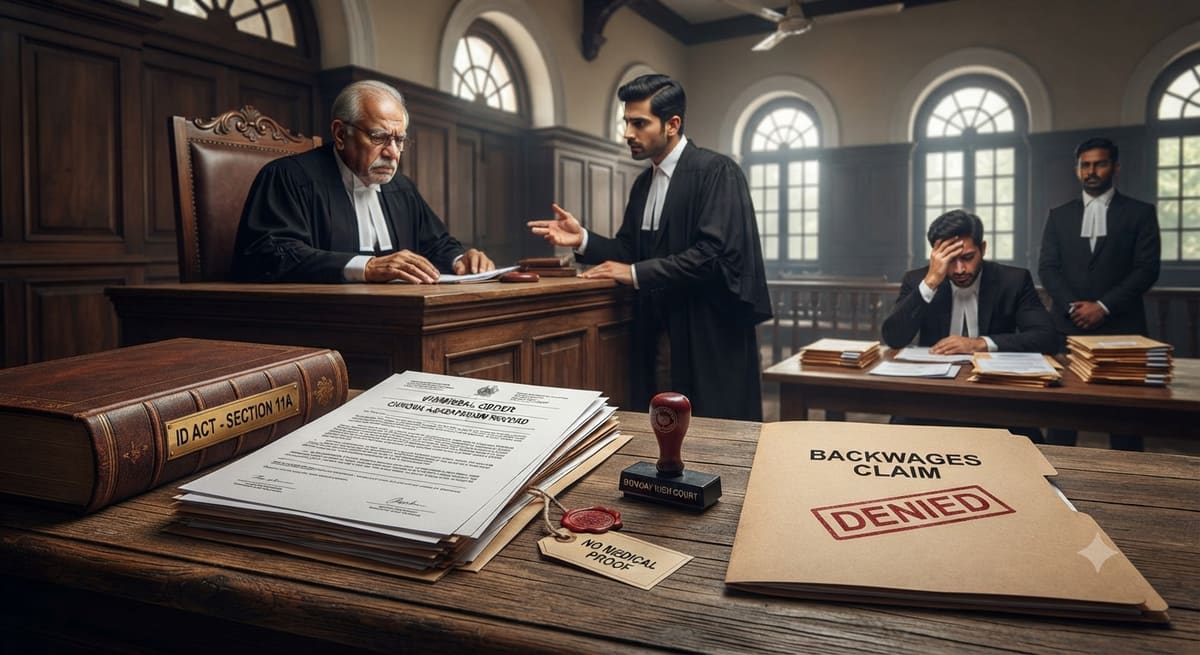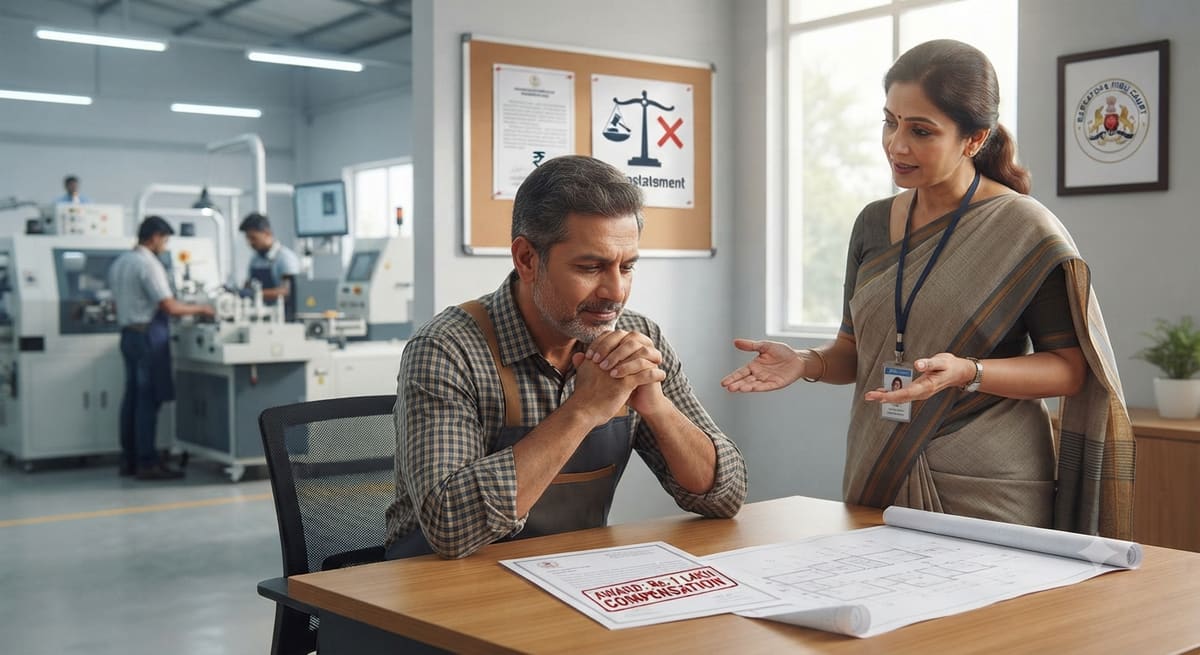
The Bombay High Court has set a critical precedent on the proportionality of disciplinary action in cases of chronic absenteeism, emphasizing that medical proof is essential to justify unauthorised absence. The Court modified a Labour Court award, replacing backwages and pension benefits with a lump sum compensation of Rs. 3,00,000, holding that chronic absenteeism without valid justification warrants dismissal rather than reinstatement.
Background & Facts
The Dispute
The petitioner, Kalyan Dombivli Municipal Corporation (Transport Undertaking), challenged an award dated 6 December 2024 passed by the Presiding Officer, Second Labour Court, Thane. The Labour Court had declared the dismissal of the respondent-employee, a bus driver, improper and unjustifiable, directing payment of 50% backwages till retirement and continuity of service for retirement benefits.
Key Facts
- The respondent was appointed as a badli Driver on 11 July 1999 and regularised retrospectively from 24 July 2000.
- He was served a chargesheet dated 21 October 2014 for chronic unauthorised absence, totalling 1,872 days between 1999 and 2013 (against 3,402 days of presence).
- The respondent faced disciplinary action on 13 occasions for unauthorised absence, including fines and withholding increments.
- The last disciplinary action was initiated for absence from February 2013 to November 2013 (205 days).
- The respondent claimed he was suffering from paralysis, but no medical certificates were produced before the employer or the Labour Court.
- The Enquiry Officer held the charges proved, and the Disciplinary Authority dismissed him on 21 April 2015.
Procedural History
- Reference (IDA) No. 154 of 2018: The Appropriate Government referred the dispute to the Second Labour Court, Thane, for reinstatement with full backwages.
- 4 July 2024: The Labour Court delivered a Part-I Award, holding the enquiry fair and findings non-perverse.
- 6 December 2024: The Labour Court delivered the final Award, setting aside the dismissal order and directing 50% backwages till retirement (May 2022) and continuity of service for pension benefits.
- Present Petition: The petitioner challenged the Award before the Bombay High Court.
Relief Sought
The petitioner sought quashing of the Labour Court’s Award, arguing that the punishment of dismissal was proportionate to the misconduct of chronic absenteeism.
The Legal Issue
The central question was whether chronic unauthorised absence without medical proof justifies dismissal under Section 11A of the Industrial Disputes Act, 1947, and whether the Labour Court erred in awarding backwages and pension benefits despite the absence of valid justification.
Arguments Presented
For the Petitioner
- The respondent failed to produce medical evidence of paralysis despite claiming illness.
- The respondent was a chronic absentee, absent for 1,872 days out of 5,274 days (1999 - 2013), including 202 days in 2012 and 205 days in 2013.
- The punishment of dismissal was proportionate given the severity of misconduct, as unauthorised absence by a bus driver disrupts municipal transport services.
- The Labour Court’s finding of paralysis was perverse, based on no evidence except a stray admission in cross-examination.
- Reliance was placed on Brihan Mumbai Electric Supply and Transport Undertaking v. Kishor Gulab Salve.
For the Respondent
- The Labour Court correctly exercised discretion under Section 11A of the ID Act, holding the punishment disproportionate.
- The respondent’s absence was not willful insubordination but due to medical conditions (paralysis).
- The respondent submitted applications for light duty, which were ignored by the employer.
- The Labour Court awarded only 50% backwages, considering the respondent had already retired.
- Reliance was placed on:
- Scooters India Ltd. Lucknow v. Labour Court, Lucknow & Ors.
- Nicholas Piramal India Limited v. Harisingh.
The Court's Analysis
The Court conducted a detailed examination of the respondent’s absence record