The Customs, Excise and Service Tax Appellate Tribunal has clarified that liability under Section 112 of the Customs Act, 1962 arises not merely from direct possession but from control over premises where smuggled notified goods are found, provided the statutory burden under Section 123 is not discharged. This ruling reinforces the principle that passive association or denial of knowledge is insufficient to evade penal consequences when circumstantial evidence and statutory presumptions align.
Background & Facts
The Dispute
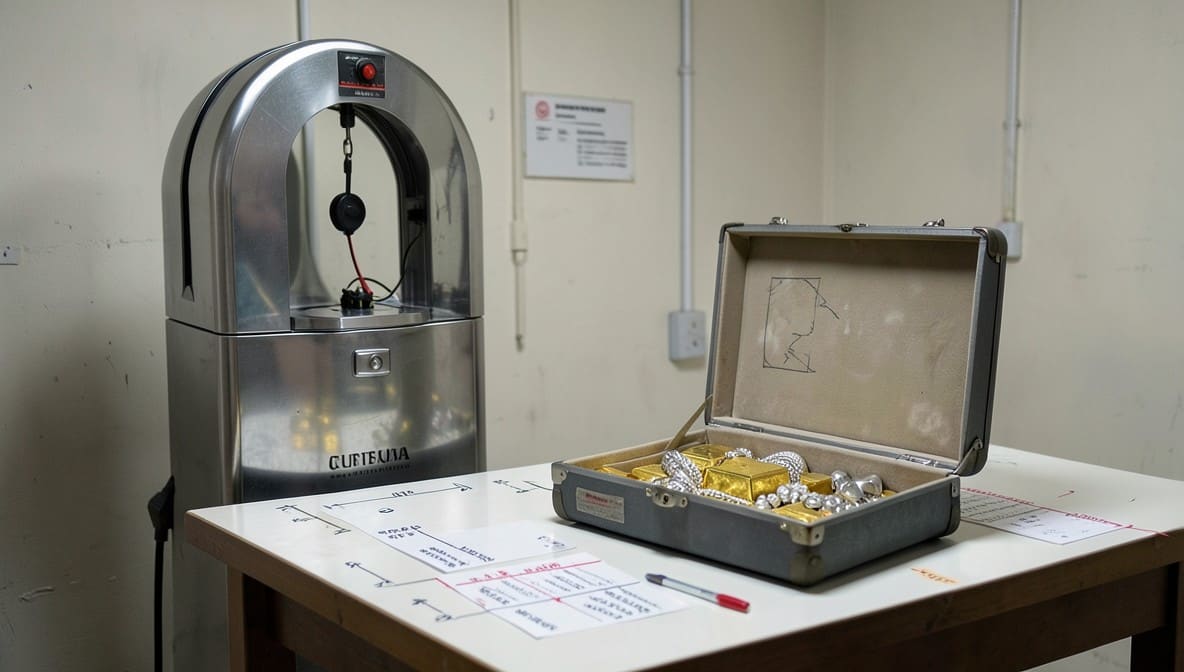
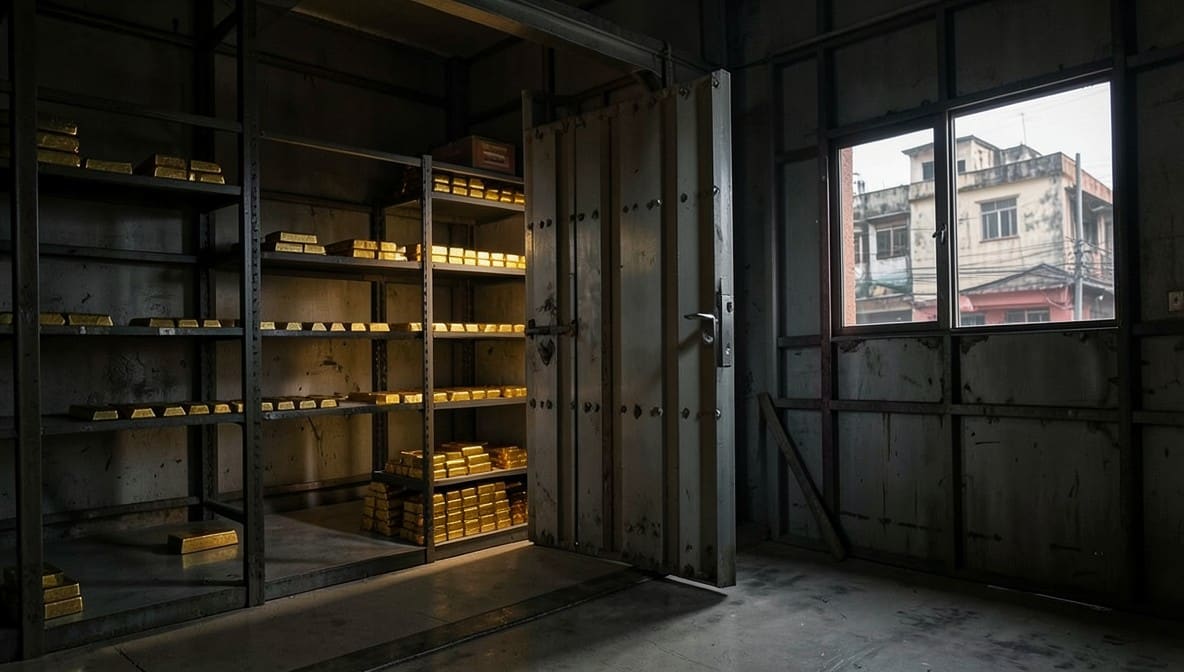
The dispute arose from the recovery of 41 gold bars, weighing 8087.460 grams and valued at Rs. 4,19,73,917, from the godown of M/s Raja Textiles at 151, Rabindra Sarani, Kolkata, on 24.05.2022. The appellant, Md. Faiyaz Alam, was present at the premises during the search and was identified as being actively involved in its operations. The gold, of 24-karat foreign origin, was seized under Section 110 of the Customs Act, 1962, as smuggled goods. No licit documents were produced to establish lawful importation or possession.
Key Facts
- The gold was examined by M/s S.K. Jewellers on 24.05.2022 and confirmed as 24-karat gold of foreign origin.
- The Central Revenue Control Laboratory (CRCL) confirmed purity levels of 99.7% to 99.8% in its report dated 07.06.2022.
- The appellant was found to be a Director of M/s Zaki Tour and Travels Pvt. Ltd., a foreign exchange-related business.
- The appellant admitted in multiple statements under Section 108 of the Customs Act (dated 25.05.2022 and subsequent dates) that foreign-origin gold was stored and distributed from the premises.
- He acknowledged working under Md. Sahnawaz alias Raja Bhai, proprietor of M/s Raja Textiles.
- Co-noticee Md. Mumtaj Alam stated he was hired by the appellant, paid by him, and worked under his instructions.
- The seized gold bore no foreign markings or inscriptions.
- No documentary evidence of lawful import, purchase, or ownership was produced by any party.
Procedural History
- 24.05.2022: Search conducted at M/s Raja Textiles; 41 gold bars seized.
- 25.05.2022: First statement recorded from appellant under Section 108 of the Customs Act.
- 07.06.2022: CRCL test report confirming purity of seized gold.
- 22.11.2022: Show Cause Notice issued proposing confiscation and penalty under Sections 112(a), 112(b), and 114AA.
- 26.06.2023: Order-in-Original by Additional Commissioner of Customs imposing penalty of Rs. 8,00,000 under Sections 112(a) and 112(b).
- 20.02.2024: Commissioner of Customs (Appeals) upheld the penalty.
- 23.06.2026: Hearing before CESTAT Eastern Zonal Bench, Kolkata.
- 02.07.2026: Final order passed by CESTAT.
The Parties' Positions
Appellant's Position: The appellant claimed he was merely a low-level employee with no knowledge of the gold's origin or illegal nature. He argued that the gold was not recovered from his person, that his statements were involuntary and later retracted, and that no independent evidence linked him to smuggling. He contended that Section 123 did not apply as the gold was not found in his personal custody.
Respondent's Position: The Revenue argued that the appellant was not a casual worker but an active participant in the operations of the godown. His repeated admissions under Section 108, his control over the premises, his directorship in a foreign exchange firm, and the absence of any lawful documentation collectively established his conscious involvement in harbouring smuggled goods.
Relief Sought
The appellant sought quashing of the penalty of Rs. 8,00,000 imposed under Sections 112(a) and 112(b) of the Customs Act, 1962, on grounds of lack of evidence and procedural irregularities.
The Legal Issue
The central question was whether a person who is in control of premises from which smuggled notified goods are recovered, but does not claim ownership, can be held liable under Section 112(a) and Section 112(b) of the Customs Act, 1962, when the statutory burden under Section 123 remains unmet.
Arguments Presented
For the Appellant
The appellant contended that liability under Section 112 requires direct possession or active participation in smuggling, which was absent here. He relied on the retraction of his Section 108 statements and argued that such statements, without corroboration under Section 138B, cannot sustain a penalty. He further asserted that Section 123 applies only when goods are found on the person or in personal custody, not in shared or third-party premises. He cited the absence of carrier details, transaction records, or foreign markings on the gold as fatal to the Revenue’s case.
For the Respondent
The Revenue argued that control over premises where smuggled notified goods are found, coupled with failure to explain lawful possession, triggers liability under Section 112. It emphasized the appellant’s multiple admissions, his supervisory role over staff, his directorship in a foreign exchange firm, and the complete absence of documentation. It relied on Commissioner of Customs v. M/s. Sree Ramakrishna Enterprises to affirm that knowledge can be inferred from control and circumstances. It further contended that retraction of statements does not nullify their evidentiary value when made voluntarily and consistently.
The Court's Analysis
The Tribunal examined the interplay between Section 112, Section 123, and Section 138B of the Customs Act, 1962. It held that Section 123 imposes a statutory burden on any person in possession, custody, or control of notified goods to prove lawful import or acquisition. The Tribunal rejected the appellant’s argument that Section 123 applies only to personal possession, noting that the term "possession" includes constructive possession through control of premises.
"Once recovery of the notified goods is established from premises under the possession, custody or control of a person, the burden shifts upon such person to establish the licit nature of possession."
The Court noted that the appellant’s statements, though later retracted, were recorded on multiple occasions and were consistent in their core admissions: that foreign gold was stored and distributed from the godown, and that he was involved in its operations. The Tribunal held that retraction alone does not invalidate such statements, particularly when no independent evidence is offered to rebut them.
The Court further observed that the appellant’s role as a Director of a foreign exchange firm and his supervision of staff, including the co-noticee, indicated more than mere employment. The absence of any licit documentation, the high value and purity of the gold, and the location of the seizure in a commercial godown collectively pointed to conscious involvement.
However, the Tribunal acknowledged mitigating factors: the gold bore no foreign markings, and the statements were not subjected to the procedural safeguards of Section 138B, which mandates recording statements in the presence of a legal practitioner or magistrate. These factors, while insufficient to absolve liability, warranted a reduction in penalty.
The Verdict
The appeal was partly allowed. The Tribunal upheld the appellant’s liability under Section 112(a) and Section 112(b) of the Customs Act, 1962, for harbouring smuggled gold. However, the penalty of Rs. 8,00,000 was reduced to Rs. 2,00,000. The order of confiscation of the gold remained unaffected. The Tribunal directed compliance with the reduced penalty within 30 days of the order date.
What This Means For Similar Cases
Control Over Premises Triggers Statutory Burden
- Practitioners must now argue that mere presence or employment at a premises is insufficient to attract penalty under Section 112, but control, supervision, or operational involvement will trigger the burden under Section 123.
- In cases involving seized notified goods, the focus must shift to whether the accused had de facto control over the location, not just physical possession.
Retracted Statements Retain Evidentiary Value
- A retracted Section 108 statement is not automatically inadmissible; its weight depends on consistency, voluntariness, and absence of contradiction by independent evidence.
- Practitioners should prepare for cross-examination on prior statements and anticipate reliance on them even if later denied.
Penalty Quantum Must Reflect Mitigating Circumstances
- Courts will consider factors such as absence of foreign markings, lack of Section 138B compliance, and degree of involvement when reducing penalties.
- Advocates should proactively highlight procedural lapses and mitigating facts to seek reduction, even when liability is established.
Burden Under Section 123 Is Not Personal but Functional
- The burden under Section 123 applies to anyone with custody or control, regardless of ownership.
- This extends liability to warehouse managers, logistics coordinators, and even security personnel if they are found to be in charge of premises where smuggled goods are stored.
No Need for Direct Proof of Smuggling
- The Revenue need not prove the exact route of smuggling or identify the original importer.
- Constructive knowledge inferred from control, silence, and failure to explain lawful possession is sufficient for penalty under Section 112.