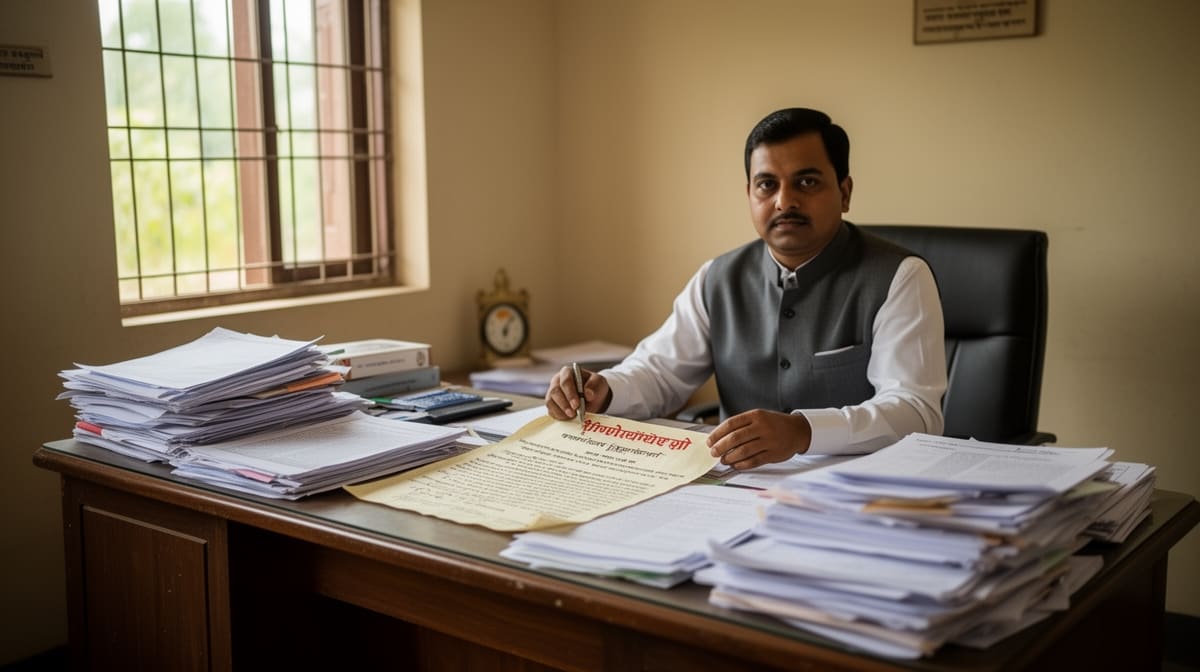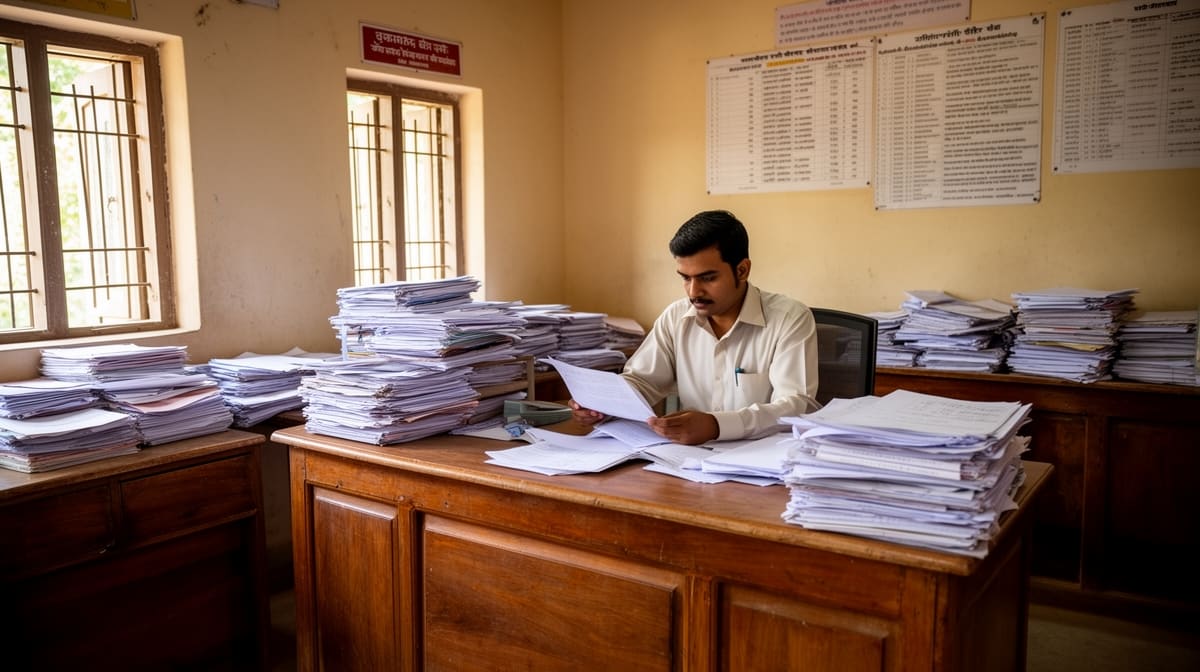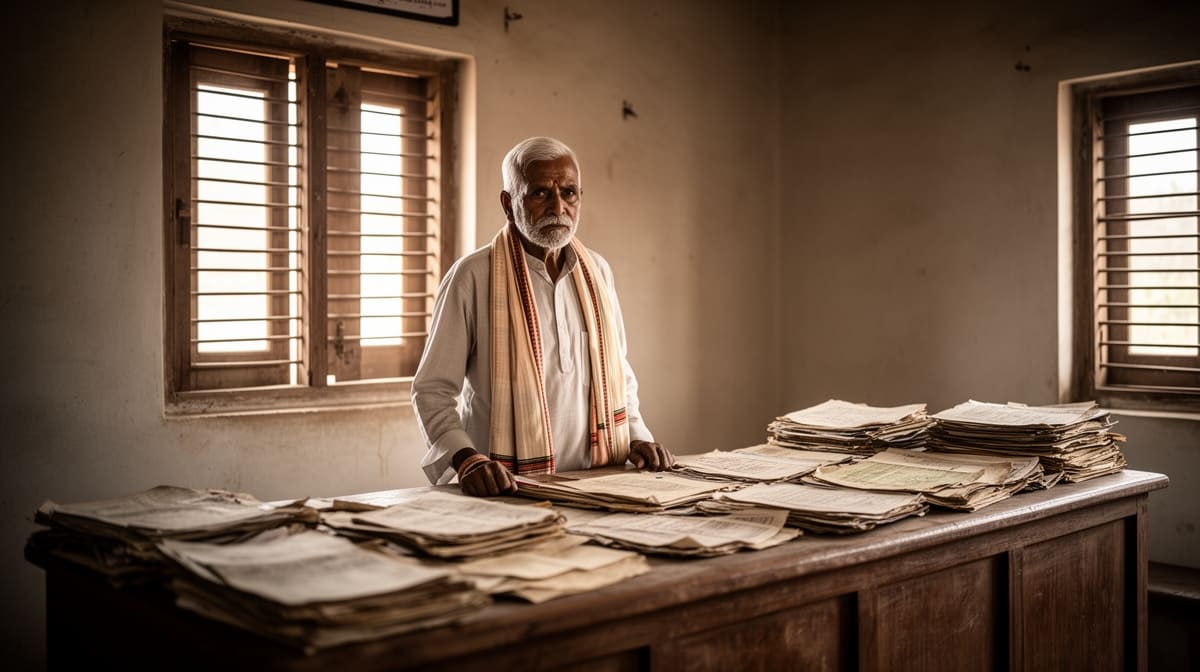
The Madhya Pradesh High Court has reaffirmed that revenue officers, including Tehsildars, lack judicial authority to determine the validity of a will during mutation proceedings under the Madhya Pradesh Land Revenue Code. This ruling clarifies a critical boundary between administrative revenue functions and civil adjudication, with direct implications for property title disputes across the state.
Background & Facts
The Dispute
The appellant, Rajendra Tiwari, sought mutation of land records in his name based on a will executed by his deceased relative. The Additional Commissioner, Jabalpur, rejected the mutation application on the ground that the will was disputed. The private respondents, including Satish Tondon, filed a writ petition challenging this rejection, arguing that the Tehsildar was obligated to process the mutation application on the basis of the will, irrespective of potential disputes. The writ petition was allowed by the Single Judge on 06.03.2024, quashing the order dated 20.12.2018 and granting liberty to the appellant to file a civil suit for declaration of title.
Key Facts
- The appellant claimed ownership of land through a will dated 10.08.2015, executed by his uncle.
- The will was unregistered but allegedly witnessed and notarized.
- Legal heirs of the deceased, including the private respondents, raised objections to the authenticity and validity of the will.
- The Tehsildar, upon receiving the mutation application, noted the existence of a dispute and declined to proceed under Section 110(4) of the M.P.L.R.C.
- The Additional Commissioner upheld the Tehsildar’s refusal, holding that the will was contested and could not form the basis of mutation.
- The writ petitioners contended that the Tehsildar must accept the will for mutation unless a civil court had issued an injunction.
Procedural History
- 10.08.2015: Will executed by the testator.
- 15.01.2018: Mutation application filed by the appellant before the Tehsildar.
- 20.12.2018: Additional Commissioner, Jabalpur, rejected the mutation application citing dispute over the will.
- 14.02.2019: Writ Petition No. 1469 of 2019 filed before the High Court by private respondents.
- 06.03.2024: Single Judge allowed the writ petition, quashed the 20.12.2018 order, and granted liberty to file a civil suit.
- 12.03.2024: Writ Appeal No. 1017 of 2024 filed by the appellant challenging the 06.03.2024 order.
Relief Sought
The appellant sought reversal of the order dated 06.03.2024, restoration of the Additional Commissioner’s order dated 20.12.2018, and a direction that mutation proceedings be stayed until the civil court adjudicates the validity of the will.
The Legal Issue
The central question was whether a Tehsildar under the M.P.L.R.C. has the authority to reject an application for mutation on the ground that the title document (a will) is disputed, or whether he is bound to process the application and leave the dispute to be resolved by the Civil Court.
Arguments Presented
For the Appellant
The appellant argued that the Tehsildar is empowered under Section 110 of the M.P.L.R.C. to examine the genuineness of title documents, including wills, and that rejection of the mutation application was justified due to the existence of a serious dispute over the will’s validity. He relied on the principle that revenue authorities must prevent fraudulent or invalid transfers from being recorded in revenue records.
For the Respondent/State
The respondent, through the Government Advocate, contended that the Tehsildar performs only administrative functions and cannot adjudicate disputes over the validity of wills or other title documents. He relied on the Full Bench decision in Anand Choudhary v. State of Madhya Pradesh, which held that any dispute regarding the authenticity of a will must be resolved by the Civil Court, and the Tehsildar’s role is limited to noticing legal heirs and reporting disputes under Section 110(7).
The Court's Analysis
The Court examined the Full Bench judgment in Anand Choudhary v. State of Madhya Pradesh, delivered on 14.02.2025, which comprehensively delineated the limits of a Tehsildar’s authority under the M.P.L.R.C. The Court noted that the Full Bench had conclusively held that Tehsildars do not perform judicial or quasi-judicial functions in mutation matters. Their role is strictly administrative.
"The Tehsildar would not have any competence to decide the dispute and it would be for the parties to approach the civil court to get the dispute adjudicated, in terms of detailed discussion contained in para-74 above."
The Court emphasized that Section 111 of the M.P.L.R.C. explicitly reserves adjudication of private rights to the Civil Court. Even if a will is registered or notarized, its validity, the testator’s competence, or the existence of rival claims cannot be determined by a revenue officer. The five-month time limit under Section 110(4) is not a deadline for deciding the dispute, but a procedural window to determine whether a dispute exists and to notify parties to approach the Civil Court.
The Court further clarified that if no dispute is raised by legal heirs or other claimants, mutation may proceed on the basis of the will. However, this does not bar a subsequent civil suit. The Tehsildar’s duty is to notice legal heirs and report disputes - not to adjudicate them.
The Single Judge’s order, which allowed mutation on the basis of a disputed will and directed the appellant to file a civil suit, was found to be contrary to the binding precedent of the Full Bench. The Court held that the Tehsildar’s refusal to proceed was legally sound, and the writ petition should not have been allowed.
The Verdict
The appeal was dismissed. The Court upheld the order dated 20.12.2018 rejecting mutation on the basis of a disputed will. The Tehsildar is directed to maintain the status quo until the Civil Court adjudicates the validity of the will. The appellant retains the right to file a civil suit for declaration of title, and the respondents are entitled to contest the will in that forum. No costs were awarded.
What This Means For Similar Cases
Mutation Cannot Proceed on Disputed Wills
- Practitioners must advise clients that filing a mutation application based on a contested will is procedurally futile without a civil court decree.
- Revenue authorities are not forums for title disputes - civil suits are mandatory.
Notice to Legal Heirs Is Mandatory
- Tehsildars must identify and notify all legal heirs before processing any mutation based on a will.
- Failure to notify heirs may render the mutation vulnerable to challenge, even if no dispute was initially raised.
Civil Court Remains the Sole Arbiter
-
Any challenge to the authenticity, execution, or competence of a testator must be raised in a civil suit.
-
Revenue records cannot be used to establish title where a dispute exists - they are merely reflective, not determinative, of ownership.
-
Always verify whether legal heirs have been notified before relying on a mutation based on a will.
-
If a will is disputed, file a civil suit immediately and seek an injunction to prevent unauthorized mutation.
-
Do not rely on Tehsildar’s acceptance of a will as proof of title - it is not legally conclusive.