The Supreme Court has clarified that a Letter of Intent (LOI) referencing tender documents does not, by itself, create a valid arbitration agreement under the Arbitration and Conciliation Act, 1996, unless the arbitration clause is specifically incorporated. This ruling reinforces the principle that judicial intervention at the Section 11 stage is permissible where the existence of an arbitration agreement is manifestly absent on a prima facie view.
Background & Facts
The Dispute
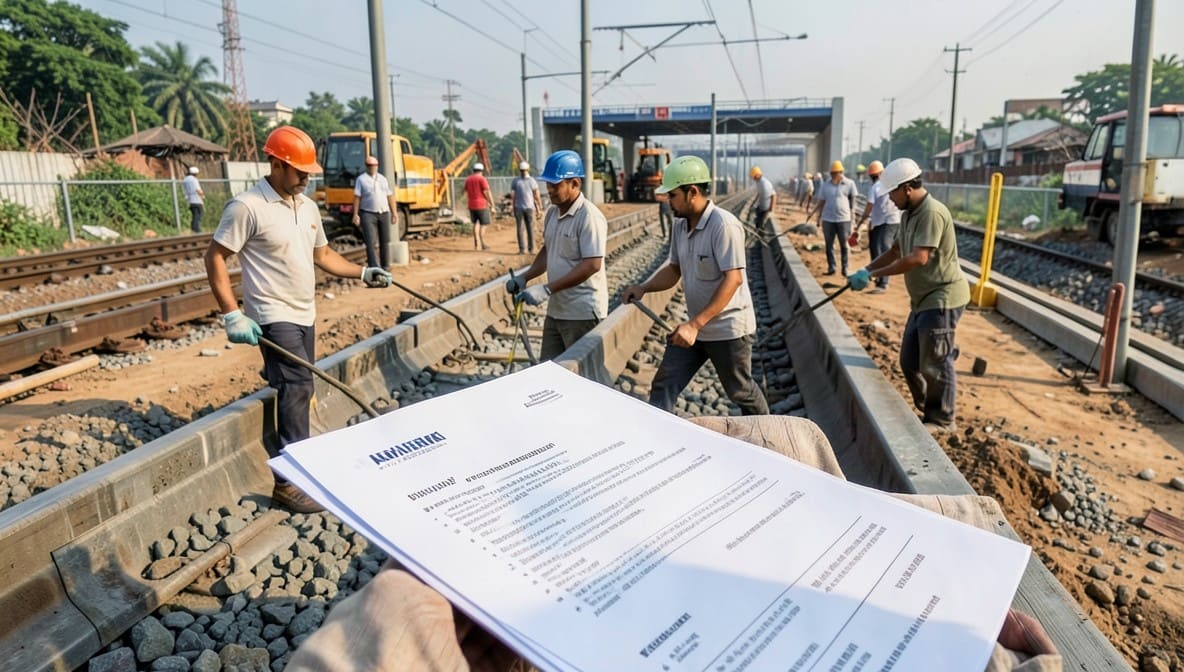
The dispute arose between Maharashtra State Electricity Distribution Company Limited (MSEDCL), a state-owned electricity distribution utility, and R.Z. Malpani, a partnership firm engaged in civil construction. MSEDCL floated a tender dated 11.08.2021 for civil and interior work at 134 CFC Centres across Maharashtra, with an estimated cost of ₹17,41,37,020. The tender documents included Special Conditions of Contract containing Clause 23, which provided for arbitration as the dispute resolution mechanism.
Key Facts
- The tender process commenced with bid opening on 18.08.2021
- The Respondent submitted its bid on 03.09.2021 with a 120-day validity
- MSEDCL issued a Letter of Intent (LOI) dated 16.11.2022 accepting the bid for ₹17,76,19,699
- The LOI stated that the work was entrusted "subject to the following terms and conditions" and that the contract terms were to be interpreted by reading the LOI together with the tender documents
- The LOI explicitly stated: "This letter of intent is issued to enable you to start with preliminaries to start the work as soon as the detailed work order is issued."
- The Respondent submitted bank guarantees on 29.11.2022 and renewed them on 08.08.2023
- No Work Order was ever issued by MSEDCL
- No formal contract was executed between the parties
- On 05.08.2024, the Respondent terminated the arrangement citing non-handover of sites
- On 30.08.2024, the Respondent issued a notice under Clause 23 of the Special Conditions demanding arbitration for ₹4,89,85,500
- MSEDCL cancelled the tender on 27.09.2024 and refunded the security deposit on 24.10.2024
Procedural History
- 01.10.2024: Respondent invoked arbitration under Clause 23
- 04.11.2024: MSEDCL replied denying existence of any concluded contract or arbitration agreement
- 06.11.2024 & 03.12.2024: MSEDCL reiterated that no claims were pending due to refund of deposits
- 01.10.2025: Bombay High Court, in Arbitration Application (L) No. 1417 of 2025, appointed Drupad Patil as sole arbitrator ex parte, holding that an arbitration agreement existed
- 28.03.2026: MSEDCL filed Civil Appeal No. of 2026 before the Supreme Court
The Parties' Positions
The Respondent contended that the LOI, read with the tender documents, created a binding contract incorporating the arbitration clause. It relied on the conduct of parties - submission and renewal of bank guarantees - as evidence of mutual intent to be bound.
MSEDCL argued that the LOI was a mere precursor to a formal contract, explicitly conditioned on issuance of a Work Order and execution of a formal agreement. It emphasized that the LOI made only a general reference to the tender documents and did not specifically incorporate the arbitration clause.
Relief Sought
The Appellant sought setting aside of the Bombay High Court’s order dated 01.10.2025 appointing the arbitrator, and a declaration that no valid arbitration agreement existed between the parties.
The Legal Issue
The central question was whether a Letter of Intent that makes a general reference to tender documents containing an arbitration clause constitutes a valid arbitration agreement under Section 7(5) of the Arbitration and Conciliation Act, 1996, in the absence of a concluded contract and without specific incorporation of the arbitration clause.
Arguments Presented
For the Appellant
Senior counsel Vikas Singh argued that the LOI was not a concluded contract but a conditional precursor, as confirmed by OASYS Cybernatics v. State of Himachal Pradesh and South Eastern Coalfields v. S. Kumar’s Associates. He emphasized that Section 7(5) requires a specific reference to the arbitration clause for incorporation, not a general reference to the tender documents. He relied on NBCC v. Zillion Infraprojects to assert that a general reference to terms and conditions does not incorporate arbitration clauses unless explicitly stated. He further contended that the High Court erred in ignoring the Appellant’s clear denial of an arbitration agreement in its 04.11.2024 reply.
For the Respondent
Counsel Abhijit A. Desai argued that the LOI, combined with the tender documents and conduct of parties (submission and renewal of bank guarantees), evidenced a concluded contract and implied acceptance of the arbitration clause. He cited UNISSI v. PGIMER and Office for Alternative Architecture v. Ircon to assert that arbitration agreements can arise from conduct and communication, even without a signed contract. He also invoked the doctrine of Kompetenz-Kompetenz and Section 11(7) to argue that the High Court’s appointment was final and non-appealable.
The Court's Analysis
The Supreme Court undertook a rigorous analysis of Section 7 of the Arbitration and Conciliation Act, 1996, particularly Section 7(5), which governs incorporation of arbitration clauses by reference. The Court held that the mere reference in the LOI to the tender documents was insufficient to incorporate the arbitration clause under Clause 23.
"The use of the word ‘contract’ when dealing with incorporation of an arbitration agreement from some other document is intentional and consequential."
The Court emphasized that Section 7(5) requires the reference to be such that it makes the arbitration clause a part of the contract. A general reference to terms and conditions, without explicit mention of arbitration, does not satisfy this requirement. The Court distinguished Inox Wind v. Thermocables and Glencore International AG, noting that those cases involved either standard form contracts or conduct indicating mutual intent to be bound - neither of which was present here.
The Court also reaffirmed the limited scope of judicial review under Section 11, as clarified in SBI General Insurance v. Krish Spg., holding that courts must only examine the prima facie existence of an arbitration agreement. However, where the agreement is manifestly absent, intervention is warranted.
"The LOI in the instant case was indicative of a preliminary document in course of the contract and was not intended to be an end-all-be-all contract between the parties, it did not create contractual obligations or legal relationship between them."
The Court found that the LOI’s language - "work is entrusted subject to terms... as soon as the detailed work order is issued" - clearly indicated that the contract was contingent upon future formalities. The submission of bank guarantees was a preliminary step, not an act of performance creating a binding relationship.
The Court further noted that the High Court’s finding that the Appellant had not disputed the existence of an arbitration agreement was factually incorrect, as the 04.11.2024 reply explicitly denied any concluded contract.
The Verdict
The appeal was allowed. The Supreme Court set aside the Bombay High Court’s order dated 01.10.2025 appointing the arbitrator. The Court held that no valid arbitration agreement existed between the parties under Section 7 of the Arbitration and Conciliation Act, 1996, as the LOI did not specifically incorporate the arbitration clause from the tender documents, and no concluded contract was formed. The Respondent was granted liberty to pursue any other available legal remedies.
What This Means For Similar Cases
General Reference to Tender Documents Is Not Enough
- Practitioners must now ensure that any arbitration clause in tender documents is explicitly referenced in the LOI or acceptance letter
- A clause such as "all terms of the tender shall apply" is insufficient; the phrase "arbitration clause is incorporated" or "disputes shall be referred to arbitration as per Clause 23" is required
- In public procurement, standard form tender conditions alone cannot be assumed to bind parties absent specific incorporation
LOIs Are Not Contracts Unless Clearly Intended
- LOIs that state work is to commence "upon issuance of a work order" or "subject to execution of formal agreement" are not binding contracts
- Conduct such as submission of bank guarantees or preliminary mobilization does not, by itself, convert an LOI into a concluded contract
- Parties must document mutual intent to be bound at the LOI stage if arbitration is to be triggered at that level
Judicial Restraint at Section 11 Stage Is Contextual
- Courts may refuse arbitration appointment under Section 11 where the arbitration agreement is ex-facie non-existent
- The "When in doubt, do refer" principle applies only when there is a plausible prima facie case
- Where the LOI is conditional and no contract is formed, courts are justified in declining to appoint arbitrators