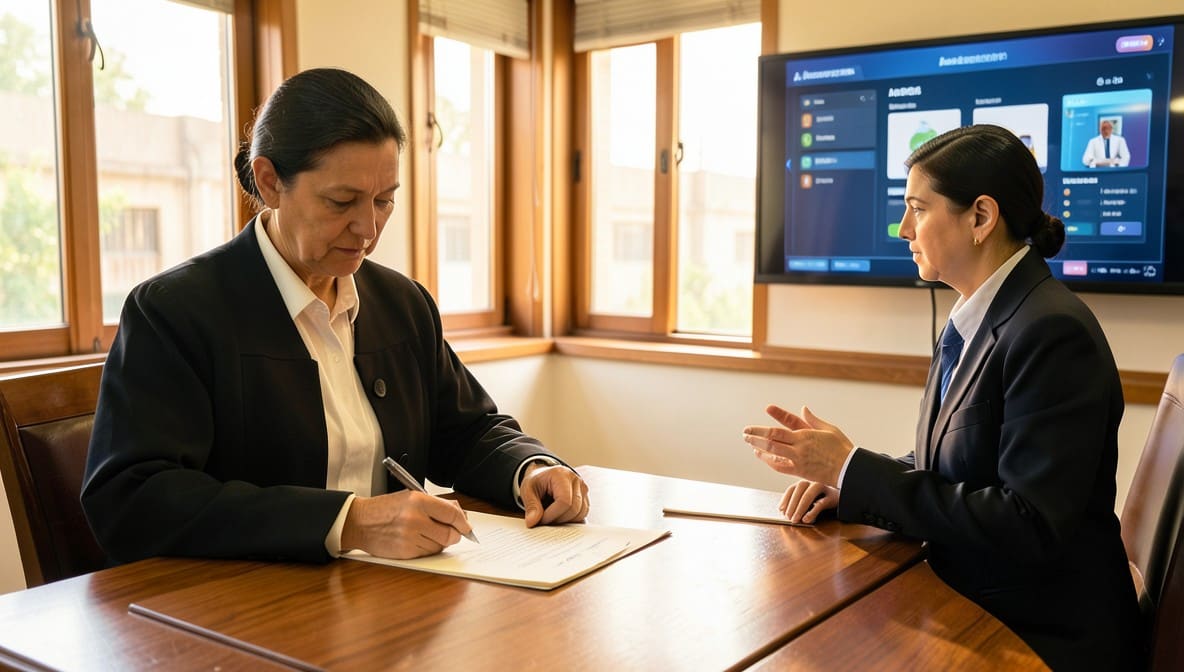
The Calcutta High Court has reinforced the state’s affirmative duty to guide bereaved families in accessing compassionate appointment benefits, setting aside rejections grounded solely on technical non-compliance where procedural guidance was never provided. This judgment establishes that administrative schemes meant to alleviate post-death financial distress cannot be rendered ineffective by rigid adherence to form over substance.
Background & Facts
The Dispute
The petitioner, Sushanta Das, sought compassionate appointment following the death-in-harness of his father, a Work Guard employed under the Public Works Directorate, Malda Highway Division. His father died on 4th August, 2017, leaving the family without a source of income. The petitioner’s mother applied for compassionate appointment on 23rd August, 2017, and the petitioner himself submitted his application on 12th September, 2017. Despite prompt submission, the application was rejected on 12th July, 2023, on the ground that it was not filed in the prescribed format within the stipulated two-year period. A re-consideration request was also rejected on 5th January, 2024, on identical grounds.
Key Facts
- Death of the government employee: 04.08.2017
- Application by mother: 23.08.2017
- Application by petitioner: 12.09.2017
- First rejection: 12.07.2023
- Re-consideration rejection: 05.01.2024
- Amended notification dated 01.03.2016 came into force before the death
- The amended notification introduced Clause 10(bb), mandating personal interaction with the family
- No record exists of any meeting between the authority and the family post-death
- No guidance was provided on application format, deadlines, or procedural requirements
- No simplified proforma or checklist was issued to the department or communicated to the family
Procedural History
- 04.08.2017: Death of the government employee
- 23.08.2017: Application filed by the petitioner’s mother
- 12.09.2017: Application filed by the petitioner
- 12.07.2023: First rejection by the authority
- 05.01.2024: Rejection on re-consideration
- 2025: Writ Petition filed before the Calcutta High Court (WPA 603 of 2025)
- 20.04.2026: Hearing concluded; judgment delivered
The Parties' Positions
For the Petitioner:
- Argued that the amended notification dated 01.03.2016 imposed a mandatory duty on authorities to personally meet and guide the family immediately after death
- Contended that the failure to provide procedural guidance rendered the rejection arbitrary and violative of natural justice
- Relied on Bishnu Rajak v. State of West Bengal (WPA 7615 of 2025, decided 16.06.2025) where a similar violation was held to invalidate rejection
- Emphasized that the family was unaware of the revised format or timeline, and the authority bore the burden of ensuring awareness
For the Respondent:
- Maintained that the petitioner, being a major at the time of his father’s death, was expected to file the application in the prescribed format within two years
- Argued that non-compliance with procedural norms justified rejection, regardless of lack of guidance
- Relied on the report of the Executive Engineer, Malda Highway Division, which confirmed the application was not in the correct format
- Asserted that the scheme’s procedural requirements are mandatory and cannot be waived
Relief Sought
The petitioner sought:
- Setting aside of the rejection orders dated 12.07.2023 and 05.01.2024
- Direction to the authority to reconsider his application for compassionate appointment in accordance with the amended notification
- Opportunity to submit documents and be heard
- A reasoned order within a stipulated timeframe
The Legal Issue
The central question was whether the authority’s failure to comply with the mandatory procedural obligations under Clause 10(bb) of the amended compassionate appointment notification dated 01.03.2016 renders a rejection on grounds of non-compliance with form or time period legally unsustainable.
Arguments Presented
For the Petitioner
The petitioner’s counsel relied on Bishnu Rajak v. State of West Bengal to argue that Clause 10(bb) imposes a non-discretionary, affirmative duty on the authority to meet the family immediately after death, explain the application process, and maintain a record of such interaction. The absence of any such record, despite the notification being in force since 2016, demonstrated systemic neglect. The petitioner, a layperson without legal or administrative knowledge, could not be expected to navigate bureaucratic formalities without guidance. The purpose of the amendment - to ensure financial survival of bereaved families - was defeated by the authority’s inaction. The rejection, therefore, was arbitrary and violative of Article 14 of the Constitution.
For the Respondent
The State contended that the two-year time limit and prescribed format were clear conditions of the scheme. The petitioner, being an adult, was presumed to know the law and was expected to comply. The absence of guidance from the authority, even if true, could not override statutory or procedural requirements. The authority had acted within its powers by rejecting a non-conforming application. The judgment in Bishnu Rajak was distinguishable on facts, and the petitioner’s delay of nearly six years in seeking relief further weakened his claim.
The Court's Analysis
The Court examined the amended notification dated 01.03.2016, particularly Clause 10(bb), which mandates that the concerned authority must:
"meet the members of the family of the deceased Govt. servant immediately after his death to advise and assist them in getting appointment on compassionate ground. The applicant should be called in person at the very first stage and should be advised in person about the requirement and formalities to be completed by him. A record of such meeting should be kept with the office of the controlling authority and appointing authority."
The Court held that this provision is not directory but mandatory. The language - "should meet", "should be called in person", "should be advised in person", and "a record... should be kept" - leaves no room for discretion. The Court emphasized that the amendment was introduced to prevent exactly the kind of hardship faced by the petitioner: a family left destitute, unaware of how to access a benefit designed for their survival.
The Court noted that the authority had no record of any meeting with the family, despite the notification being in force for over a year before the death. The petitioner’s application was filed within a month of the death, yet no officer reached out to assist. The Court observed:
"The authority did not meet the members of the petitioner’s family after the death of his father. No assistance was provided to the family members for getting compassionate appointment."
The Court distinguished between procedural compliance and procedural fairness. While the scheme requires a prescribed format and time limit, those requirements cannot be enforced against a claimant who was never informed of them. The Court held that the state, as the architect of the scheme, bears the burden of ensuring its accessibility. Failure to do so amounts to a violation of the principle of audi alteram partem.
The Court further noted that the amendment was introduced to ensure individualized consideration of each case, with the aid of a checklist and screening committee. The absence of any such process in this case rendered the rejection arbitrary and capricious.
The Verdict
The petitioner succeeded. The Calcutta High Court set aside both rejection orders dated 12.07.2023 and 05.01.2024. The authority is directed to reconsider the petitioner’s application for compassionate appointment in accordance with the amended notification dated 01.03.2016. The authority must provide the petitioner with written notice of any further formalities, afford him an opportunity of hearing, and pass a reasoned order within eight weeks from the date of communication of this judgment. If the application is accepted, all consequential steps, including payment of back pay and benefits, must be completed without delay.
What This Means For Similar Cases
Procedural Guidance Is Mandatory, Not Optional
- Practitioners must now argue that any rejection based on non-compliance with form or time limits is invalid if the authority failed to discharge its duty under Clause 10(bb)
- The burden shifts to the state to prove that guidance was provided; absence of a meeting record is fatal to the rejection
- Applications filed promptly after death, even if in non-prescribed format, cannot be dismissed without first offering corrective assistance
Administrative Negligence Cannot Be Punished Through Denial of Benefits
- This judgment establishes that welfare schemes cannot be weaponized through bureaucratic inertia
- Courts will not permit technicalities to defeat the substantive purpose of compassionate appointment rules
- Future cases must be evaluated on whether the authority fulfilled its proactive obligations, not merely whether the applicant met formal deadlines
Record-Keeping Is a Legal Obligation, Not a Formality
- Authorities must maintain documentary proof of personal meetings with bereaved families
- Failure to maintain such records will result in automatic invalidation of rejections
- Departments must now train officers on the mandatory nature of Clause 10(bb) and implement internal compliance mechanisms
The Doctrine of Beneficial Legislation Prevails
- Welfare-oriented administrative rules must be interpreted liberally
- Ambiguities must be resolved in favor of the beneficiary
- The state’s duty to inform supersedes the citizen’s duty to inquire
Practical Takeaways for Practitioners
- In compassionate appointment cases, file a preliminary application for records of family meetings under RTI
- If no record exists, challenge rejections on grounds of violation of Clause 10(bb)
- Cite Bishnu Rajak and this judgment together to establish binding precedent in West Bengal
- Demand reasoned orders with specific reference to compliance with the 2016 notification