
The Income Tax Appellate Tribunal, Delhi Bench, has held that manufacturing carried out through contract labour within a Special Economic Zone qualifies for the deduction under Section 10AA of the Income-tax Act, 1961, rejecting the revenue's contention that outsourcing disentitles the assessee. The Tribunal also allowed a bonus disallowance of Rs. 16,13,250, treating a minor variance as a clerical error.
Background & Facts
The Dispute
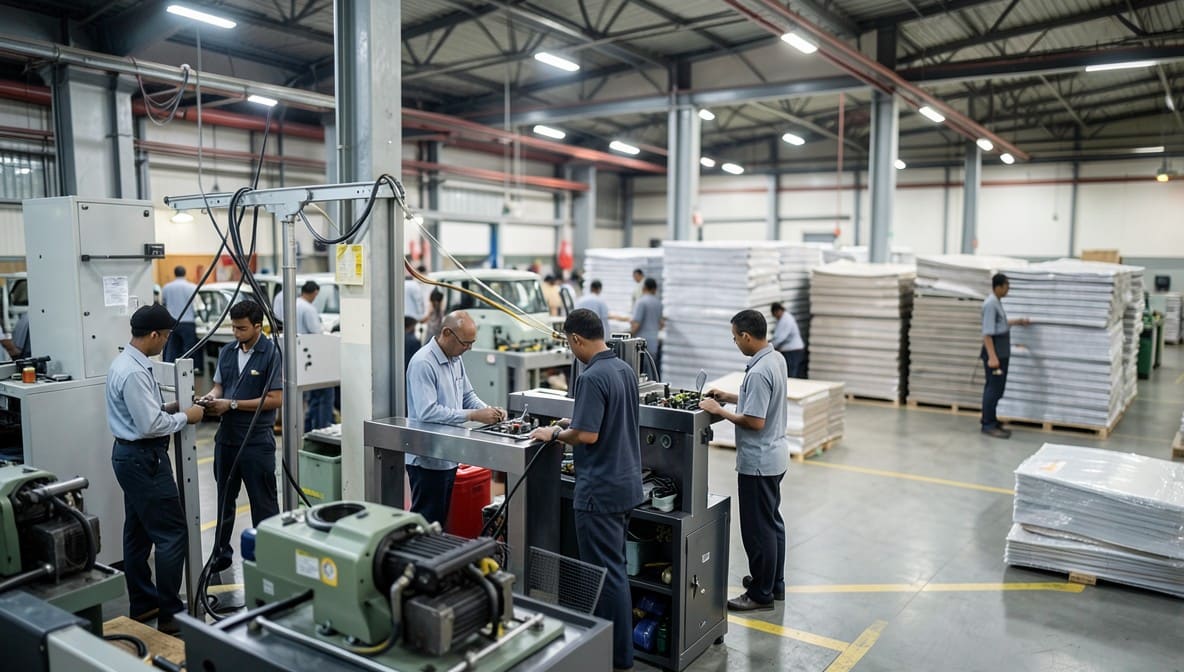
M/s Bikram Exports, a partnership firm engaged in the manufacture and export of jewellery, operates its manufacturing unit in the Noida Special Economic Zone (SEZ), Noida Dadri Road, Uttar Pradesh. For the assessment years 2015-16 and 2016-17, the Assessing Officer disallowed the exemption claimed under Section 10AA of the Income-tax Act, 1961, on the ground that the assessee had outsourced its production process to contractors. The Commissioner of Income Tax (Appeals) confirmed the disallowance, additionally relying on non-compliance with Rule 41 of the SEZ Rules, 2006. The assessee appealed to the Tribunal.
Key Facts
- The assessee's turnover was Rs. 53 crores (the AO erroneously recorded Rs. 253 crores in one paragraph)
- Total fixed assets stood at Rs. 18,54,014, of which machinery was only Rs. 21,927
- The AO listed fixed assets as inverter, cars, cycle, computer & printer, water dispenser, furniture & fixture, EPBX, CCTV camera, air conditioner, safe, weight machine, and generator
- The assessee submitted a detailed 15-step manufacturing process involving distribution of gold to workers, melting, wire drawing, component making, soldering, polishing, checking, and packing
- Designs and templates were supplied by foreign customers and treated as business secrets
- The assessee incurred production expenses of Rs. 4,94,46,497 paid to 12 parties, with TDS deducted under Section 194C
- All manufacturing occurred within the SEZ premises; entry and exit of personnel and material were controlled by customs authorities
- For AY 2016-17, the AO disallowed bonus of Rs. 16,13,250; the audit report showed Rs. 16,11,450, a variance of Rs. 2,000
- The assessee produced complete acquittance rolls acknowledging receipt of bonus by employees/karigars
Procedural History
- 26.12.2019: Assessment order for AY 2015-16 passed under Section 143(3)/147
- 28.12.2018: Assessment order for AY 2016-17 passed under Section 143(3)/147
- 21.12.2018: Order sheet entry granting further opportunity to provide design templates
- 22.09.2025: CIT(A)-29, New Delhi passed orders in Appeal Nos. CIT(A)-Delhi-17-10645/2019-20 (AY 2015-16) and CIT(A)-Delhi-17-10295/2018-19 (AY 2016-17), confirming the AO's disallowance
- 05.11.2026: Hearing before ITAT Delhi Bench-C
- 13.11.2026: Judgment pronounced
Relief Sought
The appellant sought allowance of exemption under Section 10AA for both assessment years and allowance of bonus deduction of Rs. 16,13,250 for AY 2016-17.
The Legal Issue
The central questions were: (1) Whether manufacturing carried out through contract labour within the SEZ premises constitutes "manufacture or produce" by the assessee unit for purposes of Section 10AA; (2) Whether non-compliance with Rule 41 of the SEZ Rules, 2006, disentitles the assessee from the Section 10AA deduction; (3) Whether a minor variance of Rs. 2,000 between the audit report and other documents justifies disallowance of the entire bonus claim.
Arguments Presented
For the Appellant
Counsel submitted that the assessee's manufacturing operations are located in the SEZ where entry and exit of personnel and material are rigorously monitored by customs authorities. The jewellery is handmade using hand tools and simple implements as per designs provided by foreign customers. The designs are the customers' business secrets and cannot be disclosed. Complete books of account, bills, vouchers, and documents were provided. The payments to karigars with TDS under Section 194C do not constitute outsourcing; the manufacturing was carried out in the assessee's factory in the SEZ by providing material to the karigars. Section 10AA does not mandate deployment of machinery for manufacturing.
For the Respondent
The Senior DR relied on the assessment order and the CIT(A)'s findings. The revenue contended that the assessee had insufficient fixed assets to carry out manufacturing, that production expenses of Rs. 4.94 crores paid to contractors with TDS under Section 194C evidenced outsourcing, and that the assessee failed to comply with Rule 41 of the SEZ Rules, 2006, regarding subcontracting limits and record-keeping. The CIT(A) had held that documentary evidence of compliance with the SEZ Rules' provisos was not brought on record.
The Court's Analysis
The Tribunal examined the factual matrix and the statutory framework. It noted that Section 10AA provides a deduction to an assessee located in premises covered by the Special Economic Zones Act, 2005, who manufactures or produces articles or things. The Section contains two Explanations, neither of which mandates the imperative deployment of machinery for manufacturing purposes. The emphasis is solely on manufacture, not on machines.
"The Section contains two Explanations. Neither of them in any way provides for the imperative deployment of machines for manufacturing purposes. Again as stated supra, the emphasis is solely on manufacture and not on machines."
The Tribunal found that the AO had erroneously concluded that production activities were not conducted in-house. All contractors worked strictly from the assessee's premises in the SEZ. Neither man nor material can enter or exit the SEZ without customs approval. Therefore, whether manufacturing is through the assessee's artisans or contract labour, it is invariably done at the SEZ premises alone.
Regarding the design templates, the Tribunal accepted that these are the property of foreign customers and cannot be divulged without impairing business interests. Common designs were shown to the AO, but insistence on revealing all designs was unfounded. The export proceeds had been received, confirming genuineness.
On the SEZ Rules compliance, the Tribunal implicitly rejected the CIT(A)'s reliance on Rule 41 by holding that the manufacturing was in-house within the SEZ, making the subcontracting provisions inapplicable.
On the bonus issue, the Tribunal noted the variance of Rs. 2,000 between the audit report (Rs. 16,11,450) and other documents (Rs. 16,13,250) was a clerical mistake or book adjustment. Complete acquittance rolls were produced, and neither the AO nor CIT(A) found fault with the claim details.
The Verdict
The appellant succeeded fully. The Tribunal allowed both appeals. For AY 2015-16 and 2016-17, the exemption under Section 10AA was allowed. For AY 2016-17, the bonus deduction of Rs. 16,13,250 was allowed. The orders of the CIT(A) dated 22.09.2025 were set aside. The matter was restored to the file of the Assessing Officer for giving effect to the order.
What This Means For Similar Cases
Manufacturing in SEZ Does Not Require Machinery
- Section 10AA focuses on "manufacture or produce" and does not prescribe a minimum threshold of fixed assets or machinery
- Handmade manufacturing using hand tools and simple implements qualifies equally
- Practitioners should emphasize the nature of the manufacturing process over the asset base
Contract Labour Within SEZ Premises Is In-House Manufacturing
- Where all production occurs within the SEZ unit under customs supervision, engagement of contract labour does not constitute "outsourcing" that defeats Section 10AA
- The critical factor is the physical location of manufacturing, not the employment relationship
- TDS deduction under Section 194C on payments to karigars/contractors is not determinative of outsourcing
Design Secrecy Cannot Be Ground for Disallowance
- Designs supplied by foreign customers as business secrets need not be disclosed to the Department
- Export proceeds received and customs records of entry/exit of materials suffice to establish genuineness
- Practitioners should maintain and produce customs clearance documents and export realisation certificates
Minor Clerical Variances Do Not Vitiate Entire Claims
- A variance of Rs. 2,000 on a claim of Rs. 16.13 lakhs was treated as a clerical error
- Complete acquittance rolls and employee PAN/contact details substantiate the payment
- Revenue authorities must demonstrate material fault, not trivial discrepancies