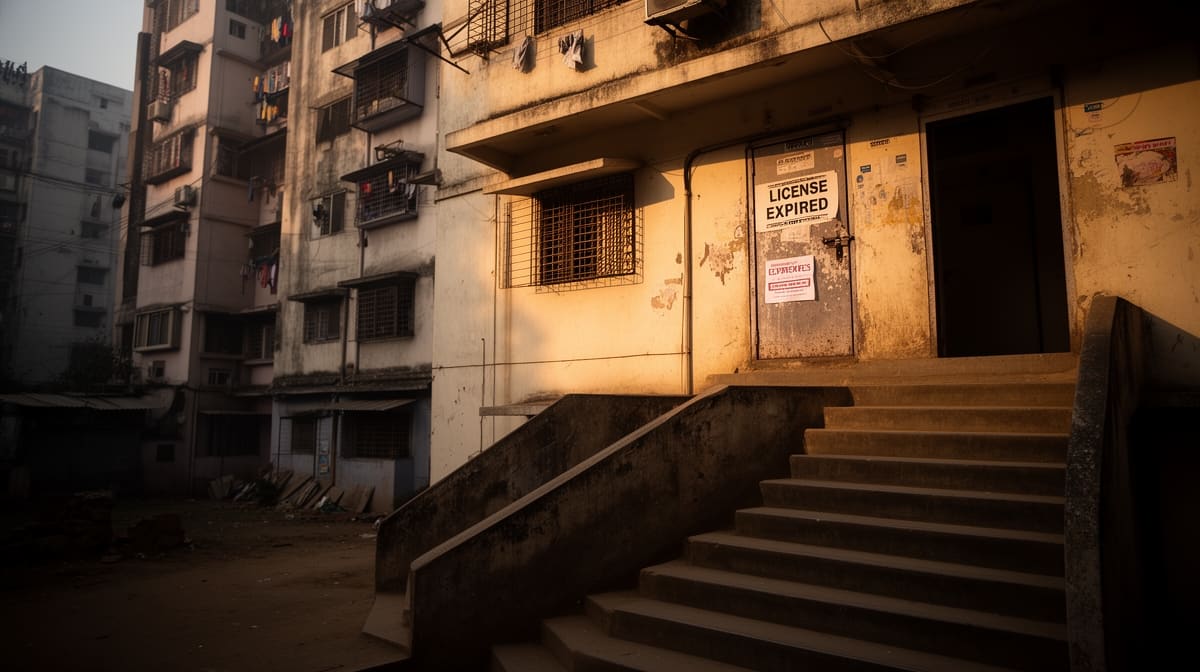
In a landmark decision, the Bombay High Court held that the caretaker agreements executed in 1994 and 1995 constituted licenses rather than leases, thereby reversing the trial court’s finding that the petitioner was a tenant. The Court also confirmed that it may exercise the powers of Order XLI Rule 33 under Article 227, and directed an enquiry into mesne profits for the petitioner’s long-term occupation.
Background & Facts
The Dispute
- The petitioner, Navina Dinesh Shetty, claimed tenancy rights over the suit premises (Gala No.9, Plot No.50, APMC Market, Sector-19, Vashi) based on caretaker agreements dated 12 October 1994 and 15 September 1995.
- The respondent, Shaikh Ayub Rehman, maintained that the agreements created a mere license and that the petitioner was a licensee.
- The petitioner sought declaration of tenancy and injunction against dispossession.
- The respondent filed a suit for recovery of possession, alleging expiry of the licence period.
Key Facts
- 12 October 1994 - First caretaker agreement executed in the name of petitioner’s husband, K. Dinesh J. Shetty, granting permission and licence for 11 months (15 Oct 1994 - 14 Sep 1995).
- 15 September 1995 - Second caretaker agreement executed in the name of petitioner, identical terms, 11-month period (15 Sep 1995 - 14 Aug 1996).
- 14 August 1996 - Expiry of the second licence; petitioner continued to occupy premises.
- 22 January 2002 - Trial Court decreed petitioner as tenant and granted injunction; respondent’s suit dismissed.
- 10 September 2003 - Appellate Court reversed the trial court’s findings, holding petitioner a licensee and directing eviction.
- 6 November 2003 - Both writ petitions admitted; interim order stayed the appellate decree.
- September 2012 - Petitioner deposited Rs.2,000 per month until this date; thereafter no further payments.
- 10 September 2026 - Judgment pronounced.
Procedural History
- 12 June 1997 - Petitioner filed Regular Civil Suit No.553 seeking declaration of tenancy.
- 15 June 1998 - Respondent filed Regular Civil Suit No.61 seeking recovery of possession.
- 22 January 2002 - Trial Court passed separate judgments for each suit.
- 10 September 2003 - Appellate Court passed common judgment reversing the trial court.
- 6 November 2003 - Writ petitions admitted; interim stay granted.
- 10 September 2026 - High Court pronounced judgment.
The Parties' Positions
- Petitioner: Argued that the agreements were leases under Section 105 of the Transfer of Property Act, 1882, and that the trial court correctly interpreted them as tenancy.
- Respondent: Contended that the agreements were leave-and-licence contracts, citing Section 52 of the Indian Easements Act, 1882, and that the petitioner was a licensee.
Relief Sought
- Petitioner sought declaration of tenancy, injunction against dispossession, and payment of rent.
- Respondent sought eviction of petitioner and payment of Rs.2,000 per month from 14 Aug 1996.
The Legal Issue
The central question was whether the caretaker agreements amount to a lease under Section 105 of the Transfer of Property Act, 1882, and whether the High Court may exercise the powers of Order XLI Rule 33 in a petition filed under Article 227 of the Constitution.
Arguments Presented
For the Petitioner
- The agreements contained clauses of transfer of right to enjoy premises, specified period, and valuable consideration, satisfying the three tests for a lease.
- The use of the word "rent" and the presence of receipts indicated tenancy.
- Cited Suhas Yeshwant Chopde v. Sachhidanand D. Purekar and Rajendra B. Nair v. Suresh D. Dyanmothe to support the lease interpretation.
For the Respondent
- The agreements explicitly used the term "license" and contained a clause stating that no interest or estate as a tenant was created.
- The respondent relied on M/s. Musaji Mohamadali Master and Sons v. Gulamali Dadabhai Amreliwala and Puran Singh v. State of Punjab to argue that the High Court could exercise appellate powers under Order XLI Rule 33.
- Argued that the petitioner’s continued occupation after 14 Aug 1996 was unlawful and that mesne profits should be awarded.
The Court's Analysis
The Court examined the statutory definitions and the contractual terms. It held that:
"The first condition of lease is that there must be transfer of right to enjoy the premises. In the present case, the Transfer of Property Act is not fulfilled, whereas the condition of grant of right to use the premises is fulfilled, what is created is a mere license and not a lease."
The Court distinguished the trial court’s reliance on the three-test approach, noting that the first test - transfer of interest - was not satisfied because the respondent retained control and possession. The Court emphasized that the presence of the word "rent" alone does not convert a licence into a lease.
Regarding Article 227, the Court observed that the provisions of the Civil Procedure Code are applicable to petitions under Article 227, allowing the High Court to exercise the powers of Order XLI Rule 33. It cited M/s. Musaji Mohamadali Master and Sons and Puran Singh to support this view.
The Court also considered the long-term occupation of the petitioner and the failure to pay the licence fee after September 2012. It concluded that an enquiry into mesne profits was warranted.
The Verdict
Both petitions were dismissed. The petitioner was directed to hand over possession of the suit premises to the respondent on or before 30 September 2026. The operative direction to pay Rs.2,000 per month from 14 August 1996 was modified to an enquiry into mesne profits, and the petitioner was ordered to pay the determined mesne profits from 14 August 1996 until handover. No costs were awarded.
What This Means For Similar Cases
Lease vs License Distinction
- Courts must apply the statutory definition of a lease under Section 105 and confirm that a transfer of right to enjoy premises is essential.
- The mere use of the word "rent" or the presence of receipts does not automatically create tenancy.
- Parties should draft agreements with clear terminology to avoid ambiguity.
Article 227 and Order XLI Rule 33
- The High Court can exercise appellate powers under Order XLI Rule 33 even when the petition is filed under Article 227.
- This expands the scope of relief available to parties in long-term occupancy disputes.
Mesne Profits in Long-Term Occupancy
- An enquiry into mesne profits can be directed when a licencee occupies premises beyond the agreed period.
- The court may award mesne profits retroactively from the date of unlawful possession.