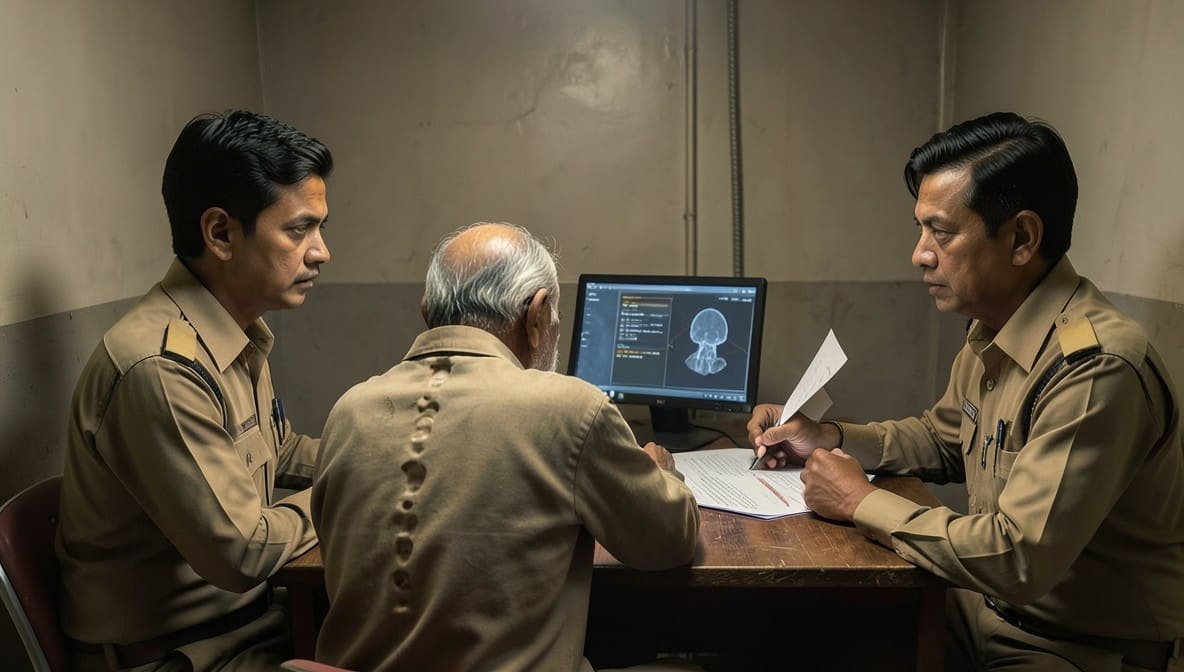
The Telangana High Court has clarified the standards for granting a second application for police custody under the Unlawful Activities (Prevention) Act, 1967 (UAPA). While dismissing an appeal challenging a second custody order, the Court emphasized that the Investigating Officer must provide specific, satisfactory reasons for seeking further custody, particularly when dealing with voluminous electronic evidence. The judgment also underscores the need for humane treatment of elderly accused, directing that interrogation hours be limited to protect the accused's health. This ruling balances investigative imperatives with constitutional safeguards, offering guidance for future cases involving prolonged investigations under special laws.
Background & Facts
The Dispute
The appellant, Gade Innaiah @ Gade Inna Reddy, a 64-year-old social activist, was arrested by the National Investigation Agency (NIA) on 21.12.2025 in connection with RC.04/2025/NIA/HyD. The case pertains to allegations under the UAPA, involving scrutiny of financial transactions, witness examinations, and analysis of electronic evidence seized during the investigation.
Key Facts
- 21.12.2025: Appellant arrested by NIA in RC.04/2025/NIA/HyD
- 16.01.2026: First application for police custody (Crl.M.P.No.1 of 2026) allowed by the IV Additional Sessions Judge, Hyderabad, granting custody from 19.01.2026 to 23.01.2026
- 21.01.2026: Appellant produced prematurely before the court, cutting short the first custody period
- 22.02.2026: Appellant files bail application, posted for orders on 09.03.2026 and adjourned to 13.03.2026
- 10.01.2026: Central Forensic Science Laboratory (CFSL) provides data extracted from seized electronic devices
- 12.03.2026: NIA files second application (Crl.M.P.No.514 of 2026) seeking further police custody, citing:
- Examination of several witnesses post-first custody
- Scrutiny of financial transactions
- Discovery of incriminating documents and chats from CFSL data
- Need for appellant’s explanation regarding suspicious transactions
- 01.04.2026: Learned IV Additional Sessions Judge allows the second custody application, granting custody from 02.04.2026 to 06.04.2026
- 02.04.2026: Appellant files Criminal Appeal No. 341 of 2026 challenging the second custody order
Procedural History
- 21.12.2025: Arrest of appellant
- 16.01.2026: First custody order granted
- 21.01.2026: Premature production before court
- 22.02.2026: Bail application filed
- 12.03.2026: Second custody application filed by NIA
- 01.04.2026: Second custody order passed
- 02.04.2026: Appeal filed before Telangana High Court
- 02.04.2026: High Court disposes of appeal with directions
The Parties' Positions
For the Appellant
- The second custody application was filed 60 days after the premature completion of the first custody, defeating the appellant’s right to bail
- The Investigating Officer (IO) failed to provide specific details regarding the number of witnesses examined or transactions scrutinized post-first custody
- Reliance placed on the precedent Nossam Mohamed Yunus v. State of Telangana (Crl.A.No.829 of 2023), where the High Court set aside a second custody order due to lack of specific reasons
- The appellant, suffering from spinal issues and awaiting a third surgery, requires humane interrogation conditions
For the Respondent (NIA)
- Post-first custody, several witnesses were examined, and financial transactions were scrutinized, revealing suspicious activities requiring further interrogation
- CFSL data provided on 10.01.2026 contained voluminous incriminating evidence, including chats and documents, necessitating the appellant’s explanation
- The UAPA investigation is complex and ongoing, justifying the need for a second custody period
- The NIA office has adequate facilities to ensure the appellant’s comfort during interrogation
Relief Sought
The appellant sought:
- Stay of execution of the second custody order dated 01.04.2026
- Setting aside of the impugned order
- Humane interrogation hours considering his age and medical condition
- Dismissal of the second custody application on grounds of delay and lack of specific reasons
The Legal Issue
The central legal questions before the Court were:
- Whether a second application for police custody under the UAPA is maintainable if filed beyond the stipulated time and without specific, satisfactory reasons for further interrogation?
- Whether the rights of the accused, particularly under Article 20(3) of the Constitution of India (protection against self-incrimination), are violated if custody is granted without adequate justification?
- What safeguards must be imposed to balance investigative needs with the human rights of an elderly accused undergoing medical treatment?
Arguments Presented
For the Appellant
- The second custody application was filed 60 days after the first custody was prematurely terminated, rendering it time-barred and an abuse of process
- The IO failed to specify the number of witnesses examined or transactions scrutinized, making the application vague and unsustainable
- Cited Nossam Mohamed Yunus v. State of Telangana, where the High Court held that silence of the accused during interrogation cannot be used as a ground for further custody
- Argued that the appellant’s medical condition (spinal issues, age 64, pending surgery) warranted lenient interrogation hours
For the Respondent (NIA)
- The complexity of the UAPA investigation, involving voluminous electronic evidence and financial transactions, justified the need for a second custody period
- The CFSL data provided on 10.01.2026 contained incriminating evidence requiring the appellant’s explanation
- The premature termination of the first custody was necessitated by procedural requirements, not investigative lapses
- Assured the Court that the NIA office has adequate facilities to interrogate the appellant without causing inconvenience
The Court's Analysis
The Court undertook a two-pronged analysis, examining both the legal maintainability of the second custody application and the humanitarian concerns raised by the appellant’s medical condition.
Maintainability of Second Custody Application
The Court distinguished the present case from Nossam Mohamed Yunus v. State of Telangana, noting that while the principle of specificity in custody applications remains sacrosanct, the facts here were slightly different:
"In the application filed by the Investigating Officer, NIA, there is specific contention that subsequent to premature completion of earlier police custody, several witnesses were examined, several financial transactions of the accused were scrutinized. There is also mention with regard to the data provided by CFSL on 10.01.2026. The said data has been voluminously analyzed and several incriminating documents, chats etc were found therein, which again needs to be confronted with the accused."
The Court observed that while the IO did not specify the exact number of witnesses or transactions, the mention of CFSL data analysis and the need for confrontation with incriminating evidence provided a reasonable basis for granting the second custody. However, the Court implicitly criticized the lack of specificity, stating:
"Admittedly, the Investigating Officer has filed the aforesaid application seeking police custody second time within time lines. It is maintainable. In the present case, they have specifically mentioned reasons. However, they have not mentioned the number of witnesses examined subsequent to premature completion of earlier police custody, the number of transactions etc."
Despite this, the Court declined to interfere with the impugned order, holding that the Designated Court had considered the material on record and that the investigation was still pending.
Humanitarian Considerations
The Court took judicial notice of the appellant’s age (64 years), spinal ailments, and pending third surgery, emphasizing the need for humane treatment during interrogation. While dismissing the appeal, the Court modified the interrogation hours as a compromise between investigative needs and constitutional safeguards:
"Considering the age of the appellant i.e., 65 years and the ailments which he is facing, the Investigating Officer is directed to interrogate the appellant from 09.00 a.m. to 05.00 p.m."
The Court rejected the appellant’s plea to conduct interrogation in jail, accepting the NIA’s assurance that it has adequate facilities to ensure the appellant’s comfort.
The Verdict
The Telangana High Court dismissed the appeal (Criminal Appeal No. 341 of 2026), upholding the second police custody order dated 01.04.2026 passed by the IV Additional Sessions Judge, Hyderabad. However, the Court modified the interrogation hours as follows:
- Interrogation period: 09.00 a.m. to 05.00 p.m. (instead of the original custody hours)
- Custody duration: 02.04.2026 to 06.04.2026 (5 days)
- Conditions: The other conditions imposed in the impugned order remain unaltered
The Court directed strict compliance with the modified interrogation hours, balancing the NIA’s investigative requirements with the appellant’s medical and age-related vulnerabilities.
What This Means For Similar Cases
Specificity in Custody Applications Is Non-Negotiable
- Investigating Officers must clearly articulate the reasons for seeking second custody, including:
- Number of witnesses examined post-first custody
- Specific financial transactions scrutinized
- Details of electronic evidence analyzed (e.g., CFSL data, chats, documents)
- Failure to provide specifics may render the application unsustainable, as seen in Nossam Mohamed Yunus
- Defense counsel should vigorously challenge vague applications, particularly when filed beyond reasonable time
Courts Will Balance Investigative Needs with Human Rights
- Elderly or medically vulnerable accused may seek modification of interrogation hours or alternative arrangements (e.g., interrogation in jail)
- Article 20(3) protections (right against self-incrimination) will be strictly enforced, particularly where the accused’s silence is misconstrued as guilt
- Judicial oversight will ensure that custody orders are not used punitively but are proportionate to investigative needs
UAPA Investigations Require Heightened Scrutiny
- Second custody applications under UAPA will be closely examined for delay, specificity, and necessity
- Electronic evidence (e.g., CFSL data) must be properly analyzed and disclosed to justify further custody
- Defense strategies should focus on:
- Procedural lapses (e.g., delay in filing applications)
- Lack of specificity in the IO’s contentions
- Medical or humanitarian grounds for lenient interrogation conditions