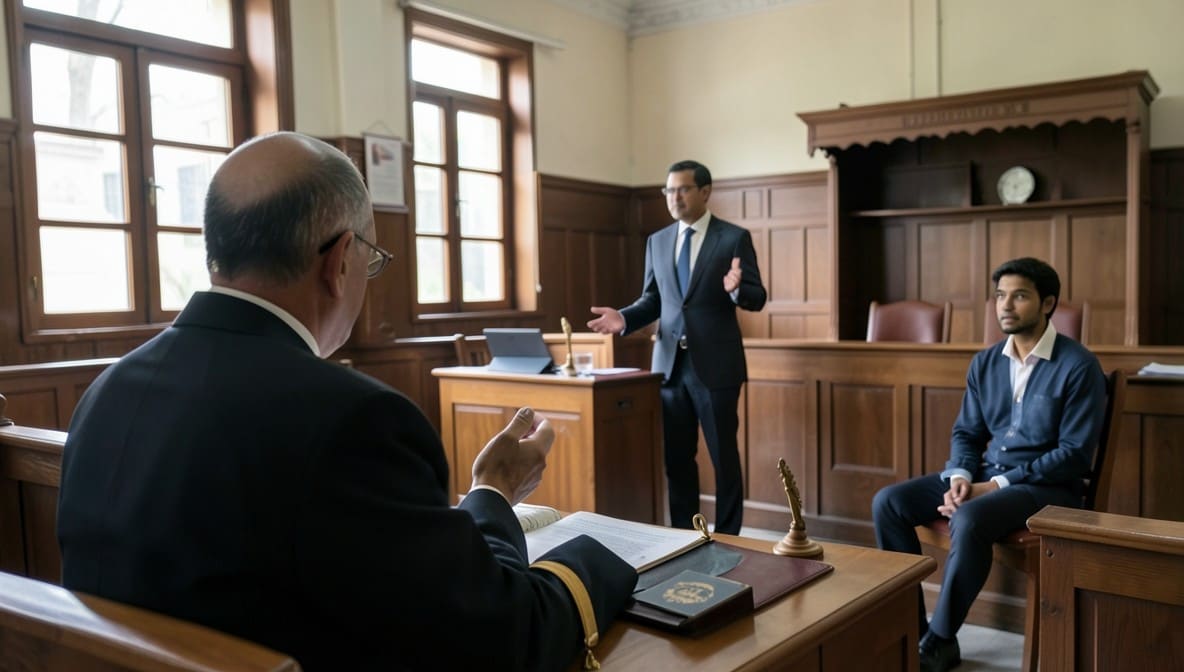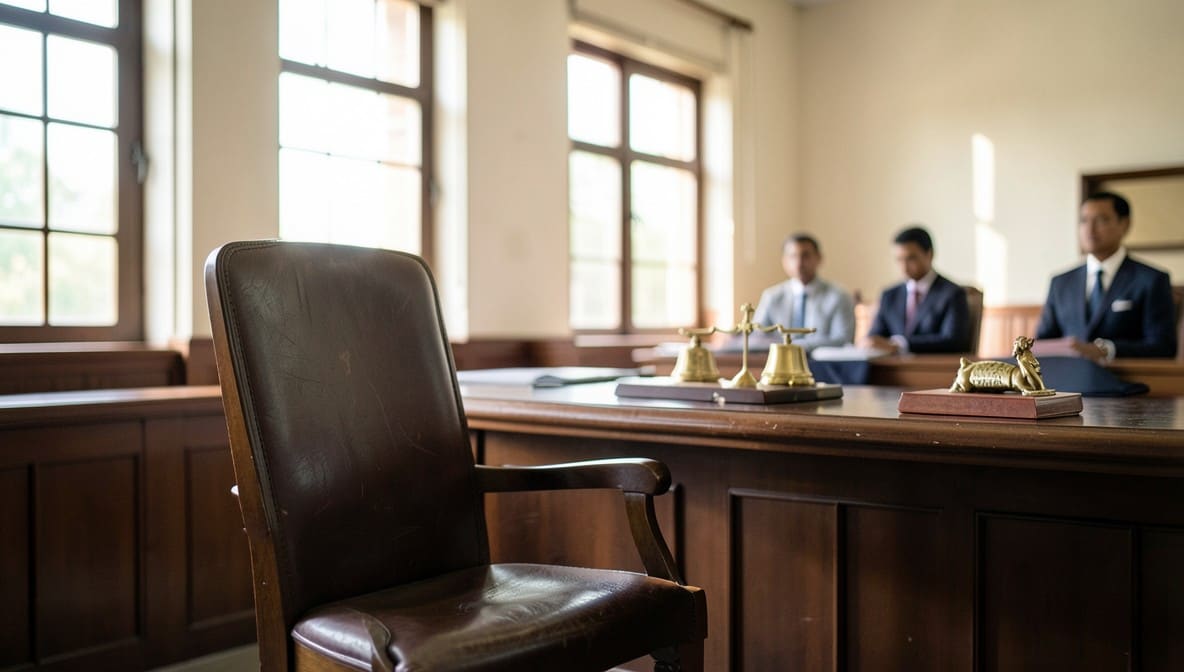
The Bombay High Court has affirmed that prolonged pre-final-hearing incarceration, even in grave offences like murder, may justify bail pending appeal when the delay in appellate disposal is unreasonable. This ruling reinforces the principle that custody must not become punishment without final adjudication.
Background & Facts
The Dispute
The applicants, Umesh Paramanand Chalwadi and Rahul Shrihari Choudhari, were convicted and sentenced to life imprisonment under Sections 141, 143, 147, 148, 302 read with Section 149 of the Indian Penal Code and Sections 4 and 25 of the Indian Arms Act for the murder of Dildar Pathan on 20th December 2010. The crime was registered as C.R. No. 414 of 2010 at Kothrud Police Station, Pune. Six accused were charge-sheeted, with Umesh as Accused No. 4 and Rahul as Accused No. 3. An eyewitness, Sachin Shivaji Sartape, testified to the incident.
Key Facts
- The murder occurred on 20.12.2010 at 2:30 p.m.
- Both applicants were granted bail during trial by order dated 13.10.2011
- No allegations of misuse of bail were made during trial
- Conviction and life sentence were imposed by the Additional Sessions Judge, Pune, on 31.01.2017
- Fine imposed was paid
- Umesh has been in actual custody for 8 years and 2 months as of the hearing date
- Rahul has been in actual custody for 10 years and 2 months as of the hearing date
- Umesh was previously granted Covid bail and furlough/parole, and surrendered on time each instance
- The prosecution did not allege any breach of conditions during Covid bail or furlough
- Accused No. 1, Dev Parmanand Chalwadi (Umesh’s brother), was granted bail by this Court on 02.02.2024 under Saudan Singh v. State of Uttar Pradesh
Procedural History
- 20.12.2010: Commission of offence
- 13.10.2011: Trial court grants bail to both applicants
- 31.01.2017: Conviction and life sentence by Additional Sessions Judge, Pune
- 15.01.2017: Criminal Appeal No. 156 of 2017 filed by Umesh
- 19.05.2019: Criminal Appeal No. 596 of 2019 filed by Rahul
- 02.02.2024: Accused No. 1 granted bail by this Court
- 05.05.2026: Interim bail applications heard and decided by Division Bench
Relief Sought
The applicants sought suspension of their life sentences and release on bail during the pendency of their appeals, citing prolonged incarceration and the precedent in Saudan Singh v. State of Uttar Pradesh.
The Legal Issue
The central question was whether an accused serving a life sentence may be granted bail pending appeal after serving over eight years in custody, particularly when appellate delay is significant and no misconduct during prior bail is alleged.
Arguments Presented
For the Appellant
The applicants argued that their prolonged incarceration - 8 years 2 months for Umesh and 10 years 2 months for Rahul - amounts to de facto punishment without final adjudication. They relied on Saudan Singh v. State of Uttar Pradesh and subsequent decisions (Suleman v. State of Uttar Pradesh, Dinesh @ Paul Daniel Khajekar v. State of Maharashtra) which permit bail in cases of extended custody pending appeal, even in serious offences. They emphasized that Umesh had not misused bail during trial, Covid bail, or furlough, and that the appeal had been pending since 2017 with no foreseeable conclusion.
For the Respondent
The State opposed bail, arguing that the gravity of the offence - murder under Section 302 IPC - demands strict custody. It contended that the appeals should be heard expeditiously and that bail should not be granted merely due to delay, especially since one co-accused had already been granted bail on different grounds.
The Court's Analysis
The Court acknowledged the seriousness of the offence but emphasized that the purpose of bail pending appeal is not to negate punishment but to prevent undue incarceration before finality. The Court noted that Saudan Singh established that prolonged custody, irrespective of the nature of the offence, warrants reconsideration of bail when appellate delay is substantial.
"The principle laid down in Saudan Singh is not confined to cases where the accused has served more than half the sentence, but extends to situations where the incarceration has become so prolonged that it ceases to be merely pre-execution custody and assumes the character of punitive detention without final determination."
The Court observed that Rahul’s custody of 10 years and 2 months squarely fell within the Saudan Singh framework. For Umesh, though his custody of 8 years and 2 months did not meet the exact benchmark, the Court held that the appeal had been pending for nearly nine years (since 2017), and given the backlog of old appeals, final hearing was unlikely in the near term. The Court further noted that Umesh had complied with all bail conditions during trial, Covid bail, and furlough, with no adverse report from the prosecution.
The Court rejected the State’s argument that granting bail would undermine the gravity of the offence, stating that the law permits judicial discretion to balance liberty and public interest, especially where custody has far exceeded the average appellate timeline.
The Verdict
The applicants succeeded. The Court suspended the life sentences imposed by the Additional Sessions Judge on 31.01.2017 and granted bail to both Umesh Paramanand Chalwadi and Rahul Shrihari Choudhari. Each applicant must furnish a personal bond of Rs. 25,000 with one or more sureties of like amount, to be approved by the trial court. They are required to report to Kothrud Police Station, Pune, on the first Monday of every month between 11:00 a.m. and 1:00 p.m., commencing June 2026. They must remain present for the final hearing and submit their current addresses and contact details.
What This Means For Similar Cases
Prolonged Custody Triggers Bail Entitlement
- Practitioners may now argue that custody exceeding 8 years in life sentence cases, even without half-sentence completion, warrants bail if appellate delay is demonstrable
- The burden shifts to the prosecution to show why continued custody is necessary beyond mere gravity of offence
Compliance History Is Decisive
- Past compliance with bail or furlough conditions, even in serious cases, strongly supports bail applications
- Absence of adverse reports from police or prosecution is a critical factor
Appellate Delay as a Ground for Relief
-
Courts must consider the actual pendency duration of appeals, not just statutory timelines
-
Delay caused by court backlogs cannot be used to justify continued incarceration
-
Always document the date of filing of appeal and estimate time to final hearing
-
Cite Saudan Singh and its progeny in all bail applications where custody exceeds 8 years
-
Highlight compliance history and absence of misconduct as decisive factors